Should you need a permit to protest? Here’s why that’s a bad idea (and might be unlawful)
- Written by: Maria O'Sullivan, Associate Professor of Law, Member of Law as Protection Centre, Deakin Law School, Deakin University
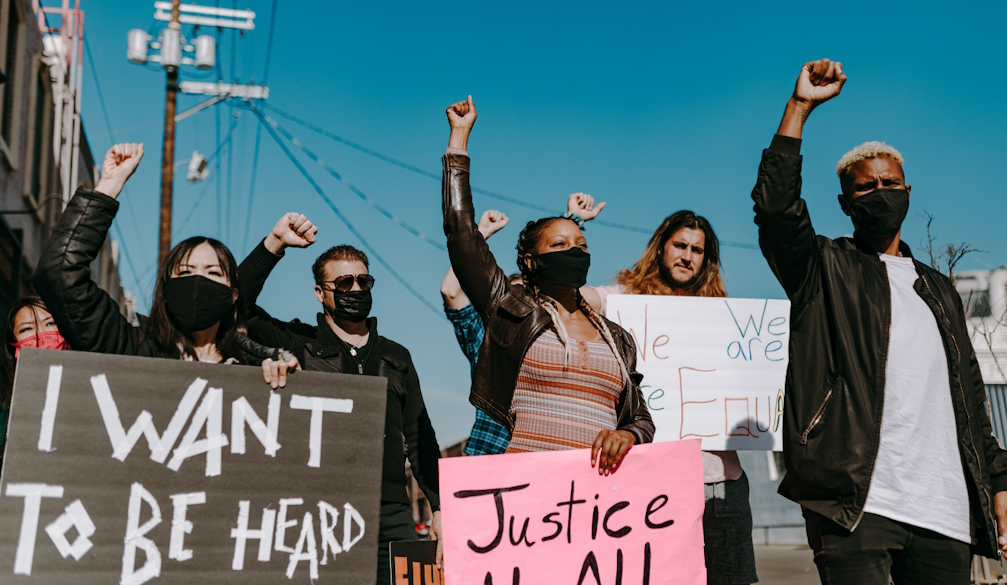
Australians’ ability to protest has again been in the news this week. Against the background of an armed conflict in the Middle East and rallies nationwide, the government has suggested Australia should establish a permit system for all protests.
Minister for the NDIS and Government Services Bill Shorten made the suggestion[1] on television this week:
how the permit system works is it doesn’t stop people protesting, but the purpose of is to look at the circumstances […] I don’t necessarily think it should apply to industrial relations, but for some of these protests we’ve seen week in, week out, I do think that having a permit system would at least straighten it up.
So what are protest laws like around the country? Do any states or territories have this permit system, and should they? And importantly, what effect to these laws have on the right to protest?
What are the laws like nationally?
A permit system to allow protest organisers to hold an “authorised public assembly” operates in most states and territories in Australia. These systems allow police to “authorise” a particular protest and require a written application to police and/or the relevant local council.
For instance, in New South Wales, people who wish to hold an authorised protest must lodge[2] a “notice of intention to hold a public assembly” with the NSW Police Commissioner.
Similar provisions also exist in Queensland[3], where organisers wishing to obtain authorisation for a protest must send a “Notice of Intention to Hold a Public Assembly” form to Queensland Police Service and the local council.
In Western Australia, organisers may apply for a permit to hold a public meeting and/or procession under the Public Order in Streets Act[4].
However, there a significant differences in the detail of these laws. In most states, the permit system simply allows the protest to be “authorised”. This means that while it is not a criminal offence to hold a protest without a permit, it provides a level of protection to protesters from certain criminal charges such as obstructing traffic.

Victoria does not have a permit system like NSW. Instead, it has laws[6] that enable police to move people on, or to arrest someone for violent or anti-social behaviour.
However, in Tasmania, a section of the Police Offences Act[7] makes it an offence for a person to organise or conduct a demonstration without a permit if it is to be held, wholly or partly, on a public street. It’s punishable by a fine.
The period of notification also varies widely. In most states and territories, the lead time is anywhere from five days to two weeks.
However, in Tasmania, protest organisers are advised to lodge an application with police 12 weeks[8] before the demonstration.
Finally, the grounds for rejection of a permit can be overly broad. For instance, in South Australia[9], police and other authorities may reject a permit on the ground that “it would, if effectuated, unduly prejudice any public interest”. The legislation does not set out any criteria for that test.
Which laws are the best?
In terms of how these laws compare with one another and which approach is the most preferable, we need to consider two factors: the practicalities of a permit system, and whether allowing government authorities to control protests is advisable.
In terms of practicalities, the paperwork burden, cost and uncertainty of a mandatory permit system may be unworkable. There could also be ensuing litigation to consider.
This was starkly demonstrated in 2020 when planned protests against Indigenous deaths in custody were litigated in the NSW Supreme Court.
In NSW, which has a permit system, the “Stop All Black Deaths in Custody” protest was initially rejected by the NSW Supreme Court but was then declared an authorised public assembly by the NSW Court of Appeal only minutes[10] before the protest was scheduled to start.
In deciding on the best approach to permits, we must also consider whether it is wise to allow government agencies to give the green light to some protests and disallow others. Will this put too much power into the hands of police and individual judges?
The human right of protesting
Here it is relevant to consider Australia’s international human rights treaty obligations, which protect the right to assemble peacefully. United Nations guidance[11] on this right recognises that states can set up notification provisions for protests, but they cannot establish authorisation requirements.
This means Australia can set up a notification system to allow police to facilitate the smooth conduct of a protest in advance (such as by organising road closures).
 The Tent Embassy in Canberra started spontaneously and remains to this day. Mick Tsikas/AAP[12]
However, this cannot require people to get permission from the police before undertaking a protest. In fact, this international human rights guidance states that having to apply for permission to protest undermines its status as a basic human right.
More generally, it should be remembered that protests can be spontaneous and should be allowed to be so.
This is best illustrated by one of the most important acts of protest in Australian history: the Aboriginal Tent Embassy. This was set up spontaneously on January 26 1972 when four Indigenous men set up a beach umbrella on the lawns opposite Parliament House in Canberra as a protest against[13] the government’s approach to Indigenous land rights.
It stands to this day and is a visual reminder of the power of spontaneous protest, carried out without police permission, and a sober reminder of the importance of protest in our democratic system.
References
- ^ made the suggestion (ministers.dss.gov.au)
- ^ must lodge (www.police.nsw.gov.au)
- ^ Queensland (www.police.qld.gov.au)
- ^ Public Order in Streets Act (www.police.wa.gov.au)
- ^ Loic Le Guilly/AAP (photos.aap.com.au)
- ^ it has laws (www.melbourne.vic.gov.au)
- ^ Police Offences Act (www.legislation.tas.gov.au)
- ^ 12 weeks (www.police.tas.gov.au)
- ^ South Australia (www.legislation.sa.gov.au)
- ^ only minutes (www.theguardian.com)
- ^ United Nations guidance (documents.un.org)
- ^ Mick Tsikas/AAP (photos.aap.com.au)
- ^ protest against (www.nma.gov.au)
Authors: Maria O'Sullivan, Associate Professor of Law, Member of Law as Protection Centre, Deakin Law School, Deakin University
 "Pin It")