Child sexual abuse by women is on the rise. We don’t have the support services to cope
- Written by Larissa Christensen, Senior Lecturer in Criminology & Justice, Co-leader of the Sexual Violence Research and Prevention Unit (SVRPU), University of the Sunshine Coast
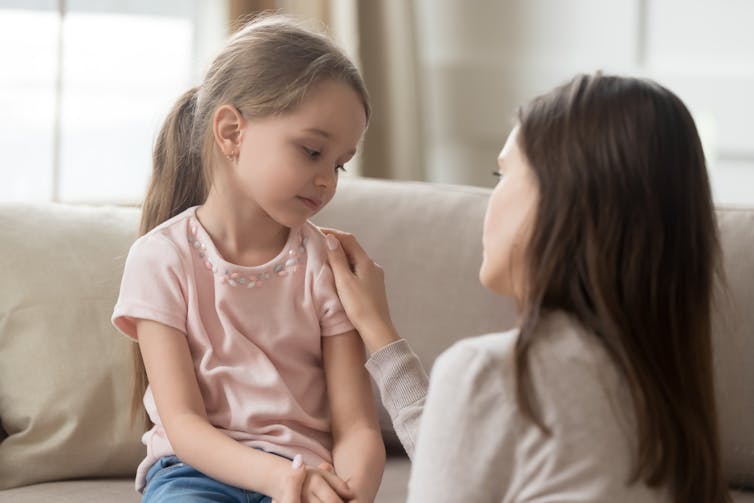
Sexual offending perpetrated by females is probably much more common than people think.
In Australia, we have seen an almost 208% increase[1] in the number of women in the criminal justice system for sexual offences from 2008 to 2023.
Research in the United States has found that on average, almost 8%[2] of verified cases of sexual abuse across the nation had a female perpetrator. This figure ranges from 1% to more than 36% across the different states.
While women make up a small minority of people who sexually offend, there are minimal offence-specific rehabilitative programs for these women in Australia. To prevent harm to children, this needs to change.
Why is this happening?
There is no one “type” of female who perpetrates sexual offences[3].
Rather, this population is varied[4] in their backgrounds and motivations, though they tend to have psychological problems and have experienced trauma[5] in the past.
Co-offending with a male partner – such as a boyfriend or spouse – is also quite common (almost 33%[6] of female-perpetrated sexual offence cases).
But not all females[7] who co-offend do so because of coercion by their partner. Some will offend on their own and may do it out of sexual interest and pleasure[8].
What does this abuse look like?
When we hear about female-perpetrated sexual offending in the media, it typically involves young teachers offending against their students.
For example, a recent Australian case[9] involved a 28-year-old former student teacher found guilty of sexual offences against a 15-year-old boy she met while on a teaching placement.
We also heard about the 28-year-old female teacher in the United Kingdom who was jailed[10] after she was convicted of sexual activity with two schoolboys.
It may therefore come as a surprise that more often than not, most cases involve a mother offending against her own child[11].
For example, earlier this year a Queensland woman was sentenced[12] for sexually abusing her child and transmitting child sexual abuse material.
The woman was charged with 21 child abuse-related offences, including rape.
Authorities found the abuse was planned[13] with a man in the United States who was also convicted for child sexual abuse material offences.
Rehabilitation lacking
While punishment is important to discourage offending, therapeutic strategies can help to prevent re-offending.
Unfortunately, though, rehabilitation opportunities for women convicted of sexual offences are lacking[14].
We recently interviewed women sentenced for child sexual abuse in Australia. Our study[15] found women have reportedly “begged for help” in prison, yet their requests for more support have largely gone unanswered.
Others said they were turned away from treatment in the community because they were women and not men.
Sexual offending treatment programs are available to men in Australia and other western countries. Many studies, including our own research[16], have found this helps reduce re-offending.

It seems reasonable, then, that such programs would be available to women who commit these offences. Some women in our interviews even expressed fear that without a rehabilitation program, they might re-offend.
But it is not just the women sentenced for sexual offences who believed rehabilitation programs would help to reduce their reoffending. The professionals we interviewed also expressed great support for such programs.
So, can’t we just use the same programs that are currently offered to men? The short answer is no.
Our research[18] has found these programs must be tailored to women. This is because their motivations, offending pathways and offence characteristics are different[19].
With sexual offending rehabilitation programs now available for women in some other countries, hopefully we can see progress in this area in Australia soon. This is important for the protection of our most vulnerable community members: children.
Preventing abuse
In the meantime though, we need to focus on stopping this crime before it happens and being thorough in our approach to prevention.
This includes considering the range of contexts[20] in which adult women come in contact with children, such as childcare, schools, sporting clubs, and in the home.
There are several steps organisations must take to create safer environments for children. This includes putting the National Principles for Child Safe Organisations[21] into action.
 Organisations should ensure their environments are safe for children.
Shutterstock[22]
Organisations should ensure their environments are safe for children.
Shutterstock[22]
Organisations should also consider the physical design of settings to improve supervision and surveillance, as well as education for staff[23] as onlookers to identify, intervene, and/or report their concerns.
But this isn’t enough. We also need to think about how to minimise risks within family homes.
Educating parents, open communication, and family rules have all been suggested[24] to improve safety for children in the family home.
While these strategies are important to use, they often rely on women as mothers and protectors of their children. This makes prevention of female-perpetrated sexual abuse particularly difficult within the family home.
This means responsibility for detecting this type of offending seems to fall to those outside the home (like schools or doctors) to identify and respond to early warning signs. Prevention could also involve women reaching out[25] for anonymous support if they are concerned about their own thoughts or behaviour.
To assist prevention efforts, we need to continue to debunk misconceptions about female sexual offending. We also need to challenge those who minimise the abuse of female perpetrators.
These misconceptions and the minimisation of abuse creates barriers to victims accessing help, but also to the women themselves.
References
- ^ 208% increase (www.abs.gov.au)
- ^ almost 8% (www.emerald.com)
- ^ perpetrates sexual offences (journals.sagepub.com)
- ^ is varied (journals.sagepub.com)
- ^ experienced trauma (www.tandfonline.com)
- ^ almost 33% (journals.sagepub.com)
- ^ not all females (www.researchgate.net)
- ^ sexual interest and pleasure (journals.sagepub.com)
- ^ recent Australian case (www.abc.net.au)
- ^ was jailed (www.bbc.com)
- ^ against her own child (www.emerald.com)
- ^ was sentenced (www.afp.gov.au)
- ^ abuse was planned (www.afp.gov.au)
- ^ lacking (www.tandfonline.com)
- ^ Our study (www.tandfonline.com)
- ^ our own research (journals.sagepub.com)
- ^ Shutterstock (www.shutterstock.com)
- ^ Our research (www.tandfonline.com)
- ^ are different (www.sciencedirect.com)
- ^ range of contexts (onlinelibrary.wiley.com)
- ^ National Principles for Child Safe Organisations (www.childsafety.gov.au)
- ^ Shutterstock (www.shutterstock.com)
- ^ education for staff (onlinelibrary.wiley.com)
- ^ all been suggested (link.springer.com)
- ^ women reaching out (www.stopitnow.org.au)
Authors: Larissa Christensen, Senior Lecturer in Criminology & Justice, Co-leader of the Sexual Violence Research and Prevention Unit (SVRPU), University of the Sunshine Coast