How the federal government’s misinformation bill might impede freedom of speech
- Written by Anne Twomey, Professor Emerita in Constitutional Law, University of Sydney
The federal government’s proposed legislation[1] on misinformation and disinformation has passed the House of Representatives, but faces a rocky time in the Senate.
Opponents have dubbed it the MAD Bill, and it has certainly made some of them mad. Ironically, there is a great deal of misinformation circulating about the bill itself.
Some believe it gives the Commonwealth government power to censor them and prosecute them for what they say – but it does not.
What does the bill do?
The bill is directed at digital platforms such as Google, Facebook, Instagram, X and TikTok. It requires them to be transparent, by publishing their policies, risk assessments and complaints mechanisms for dealing with “misinformation” (which is false, misleading or deceptive content) and “disinformation” (which is misinformation that is intended to deceive or involves “inauthentic behaviour” by bots).
It also requires the platforms to keep records and provide information to the Australian Communications and Media Authority (ACMA[2]) about how they deal with misinformation.
The digital platforms already take action to remove content, demote its accessibility, and place warning labels on content that is disputed. But exactly how they do this, and whether their actions are sufficient, remain contentious.
Outsourcing responsibility to digital platforms
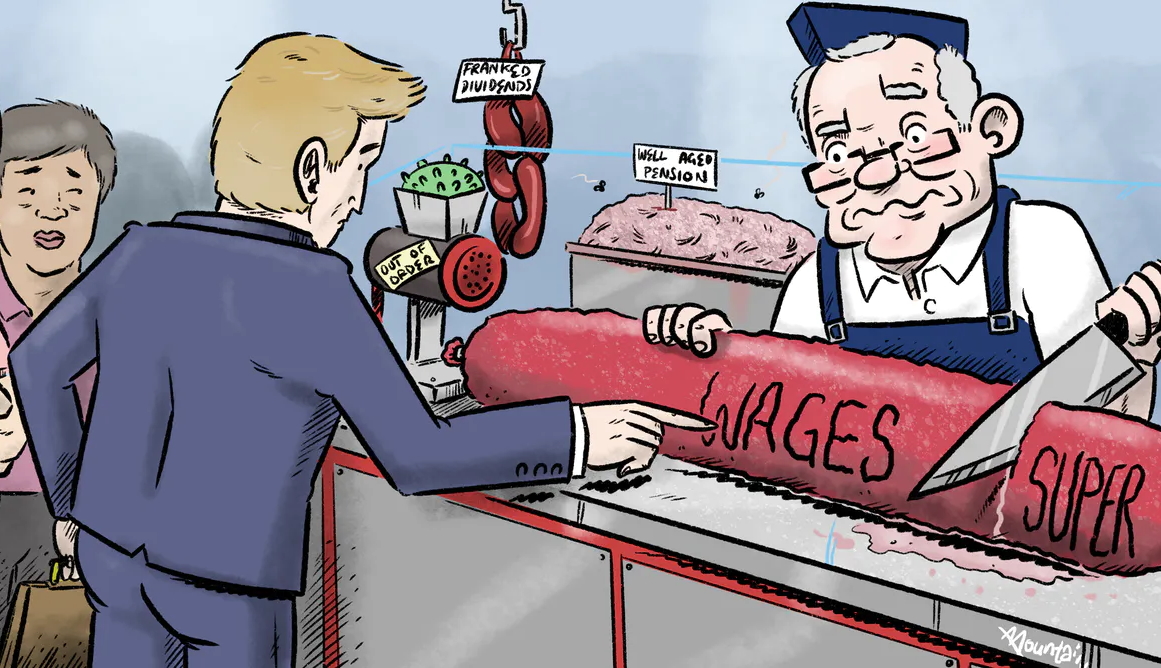
The controversial aspect of the government’s bill concerns its outsourcing to the digital platforms of the primary responsibility of dealing with misinformation. It requires them to enter into industry codes to address the spread of misinformation and disinformation. Once ACMA has approved the code, it becomes binding on the industry and is backed by hefty fines for any failure to comply.
If there is a failure to develop a code, or ACMA decides the code is deficient, or if there are “exceptional and urgent circumstances”, ACMA can impose its own “standards” on the digital platforms. These are also backed by hefty fines for failure to comply.
It is unclear what these standards can address. The bill says they can deal with “matters relating to the operation of digital communications platforms”, which could mean anything.
But the bill also says ACMA can only apply a standard if it considers it is necessary to provide adequate protection for the Australian community from serious harm caused or contributed to by misinformation or disinformation on the platforms.
ACMA cannot use its standards to order the platforms to remove content or boot off end-users, unless it involves inauthentic behaviour by bots.
What is ‘misinformation’?
It is when we get to the definition of “misinformation” that things get sticky.
Misinformation is defined as content that contains information that is reasonably verifiable as false, misleading or deceptive. It is only misinformation if the content is provided on a digital service to end-users in Australia, and is reasonably likely to cause or contribute to serious harm.
The types of serious harm are set out in the bill. These include harm to electoral and referendum processes, harm to public health, the vilification of particular groups, and imminent harm to the economy or critical infrastructure.
If it was just confined to matters of fact that could be verified as false – for example, scam financial advertisements showing false celebrity endorsements, or manipulated photos – there would be less concern. But the explanatory memorandum[3] to the bill says it also covers opinions, claims, commentary and invective.
How do you determine that opinions are false? What happens to claims that are contestable? How does a digital platform, based in the United States, make assessments about whether a claim relating to a referendum in Australia is false or misleading and is reasonably likely to cause serious harm to the referendum process in Australia?
Fact-checking
The explanatory memorandum says information can be verified as false by a third-party fact-checker. Digital platforms already use Australian fact-checking services for this purpose. Fact-checkers rely on experts to help them make their assessments. But they are only as good as the experts who happen to respond to their requests.
When dealing with contestable matters, it is often the case that there are experts with different views. Who is chosen can make a big difference to the outcome of the fact-checking report. Even where there is a consensus of experts that something is wrong, that does not always turn out to be the case.
If the result of fact-checking is that a note is added to a post stating it is contested, and giving readers other information or references to more authoritative sources, that is fine. It ensures readers are aware the post may not be accurate, and empowers them to become better informed and make their own assessment.
But if fact-checking leads to a contestable claim being declared “misinformation”, and posts containing that claim are then removed from digital platforms, that is far more concerning.
While the “serious harm” qualification should mean most contestable claims are not treated as misinformation, that will not always be so. The explanatory memorandum regards swaying voter behaviour during an election so that “the outcome of an electoral process can no longer be said to represent the free will of the electorate” as falling within serious harm. So contestable claims about political policies could end up being classified as misinformation, if fact-checked as false and if they were likely to influence voters.
There are exclusions from the scope of “misinformation” for professional news content, parody and satire, and the “reasonable dissemination of content for any academic, artistic, scientific or religious purpose”. But the chances of a digital platform’s algorithm being able to apply such fine distinctions seem pretty low. The more likely outcome would be over-censorship by platforms, dumping anything on a controversial subject in the “misinformation” basket to avoid trouble.
The Trump wild card
But the last word on this may come from Donald Trump. He has announced[4] that once inaugurated he would ask Congress to enact legislation that curtailed the powers of the digital platforms to restrict lawful speech. They would be prohibited from taking down content, other than unlawful content such as child exploitation or the promotion of terrorism.
How effective the Australian bill, if passed, would be in the face of such US legislation, takes this issue to a new dimension of difficulty.
References
- ^ proposed legislation (www.aph.gov.au)
- ^ ACMA (www.acma.gov.au)
- ^ explanatory memorandum (parlinfo.aph.gov.au)
- ^ announced (www.youtube.com)
Authors: Anne Twomey, Professor Emerita in Constitutional Law, University of Sydney