Australia in a baby bust? It’s not that simple – and a panic won’t help
- Written by: Edith Gray, Professor, School of Demography, Australian National University
There is a seemingly endless stream of news headlines about plummeting birth rates. Many have alarmist narratives about the perils of “baby busts” and “population decline”. This reflects a deep-seated anxiety about what declining birth rates mean for the future of society.
In 2023, Australia’s birth rate declined to the lowest level ever recorded[1] of 1.5 births per woman. But declining birth rates have long been an issue of public concern. Even as early as 1903, the New South Wales government established a Royal Commission on the decline of the birth rate.
But what real issue does a low birth rate pose, and for whom?
Birth rates are not just numbers; they are intertwined with the fabric of societies. Alarm about low fertility is grounded not just in economic concerns, but political and ideological worries, too.

Declining birth rates affect the economy
Initially, a declining birth rate will mean a relatively larger proportion of people of working age and fewer children.
This pattern provides countries with an opportunity to grow their economy. More people of working age means more economic productivity and activity, and a larger tax base.
Over time, however, sustained declines in the birth rate leads to fewer people moving into the productive (and reproductive) years. The working age demographic bulge moves into older ages.
This is known as population ageing. In the absence of positive net migration[3], this will eventually lead to depopulation if fertility is low enough.
There is widespread recognition declining birth rates can contribute to economic decline[4], as a result of a shrinking workforce. This can lead to labour shortages, reduced economic output, and a smaller tax base to support welfare systems.
But it doesn’t automatically spell disaster
However, some experts challenge the idea population decline means economic disaster.
Population decline, they argue, can actually be beneficial[5] for per capita consumption and living standards.
Other potential benefits include:
- less resources being consumed
- less pollution
- more investment in the education and well-being[6] of a smaller number of children.
Beyond the economic sphere, declining birth rates often become entangled with broader social and political anxieties.
 Supporting child-free lifestyles is important.
Photo by Vladimir Kudinov/Pexels[7]
Supporting child-free lifestyles is important.
Photo by Vladimir Kudinov/Pexels[7]
Non-economic fears
Low birth rates often accompany fears of national decline, cultural homogenisation, and even “civilizational doom[8]”.
These fears are often exploited by political actors seeking to promote nationalist agendas and restrict immigration[9].
The focus on increasing birth rates as a solution to these perceived threats can also lead to policymakers undermining human rights, particularly women’s reproductive rights.
Policies that pressure women to have children are often justified in the name of national security and demographic stability[10]. These policies may promote traditional gender roles, and restrict access to reproductive healthcare.
Beyond the macroeconomic and geopolitical narratives, however, people’s decisions about childbearing are deeply personal.
Many people want more kids than they have
Research repeatedly shows there is a gap between people’s fertility intentions and the number of children they end up having.
Many people who want kids face barriers[11] such as:
- economic insecurity
- gender inequality
- limited access to formal and informal childcare, and
- high housing and education costs.
This underscores the need to address the systemic issues that make it difficult for people to have the number of children they want.
The persistent focus on declining birth rates is the product of a complex and often emotionally charged intersection between the public and private spheres.
The economic and social challenges associated with low fertility are real and deserve careful consideration. But demographic policies need not specifically address only childbearing.
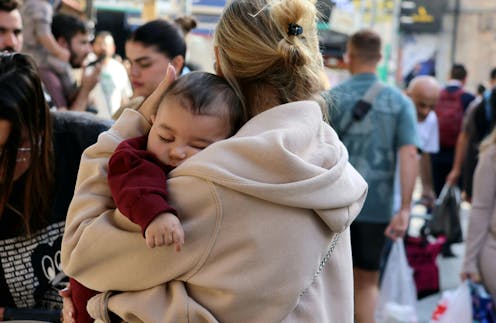
 Many people want more kids than they actually end up having.
Photo by RDNE Stock project/Pexels[12]
Many people want more kids than they actually end up having.
Photo by RDNE Stock project/Pexels[12]
Demographic resilience
Many countries are framing their population futures under a “demographic resilience[13]” framework.
This framework recognises that there is a need for constructive solutions to the rapidly ageing or declining populations we see today, without a distracting focus on policies to increase the birth rate.
Policies that do aim to support childbearing should respect people’s individual autonomy and reproductive choices.
A human rights-based approach recognises that the goal is not to dictate reproductive choices. It is to ensure the conditions under which individuals can freely exercise those choices.
This could include policies that ensure people can:
- access affordable childcare and housing
- achieve work-life balance through flexible work arrangements
- access robust parental leave policies.
Supporting child-free lifestyles is equally important; society should affirm the right not to have children is a valid choice.
The challenge for policymakers lies in balancing societal concerns with respect for individual autonomy.
The low fertility discourse should move beyond “crisis” to focus on creating supportive environments where people can make informed, empowered decisions about parenthood.
References
- ^ lowest level ever recorded (www.abs.gov.au)
- ^ bypty/Shutterstock (www.shutterstock.com)
- ^ absence of positive net migration (onlinelibrary.wiley.com)
- ^ contribute to economic decline (www.bmj.com)
- ^ actually be beneficial (pubmed.ncbi.nlm.nih.gov)
- ^ education and well-being (www.unfpa.org)
- ^ Photo by Vladimir Kudinov/Pexels (www.pexels.com)
- ^ civilizational doom (eeca.unfpa.org)
- ^ nationalist agendas and restrict immigration (www.tandfonline.com)
- ^ national security and demographic stability (www.bmj.com)
- ^ barriers (link.springer.com)
- ^ Photo by RDNE Stock project/Pexels (www.pexels.com)
- ^ demographic resilience (eeca.unfpa.org)
Authors: Edith Gray, Professor, School of Demography, Australian National University