NZ has no dedicated database to track losses from weather disasters – without it, we’re planning in the dark
- Written by: Ilan Noy, Chair in the Economics of Disasters and Climate Change, Te Herenga Waka — Victoria University of Wellington
Following the Trump administration’s abrupt cuts to USAID funding[1] last month, the online international disaster database EM-DAT[2] (normally funded by USAID) went dark for a week.
EM-DAT collates data on the occurrence and impacts of thousands of mass disasters worldwide and records both human and economic losses in a publicly available dataset. It relies on various sources, including United Nations agencies and non-governmental organisations, but also news reports.
The vulnerability of this database to the Trump administration’s cuts highlights the need for New Zealand to take charge of its own data on the damage caused by extreme events.
Currently, New Zealand has no dedicated disaster loss database. This means we don’t know how much extreme weather events and other types of disasters are costing us.
But as such events are becoming more frequent and more intense with worsening climate change[3], this lack of data is increasingly detrimental to our long-term prosperity.
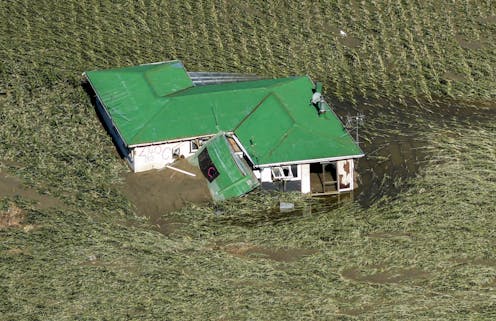
Two events in 2023 – Cyclone Gabrielle[4] and the Auckland floods[5] – illustrate this problem. They were by far the costliest weather disasters in New Zealand’s modern history and we know they were exceptionally damaging.
But we don’t know the aggregate financial losses they caused, and the different sources shown in the table below provide conflicting numbers[6], none of them comprehensive.
Without understanding the magnitude of the problem, our ability to prevent damage or recover from extreme weather is diminished. It is indeed difficult to manage what we don’t measure.
In the face of these unknowns, most other countries, including Australia[7], are investing in the collection, collation and analysis of their own data to make informed decisions about disaster risk management. It is high time New Zealand did the same.
The limits of New Zealand’s data on loss and damage
Currently, data on extreme weather costs have come primarily from the Insurance Council of New Zealand (ICNZ[8]) or from EM-DAT, whose data sometimes come from less reliable sources. New Zealand’s reliance on a private source and an international organisation leaves us with data that could charitably be described as fragmented, incomplete and unreliable.
ICNZ figures showing insurance payouts for disasters are commonly used by the government and media as a proxy for total cost. But private insurance accounts for only a small share of the losses resulting from some extreme weather. Roads, bridges and many other parts of public infrastructure are not insured; many private assets are not insured either.
Furthermore, wealthier communities tend to be better insured and hence receive higher payouts[9]. The ICNZ data imply they experience more damages than poorer, less insured communities, even when that is not the case.
Globally, insurance tends to retreat when the risks become too high to be covered affordably[11]. We expect that in the future a higher number of homes and businesses will be under-insured. Relying solely on data on insured damages will hence provide us with an increasingly partial picture of damages caused by extreme weather.
The second main source of disaster loss data is EM-DAT. In principle, it aims to include all damage costs (not just insured ones), but the approach does not necessarily result in more accurate numbers.
As the graph below shows, ICNZ can be counted on to provide reliable data for all large events, but there are frequent gaps in EM-DAT’s data for New Zealand. It is also clear that the difference between ICNZ private insurance payouts and total cost estimates from EM-DAT is too small to accurately reflect uninsured losses.
In previous research[12] (co-authored with Rebecca Newman) we identified other gaps in the EM-DAT international estimates of extreme-weather costs, most notably for wildfires, droughts and heatwaves.
Damages from these events are largely uninsured and so are not included in the ICNZ data either. Yet their likelihood is increasing[13] because of dramatic changes in our climate.
We only have a partial picture, and a potentially very misleading one at that – both in terms of the size of the problem and how the problem is changing. Nevertheless, the data from the ICNZ and EM-DAT are still the best we have for understanding what is happening.
When EM-DAT temporarily went offline last month following the termination of its funding from USAID, we received a crude reminder of how critical this resource is in the global context. How can we talk about disaster risk management and risk reduction when we have no idea what is going on?
Effective policy relies on accurate data
There are myriad ways in which a disaster-loss database for New Zealand could be used effectively by central and local government, insurance and banking companies, weather-exposed industries such as agriculture, community organisations and by individuals.
Policies about flood protection, planned relocation (managed retreat), climate adaptation, insurance pricing, banking regulation, home loans and infrastructure maintenance should all be informed by knowledge of the risks from extreme-weather events and other hazards.
A concrete example of how useful this data would be is for planned relocations. We need a clear perspective of the history of flood events in different communities and comprehensive assessments of past damages in order to quantify the future costs of relocations. Without these data, how can we decide which financial arrangements for relocation are fiscally sound?
A comprehensive New Zealand disaster-loss database is possible. As a nation we have the datasets we need, but these are held within different government agencies and other organisations, with no centralised collection or reporting.
Hidden there is everything we need to understand the current situation and plan better for the future. We just have to make the decision to invest in collecting and curating this data.
Stats NZ[14] would be the data’s logical host, given the agency’s extensive experience in collecting and posting data to help us organise our society. Cyclone Gabrielle and the Auckland floods should have convinced us we need this. Maybe EM-DAT going dark, and thus obscuring a worldwide risk, should convince us even more.
I am grateful for the contribution of Jo-Anne Hazel (writing) and Tom Uher (data collection).
References
- ^ abrupt cuts to USAID funding (theconversation.com)
- ^ EM-DAT (www.emdat.be)
- ^ more frequent and more intense with worsening climate change (environment.govt.nz)
- ^ Cyclone Gabrielle (theconversation.com)
- ^ Auckland floods (theconversation.com)
- ^ provide conflicting numbers (www.dropbox.com)
- ^ including Australia (knowledge.aidr.org.au)
- ^ ICNZ (www.icnz.org.nz)
- ^ higher payouts (link.springer.com)
- ^ Phil Walter/Getty Images (www.gettyimages.com.au)
- ^ risks become too high to be covered affordably (link.springer.com)
- ^ previous research (www.nature.com)
- ^ their likelihood is increasing (iopscience.iop.org)
- ^ Stats NZ (www.stats.govt.nz)
Authors: Ilan Noy, Chair in the Economics of Disasters and Climate Change, Te Herenga Waka — Victoria University of Wellington