why a routine traffic stop and police photo went all the way to the Supreme Court
- Written by: Alexandra Allen-Franks, Senior Lecturer, Law School, University of Auckland, Waipapa Taumata Rau
A recent Supreme Court decision could have far reaching consequences on how police can use photographs as evidence.
The central question in Mahia Tamiefuna v The King[1] was whether a photo taken by a police officer on a public road during a routine traffic stop could be used to convict a person of an unrelated crime.
According to the decision, which became public this week, the answer is no. And there are clear and compelling reasons why a majority of the court made this call.
The Tamiefuna case
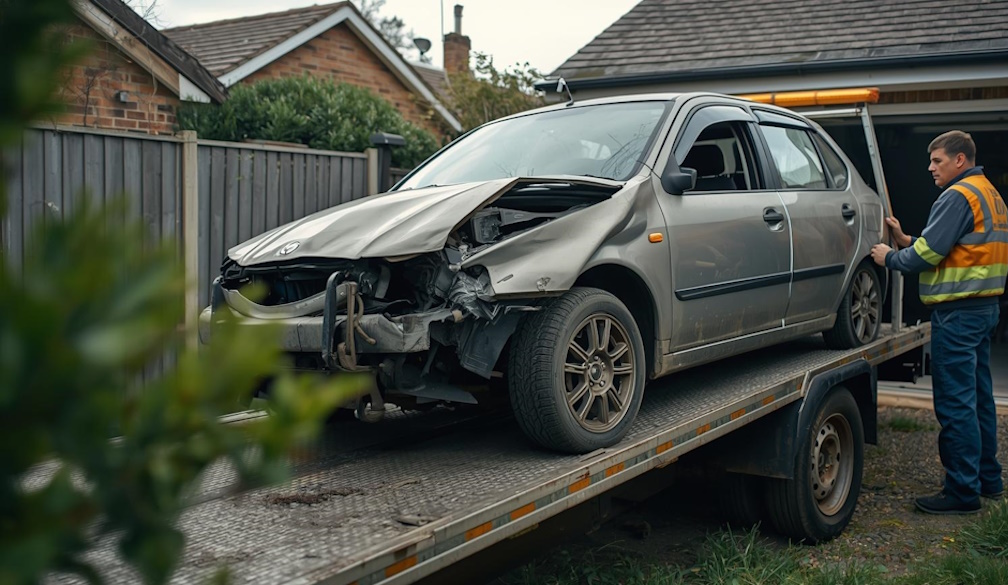
The Tamiefuna case started with a traffic stop by a police officer in 2019. Finding the driver was unlicensed, the officer impounded the car and the occupants had to get out.
While they were standing on the road, the officer took pictures of them with his phone and uploaded the images to the national intelligence database.
The photo of Tamiefuna matched CCTV footage taken three days earlier after an aggravated robbery. At the time of the robbery, police weren’t able to identify Tamiefuna because his face was obscured.
But after the photo was uploaded to the database, police realised the clothing Tamiefuna was wearing in the photo matched the clothing from the aggravated robbery. The photo became a key piece of evidence linking him to that case and resulted in a conviction of aggravated robbery.
His appeal against the conviction was dismissed before the case came before the Supreme Court, where a majority of the court agreed with his arguments.
The court found the taking of the photo was unlawful and unreasonable because the officer wasn’t investigating any specific crime when he took it. Uploading the photo to the database and keeping it there was also unlawful and unreasonable.
If the officer had been investigating a specific crime, there is a legal framework that would have allowed the taking of photos and other information by police.
The impropriety in taking and retaining the photo was such that the court said it should have been excluded from Tamiefuna’s trial under section 30 of the Evidence Act 2006[2]. The Crown has subsequently said it would not seek a retrial of Tamiefuna due to insufficient evidence. He is a free man.
Improperly obtained evidence
Under the Evidence Act, a judge must decide whether to exclude evidence from the trial if a court finds it was obtained improperly. That decision is made by balancing whether exclusion would be “proportionate to the wrongdoing”.
In making that decision, the judge has to take account of “the need for an effective and credible system of justice”. If the evidence is excluded, the judge may be depriving the jury of relevant material which could help them determine what truly happened.
As such, we need a strong justification for why it may be right to keep evidence out of a trial.
In my view, there are two compelling justifications for what happened in Tamiefuna’s case. The first is called the “rights thesis”: the idea that we should exclude evidence if it has been obtained in breach of a defendant’s rights.
The logic is that if parliament declares we have a right, it should be taken seriously. And there should be consequences for violating a person’s rights. When evidence is obtained through breaching a person’s rights, the most appropriate remedy is the exclusion of the evidence.
For Tamiefuna, the evidence was obtained in breach of his right to be free from unreasonable search and seizure under section 21 of the Bill of Rights Act[4]. With the rights thesis, we return a person back to the position they would have been in had the breach not happened.
Protecting the integrity of the justice system
The other justification is that we should exclude evidence if we need to uphold the integrity of the justice system (the “integrity principle”).
Courts need the ability to exclude improperly obtained evidence, because integrity as a rule-of-law concept requires our courts to act coherently. By this logic, they shouldn’t ignore wrongdoing in the obtaining of evidence.
The court shouldn’t condone illegal actions by state actors such as the police, while condemning some other conduct by finding someone guilty of crime. It matters if evidence is obtained in breach of a right.
In circumstances where parliament has marked out certain rights by including them in the Bill of Rights Act, relying on evidence obtained in breach of such rights raises serious integrity concerns.
The best way for the court to show it’s acting with integrity would be to approach this sort of evidence by presuming it should be excluded.
This may mean that “the criminal is to go free because the constable has blundered”, as American judge Benjamin Cardazo once complained. But that is a consequence we have to accept to be sure we have an effective and credible system of justice.
Tamiefuna’s case will likely lead to greater guidance for police around the taking of pictures so the same thing doesn’t happen in the future.
Some people might baulk at Tamiefuna going free, but it’s the right decision overall.
References
- ^ Mahia Tamiefuna v The King (www.stuff.co.nz)
- ^ Evidence Act 2006 (www.legislation.govt.nz)
- ^ Hagen Hopkins/Getty Images (www.gettyimages.com.au)
- ^ Bill of Rights Act (www.legislation.govt.nz)
Authors: Alexandra Allen-Franks, Senior Lecturer, Law School, University of Auckland, Waipapa Taumata Rau