Making it easier to build a granny flat makes sense – but it’s no solution to a housing crisis
- Written by: Timothy Welch, Senior Lecturer in Urban Planning, University of Auckland, Waipapa Taumata Rau
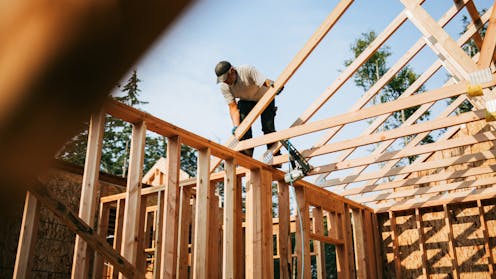
As part of its resource management reforms, the government will soon allow “super-sized granny flats[1]” to be built without consent – potentially adding 13,000 dwellings over the next decade to provide “families with more housing options”.
This represents genuine progress in reducing regulatory barriers. But the scale of the housing crisis means we have to ask whether incremental reforms can deliver meaningful change.
The numbers provide important context. Against current consenting rates of 40,000 to 50,000 new dwellings per year, those projected 70-square-metre granny flats represent a 2.6% increase in housing supply.
In Auckland, where housing pressure is most acute, 300 additional units might be built annually. For some, that’s likely to be useful. But for a country already facing a housing crunch, it’s insignificant.
The costs of a granny flat
The numbers also reveal who can participate in this proposed solution. Building a basic 70-square-metre granny flat will cost between NZ$200,000 and $300,000. Add site works, utility connections and mandatory licensed building practitioner supervision, and total project costs will be closer to the upper end of that range.
At current interest rates, financing $250,000 requires approximately $480 weekly in loan payments. While rents of $500-$600 per week are achievable in urban markets, these thin margins assume optimal conditions.
For property owners with existing equity, this presents a viable investment. For those seeking affordable housing – young families, essential workers, recent immigrants – the benefits remain largely theoretical.
This dynamic illustrates a persistent challenge in market-based housing solutions: policies intended to improve affordability often primarily benefit those with capital to deploy.
Pressure on the pipes
Each granny flat requires full residential infrastructure – water, wastewater and stormwater connections. The development contributions – fees councils charge on new builds to fund infrastructure – will help fund network upgrades. But New Zealand already faces a $120-185 billion water infrastructure deficit[2] over the next 30 years, just to fix existing systems.
The challenge is particularly acute in established suburbs where these units are most likely to appear. Parts of Christchurch serviced by vacuum sewers already operate at capacity[3]. Auckland’s combined sewer areas face overflow risks during heavy rainfall. Wellington’s ageing pipes struggle with current demand.
Adding thousands of dispersed infill units to stressed networks poses genuine engineering challenges that funding alone cannot solve.
Transport infrastructure faces similar pressures. With minimum parking requirements axed[4] across the nation, these new granny flats will likely increase on-street parking demand and local traffic.
While some granny flat residents may rely on public transport or active modes, New Zealand’s car ownership rates – 837 vehicles per 1,000 people[5] – suggest most will own vehicles.
Approved but not always built
International experience offers instructive parallels. California’s 2017 Accessory Dwelling Unit[7] legislation provides the closest comparison. After removing similar regulatory barriers, California saw permits increase from 1,000 in 2016 to 13,000 in 2019.
However, construction costs and infrastructure constraints limited actual completions to roughly 60% of approved units.
Australian cities report similar patterns. Despite permissive regulations in many areas, only 13-23% of suitable properties[8] actually added secondary dwellings. High construction costs and infrastructure limitations proved more binding than regulatory constraints.
Closer to home, Auckland’s experience with minor dwellings under the Unitary Plan suggests cautious optimism. Since 2016, the city has averaged 300-400 secondary dwelling consents annually[9] where permitted. The number of units actually constructed is unknown.
Allowing one-storey detached 70-square-metre units without building consent may increase this modestly. But they are unlikely to dramatically accelerate production given persistent cost and capacity constraints.
Another form of wealth transfer
The policy’s benefits flow primarily to existing property owners. They will gain new development rights without competitive tender or public process. While perhaps justified by broader housing benefits, it’s worth acknowledging this is a form of wealth transfer.
Granny flats typically add roughly their construction cost[10] to property values, providing capital gains alongside rental income potential.
For renters, benefits depend on how many units actually materialise and at what price point. Secondary units often rent at 20-30% below comparable standalone houses[11] due to their size and backyard location.
This could meaningfully expand options for singles and couples. But families requiring larger accommodation will see limited benefits.
The policy’s design constraints also tell us what kind of urban density is acceptable. Single-storey height limits, two-metre boundary setbacks and standalone requirements essentially mandate the least efficient form of intensification.
Units could share walls and services, and two-storey designs that use less land could be permitted. Instead, the granny flat exemption favours the one configuration that maintains suburban aesthetics while delivering minimal extra housing.
A modest response to the housing crisis
The granny flat exemption exemplifies New Zealand’s approach to housing challenges: acknowledging a crisis while implementing modest responses.
Despite severe shortfalls in housing supply, the medium-density development common in comparable countries remains largely unrealised. An estimated 180,000 households[12] could be accommodated through comprehensive densification.
There are genuine benefits worth acknowledging, of course. The exemption reduces bureaucratic barriers, enables some additional housing and gives property owners new options.
The question isn’t so much whether the new policy should be embraced. But rather whether the government is willing to complement it with larger changes the housing crisis demands.
References
- ^ super-sized granny flats (www.beehive.govt.nz)
- ^ $120-185 billion water infrastructure deficit (www.waternz.org.nz)
- ^ already operate at capacity (ccc.govt.nz)
- ^ minimum parking requirements axed (ourauckland.aucklandcouncil.govt.nz)
- ^ 837 vehicles per 1,000 people (newsroom.co.nz)
- ^ Janice Chen/Getty Images (www.gettyimages.com.au)
- ^ California’s 2017 Accessory Dwelling Unit (cayimby.org)
- ^ only 13-23% of suitable properties (www.corelogic.com.au)
- ^ averaged 300-400 secondary dwelling consents annually (environment.govt.nz)
- ^ typically add roughly their construction cost (www.rnz.co.nz)
- ^ below comparable standalone houses (www.auckland.ac.nz)
- ^ estimated 180,000 households (www.buildingbetter.nz)
Authors: Timothy Welch, Senior Lecturer in Urban Planning, University of Auckland, Waipapa Taumata Rau