Many elite athletes live below the poverty line. Tax-deductible donations won’t solve the problem
- Written by: Michelle O'Shea, Senior Lecturer, School of Business, Western Sydney University
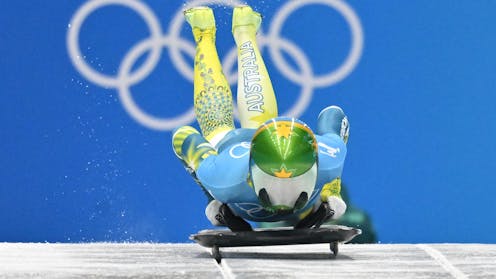
As the end of the 2024-25 financial year nears, the Australian Olympic Committee (AOC), in partnership with the Australian Sports Foundation[1] (ASF), has launched a new joint fundraising initiative allowing Australians to make tax-deductible donations directly to Australia’s Olympians[2] and Paralympians[3].
The ASF is an “Item 1” Deductible Gift Recipient (DGR)[4] and is the only organisation in Australia that allows a donor to claim a tax deduction for philanthropic donations to sport.
This is because sport is not currently eligible[5] for either DGR or charitable status under Australian law.
But is this new joint fundraising initiative a gold medal idea for our athletes, or one that falls short of a podium finish?
Aussies tax payers and Olympic dreams
The new initiative, named the “Aspiring Australian Olympian Funding program”, means individual donations of A$2 or more made through the ASF are tax-deductible[6].
Australians can direct funds to a specific athlete, coach or official selected to participate in representative, elite or high performance sport in the Olympic/Paralympic program (summer and winter).
Depending on the donor’s marginal tax rate, the effective cost of a donation may be reduced up to 62%[7] for the highest earners[8] (over $250,000).
For instance, a $1,000 donation could yield a tax refund of up to $470, bringing the net cost down to just $530.
Companies paying the full company tax rate that donate $1,000 would reduce their tax by $300 (30%)[9].
Ahead of the Milano-Cortina[10] 2026 Winter Olympic and Paralympic Games, more than 30 Australian athletes (from disciplines such as alpine skiing, bobsleigh and figure skating) have signed up to use the platform[11].
However, many Australian athletes are struggling financially[12], so more financial support is needed.
The brutal reality for many athletes
The ASF’s 2023 “Running on Empty” report[13] found many of Australia’s elite athletes were under significant financial pressure: 46% of those over the age of 18 were earning less than $23,000 per year. This places them below the poverty line[14] at $489 a week.
The report also found 67% of elite athletes said their financial struggles affected their parents and support networks. Also, 42% of elite athletes aged 18-34 reported they were suffering poor mental health as a result of their financial predicament.
The report also found the costs of training, equipment, travel and accommodation continued to rise, resulting in many questioning the sustainability of elite sport funding models both here[15] and abroad[16].
Pros and cons
The new funding program’s use of tax incentives as a funding carrot is good in principle, but there are potential unintended consequences.
This includes athletes being pitted against one another: there is a danger the athletes best skilled in marketing and public relations will receive more funding.
The current economic climate doesn’t bode well for the program. Many Australians are facing cost-of-living pressures[17], which means a lot of people may not be able to donate even if they want to.
Also, what happens if an athlete who benefits from the program is injured or found to be a drug cheat, and can’t compete? Can a donor request a refund?
Finally, taxpayers who have the most capacity to donate are likely high income earners, some of whom may donate to sport entities already. Now, their donations will be subsidised by the tax system.
Some alternative ideas
In the United Kingdom, National Lottery revenue plays a significant role in funding Olympic and Paralympic sports. Administered by UK Sport[18] (the UK’s equivalent of the ASC) funds from the lottery are directed to high performance sports programs and athletes.
This approach could be replicated in Australia[19].
Another idea is to redirect a portion of government taxes collected from sports betting, which could be lucrative given Australia’s love of sports gambling[20].
Read more: Gambling in Australia: how bad is the problem, who gets harmed most and where may we be heading?[21]
The federal government could offer a further incentive by matching peoples’ donations dollar for dollar.
As we direct funds to athletes, we need also think about the potential tax impact for them. Will the funds they receive be considered income and be taxed? The government could consider making the payment to the athlete tax free[22].
If we are going to succeed on the world stage, especially as the 2032 Brisbane Olympic and Paralympic Games approach, we need to financially support our athletes so they can focus on representing their country.
References
- ^ Australian Sports Foundation (asf.org.au)
- ^ directly to Australia’s Olympians (www.olympics.com.au)
- ^ Paralympians (asf.org.au)
- ^ an “Item 1” Deductible Gift Recipient (DGR) (www.pc.gov.au)
- ^ not currently eligible (www.acnc.gov.au)
- ^ are tax-deductible (asf.org.au)
- ^ may be reduced up to 62% (www.ato.gov.au)
- ^ highest earners (www.ato.gov.au)
- ^ reduce their tax by $300 (30%) (www.ato.gov.au)
- ^ Milano-Cortina (milanocortina2026.olympics.com)
- ^ signed up to use the platform (asf.org.au)
- ^ many Australian athletes are struggling financially (www.abc.net.au)
- ^ Running on Empty” report (aussieathletefund.com)
- ^ the poverty line (povertyandinequality.acoss.org.au)
- ^ here (www.abc.net.au)
- ^ abroad (www.olympics.com)
- ^ cost-of-living pressures (www.abc.net.au)
- ^ UK Sport (www.uksport.gov.uk)
- ^ could be replicated in Australia (www.clearinghouseforsport.gov.au)
- ^ love of sports gambling (theconversation.com)
- ^ Gambling in Australia: how bad is the problem, who gets harmed most and where may we be heading? (theconversation.com)
- ^ tax free (www.ato.gov.au)
Authors: Michelle O'Shea, Senior Lecturer, School of Business, Western Sydney University