How MPs’ ‘abandoned’ cats became the unexpected symbol of Indonesia’s protests
- Written by: Ken M.P. Setiawan, Senior Lecturer in Indonesian Studies, The University of Melbourne
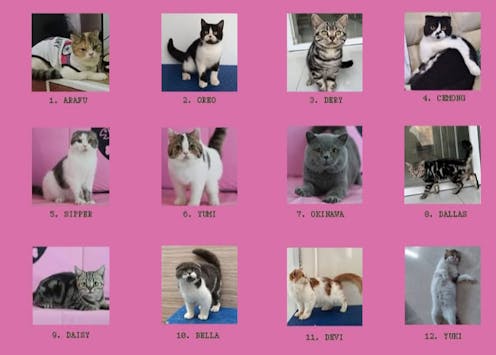
During Indonesia’s recent mass protests, the looted homes of politicians in Jakarta revealed unexpected victims: cats reportedly left behind[1] or stolen as their owners fled[2] for safety.
The cats have gone viral on social media. Their politician owners – celebrities-turned-MPs Uya Kuya and Eko Patrio of the National Mandate Party (PAN) – were accused of “abandoning” their pets. This is a framing they reject, arguing[3] they just didn’t have any opportunity to collect them before fleeing looters.
Wherever the truth lies, images of these frightened cats rescued by concerned citizens have struck a deep chord in cat-obsessed Indonesia.
Protesters and netizens quickly came to view these incidents as symbolic of politicians’ betrayal of their duty toward society’s most vulnerable.
Pets are political
Cats are hugely popular in Indonesia, which boasts the highest rate of cat ownership in the Asia-Pacific[4].
Indonesia is a majority Muslim country, and the high status of cats in Islam[5] may help explain why cats are so popular there.
Beyond the cultural significance of cats, however, the recent incidents also offer insights into the nature of political image-making in Indonesia.
The phenomenon of politicians using cats and other animals to bolster their popularity is of course not new, nor is it uniquely Indonesian.
From Winston Churchill’s wartime cat Nelson[6], to Bill Clinton’s cat Socks[7] or Downing Street’s “chief mouser” Larry[8], politicians have long used pet cats to carefully curate their public images as warm, approachable, relatable and humane.
The prime example from Indonesia is President Prabowo Subianto and his rescue tabby cat Bobby Kertanegara[9].
Bobby boasts almost 1 million followers on Instagram[10]. Images of Prabowo feeding, playing with, and cuddling him helped transform the former army general’s public image[11] in the lead-up to last year’s presidential election. He went from strongman with a questionable human rights record to a cuddly, sweet, animal-loving grandpa.
Now Indonesia’s “first cat” Bobby gets wheeled around in a luxury pet stroller and has his own security detail[12]. He makes appearances at state functions where he receives gifts from foreign leaders. This includes a bespoke scarf[13] Bobby recently received from Australian Prime Minister Anthony Albanese.
Vice President Gibran Rakabuming Raka and former Jakarta governor and 2024 presidential candidate Anies Baswedan have also used their pets to bolster their public image in Indonesia.
The recent protests
The recent protests in Jakarta[14] were triggered by a proposed rise in MP allowances[15] but also by general resentment towards the political class.
Anger has intensified over coverage of politicians’ lavish lives, as ordinary Indonesians struggle with high living costs[16] and youth unemployment rates[17].
During the recent protests, several high-profile politicians had their houses looted[18].
Kuya and Patrio were reported to have left behind their cats, some of which were taken by looters or rescued by concerned citizens.
While many of these claims have been disputed by the politicians, commentary on viral posts[19] have asked: if politicians can’t take responsibility for their own pets, how can they be trusted to care for the citizens they are supposed to represent?
Political image-crafting
Social media attention for these cats soon triggered a response from their owners.
Both Kuya[20] and Patrio[21] refuted claims the cats were “abandoned”. They argue there was no opportunity to grab the cats when their homes were targeted for looting, with the animals fleeing on their own.
Both have appealed for their pets to be returned, which has received some support from netizens.
The damage to the politicians’ reputations, however, has been done.
In the age of social media, pets have proven to be a double-edged sword.
Once used to soften politicians’ images and generate public support, these cats have now been drawn into a narrative that positions politicians as uncaring and out of touch. They have become metaphors for what some see as the elites’ betrayal of the people.
These cat incidents also reveal the precarious nature of political image-crafting in the age of social media.
Where once social media enabled political pets to be used to drive public adoration, it has now become a vehicle for backlash.
References
- ^ cats reportedly left behind (www.kompasiana.com)
- ^ fled (hot.detik.com)
- ^ arguing (hot.detik.com)
- ^ highest rate of cat ownership in the Asia-Pacific (insight.rakuten.com)
- ^ status of cats in Islam (iqranetwork.com)
- ^ Nelson (winstonchurchill.org)
- ^ Socks (www.clintonlibrary.gov)
- ^ “chief mouser” Larry (theconversation.com)
- ^ Bobby Kertanegara (www.straitstimes.com)
- ^ 1 million followers on Instagram (www.instagram.com)
- ^ public image (www.theguardian.com)
- ^ security detail (www.scmp.com)
- ^ bespoke scarf (en.antaranews.com)
- ^ recent protests in Jakarta (www.abc.net.au)
- ^ rise in MP allowances (indonesiaatmelbourne.unimelb.edu.au)
- ^ living costs (www.sbs.com.au)
- ^ youth unemployment rates (www.aljazeera.com)
- ^ looted (asianews.network)
- ^ viral posts (www.instagram.com)
- ^ Kuya (hot.detik.com)
- ^ Patrio (www.suara.com)
Authors: Ken M.P. Setiawan, Senior Lecturer in Indonesian Studies, The University of Melbourne