Jobseeker changes turn young adults into dependent children – and squeeze households further
- Written by: Susan St John, Honorary Associate Professor, Economic Policy Centre, Auckland Business School, University of Auckland, Waipapa Taumata Rau
When the government announced in its May budget that it would tighten eligibility for young New Zealanders getting Jobseeker benefits, there were few details about how the policy would work. We now have those details[1], and they raise many questions.
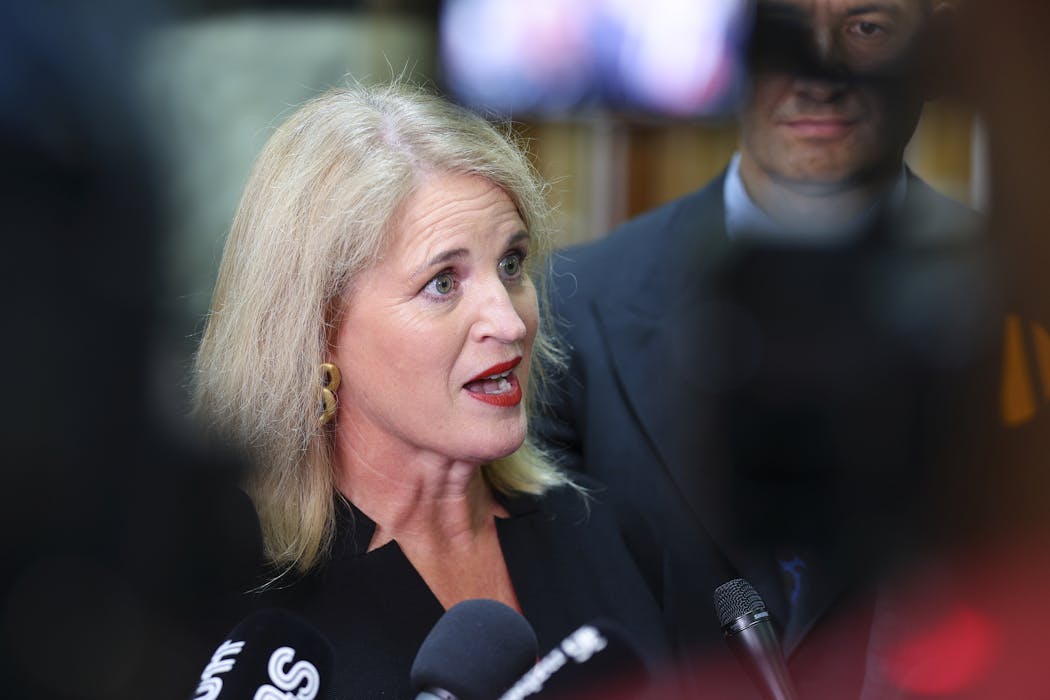
From November next year, if parents’ combined earnings are more than NZ$65,529, their unemployed 18- or 19-year-old teenagers will become ineligible for Jobseeker benefits. According to Social Development Minister Louise Upston:
We want to be clear with young people, 18- and 19-year-olds and their parents, our expectation is that they are in further education, training or a job, and welfare should be a long way away from their first option.
Without a regulatory impact statement from the Ministry of Social Development, it is unclear what the government expects to save from this. And we don’t have any risk assessment of unintended consequences either.
However, we do have a previous regulatory impact statement (the only one released this year[2]) that addressed changes to housing assistance entitlements for people with income from having boarders in their homes.
Tellingly, that impact statement[3] said:
Risks associated with the changes include a disproportionate impact on marginalised communities and impacts on social housing tenants […] a number of cohorts are likely to be disproportionately impacted, including Māori, Pacific peoples, older people, disabled people and young people.
The expected savings from the rule change were also questioned, but the impact statement did not influence the announced policy, nor was there any select committee scrutiny.
Risking a disincentive to work
What we can say about the new Jobseeker proposal is that the income limit for both one-parent and two-parent families is not only low, but totally unrealistic.
A single teenager living at home, whose parents earn $1 under the NZ$65,529 threshold may get Jobseeker support of $268.13 a week (after tax) – but zero support if their income is even $1 above the threshold.
An income of $65,529 for two parents is already insufficient for their needs. What are they to do?
Any help from Working for Families will cease for their unemployed teenager from age 18. That means the family loses support to keep them adequately fed, clothed and able to find work or training.
If they are not on a Jobseeker benefit, they also won’t have any of the oversight or mentoring Work and Income is obliged to provide as part of the benefit.
In a potential scenario, imagine a low-income, single mother who is renting with two teenagers, one of whom is 18 and without work. With her children now older, she has retrained and is finally able to work full-time.
Let’s say she currently earns $75,000. For the last $20,000 of that, she loses $6,320 to tax and accident compensation levies, receives $5,400 less in Working for Families entitlements, her student loan repayment is $2,400, and she misses out on accommodation assistance of around $5,000.
All up, for her extra gross earnings of $20,000, she is less than $1,000 (in the hand) better off. She will now be further affected if and when this new policy is introduced.
Because of her gross income, her unemployed 18-year-old will not qualify for up to $14,000 of Jobseeker support each year.
The logical thing for a sole mother to do in this situation is to stop earning that extra $20,000. That would allow the 18-year-old to qualify for Jobseeker support, contributing to the household income by paying board.
The parental income test raises numerous other difficulties, too. For example, how are separated parents to be treated? What if a parent refuses to support the young person, or reveal their income details?
Where is the work?
Politically, the policy is confusing. It will come into force right on, or just after, the next election. At this stage, the Labour Party has criticised the proposal[4], but has not committed to overturning it.
More immediately, the policy risks achieving results contrary to the government’s stated intent – as Upston put it, “to encourage young people into work”.
As well as discouraging low-income households who may consider working less so their children qualify for Jobseeker support, the policy assumes there are the jobs to absorb these young people in the first place.
As of June this year, just over 15,000 18- and 19-year-olds were on Jobseeker support. Of those, about 4,300 are estimated to become ineligible.
At the same time, there is huge competition in a tight labour market. The overall unemployment rate of 5.2% disguises a much higher youth rate[5]: 12.2% of young people are not in employment, education or training. Then there is additional underemployment of those who do have some work but want more.
In this difficult recession, the last thing we should do is to treat our young adults like dependent children. They need to be invested in, encouraged and mentored to find a pathway to meaningful work.
References
- ^ those details (www.beehive.govt.nz)
- ^ only one released this year (www.msd.govt.nz)
- ^ impact statement (www.msd.govt.nz)
- ^ criticised the proposal (www.rnz.co.nz)
- ^ disguises a much higher youth rate (www.stats.govt.nz)
Authors: Susan St John, Honorary Associate Professor, Economic Policy Centre, Auckland Business School, University of Auckland, Waipapa Taumata Rau