Trump’s new security strategy exposes the limits of NZ’s ‘softly-softly’ diplomacy
- Written by Robert G. Patman, Professor of International Relations, University of Otago
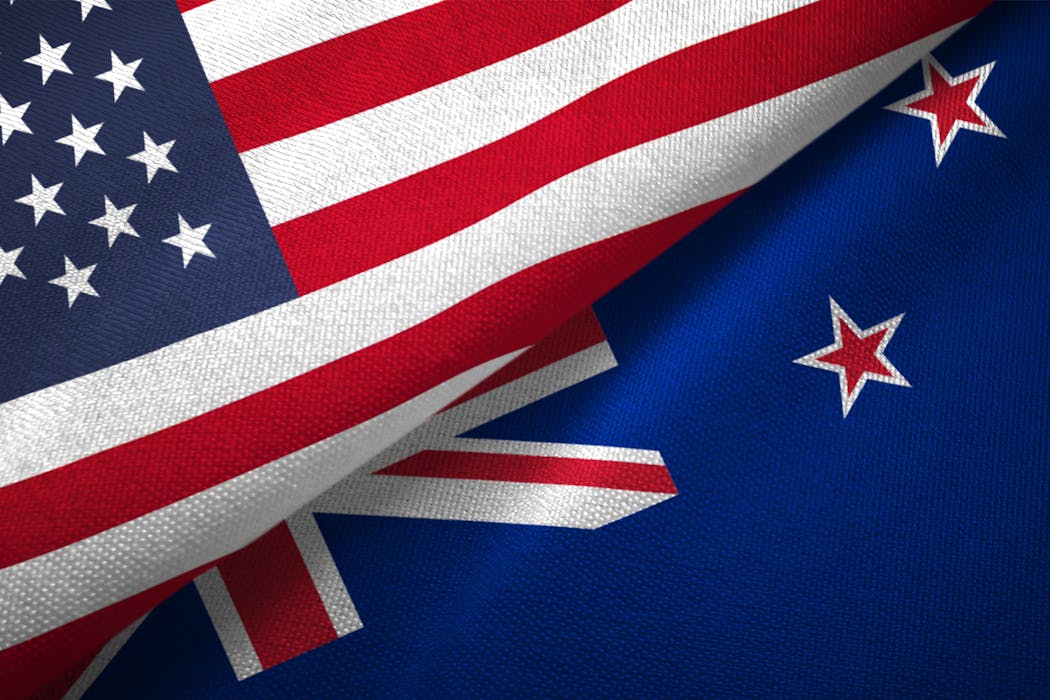
President Donald Trump’s recently-issued National Security Strategy[1] marks a decisive break in United States foreign policy. It also poses an uncomfortable challenge for New Zealand and other countries that have long depended on a rules-based order.
The document formalises the most significant shift in Washington’s global outlook since 1947. It confirms, as European Commission President Ursula von der Leyen warned earlier this year[2], that the “West as we knew it no longer exists”.
By claiming that liberal democracies in the European Union were on a trajectory towards “civilisational erasure[3]”, the Trump administration framed Europe as being in deep decline.
On that basis, it pledged to support far-right populist parties that, in its words[4], “oppose elite-driven, anti-democratic restrictions on core liberties in Europe, the Anglosphere and the rest of the democratic world”.
The security strategy also stated Europe should “take primary responsibility for its own defence” at a time when it acknowledged “many Europeans regard Russia as an existential threat”. At the same time, it made clear the US would increasingly focus on its “Western Hemisphere”.
More broadly, the document prioritised state sovereignty, rejected multilateral institutions unless they directly advanced US interests, advocated limits on immigration and free trade, and outlined a vision of global order managed by a small concert of great powers: the US, China, Russia, India and Japan.
From strategy to reality
Trump’s strategy should not have come as a surprise. Rather, it formalises a set of positions and instincts that have been increasingly evident throughout the president’s second term.
The document was foreshadowed by the administration’s steady alignment with Project 2025[5] – a suite of policy proposals advancing an ultra-conservative vision domestically and internationally.
It was also signalled by outlandish territorial threats directed at democracies such as Canada and Denmark by Vice-President JD Vance, who claimed in his controversial February speech in Munich[6] that European Union states suffer from a democratic deficit. Trump has also repeatedly implied that Russia’s invasion of Ukraine should largely end on Vladimir Putin’s terms.
The contrast with New Zealand’s worldview could hardly be greater.
Since the end of World War II, all governments in New Zealand have firmly supported a rules-based system of international relations embodied in norms of multilateralism and institutions such as the United Nations.
Nevertheless, the current coalition government, like many liberal democratic states, has responded to the second Trump administration by adopting a “softly-softly” approach.
Such diplomacy has involved a determined effort to stay off the radar, and exercising marked restraint when the Trump administration acts in ways that show little respect for New Zealand’s national interests.
Read more: Europe must reject Trump's nonsense accusations of 'civilizational erasure' – but it urgently needs a strategy of its own[7]
As a result, the New Zealand government has declined to publicly support allies and partners such as Canada, Mexico and Denmark as they face pressure from Washington.
It has also had little to say about the erosion of international law by the US and Israel in Gaza[8] and beyond, refused to recognise a Palestinian state[9], and appeared publicly unwilling to challenge Trump’s trade protectionism.
The underlying assumption was that New Zealand was too small to make a meaningful difference on the world stage. By avoiding offending or provoking Trump, it was hoped he could be persuaded over time to soften key policies – or at least be coaxed into negotiating exemptions from proposed tariffs on exporters such as New Zealand.
This strategy was flawed from the outset. It has deprived New Zealand of a clear stance on some major international issues and has risked being interpreted by Washington as supportive of Trump’s “America First” policies.
More importantly, quiet diplomacy did not curb Trump’s sustained assault on the multilateral, rules-based order on which New Zealand – and most small and middle powers – depend.
Nor did it prevent a 15% tariff[10] on New Zealand exports to the US, despite US imports facing average tariffs of just 0.3%, with few restrictions.
Why softly-softly won’t work
For countries such as New Zealand that have favoured this softly-softly stance, it is surely now time to abandon the post-war ideal of the US as champion and ally of liberal democratic states.
If alliances are arrangements through which countries safeguard shared values and interests, it has become increasingly difficult to describe New Zealand’s current relationship with Trump’s revisionist administration in those terms.
To be sure, New Zealand has continued to weigh participation in AUKUS Pillar Two and has joined a number of US-led strategic initiatives, including Operation Olympic Defender[11], Project Overmatch[12] and the Partnership for Indo-Pacific Industrial Resilience[13].
These steps reflect a desire to maintain defence and security cooperation, even as the broader political and strategic foundations of the relationship have shifted.
Yet Trump’s security strategy now leaves the government with little room to avoid reassessing its stated goal of closer strategic alignment with the US.
That pressure is reinforced by newly-released polling[14] showing New Zealanders have low levels of trust in both the US and China acting responsibly in world affairs.
For a country that depends on rules rather than power, this scepticism points to the growing challenge of navigating a global order in which the assumptions of the post-war era no longer hold.
References
- ^ National Security Strategy (www.whitehouse.gov)
- ^ warned earlier this year (www.euronews.com)
- ^ civilisational erasure (www.thetimes.com)
- ^ in its words (www.ft.com)
- ^ Project 2025 (static.heritage.org)
- ^ controversial February speech in Munich (securityconference.org)
- ^ Europe must reject Trump's nonsense accusations of 'civilizational erasure' – but it urgently needs a strategy of its own (theconversation.com)
- ^ Gaza (theconversation.com)
- ^ recognise a Palestinian state (www.bbc.com)
- ^ a 15% tariff (www.rnz.co.nz)
- ^ Operation Olympic Defender (www.beehive.govt.nz)
- ^ Project Overmatch (www.rnz.co.nz)
- ^ Partnership for Indo-Pacific Industrial Resilience (media.defense.gov)
- ^ newly-released polling (www.asianz.org.nz)
Authors: Robert G. Patman, Professor of International Relations, University of Otago