Australia can’t easily reduce its military dependence on the US, but with Canada, we can mitigate risk
- Written by John Blaxland, Professor, Strategic and Defence Studies Centre, Australian National University
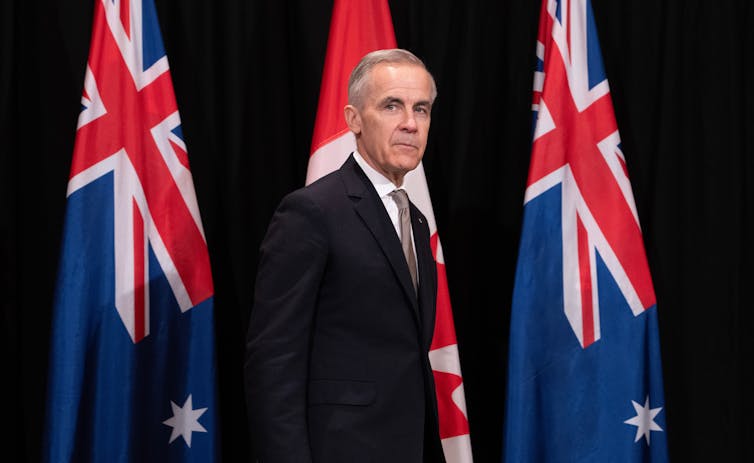
Canadian Prime Minister Mark Carney issued a stark warning in his address to the Australian parliament. The post-war global order is “breaking down[1]”, he said, and middle powers like Canada and Australia risk subordination due to their integration with great powers like the United States.
But how entangled is Australia with the United States, and is Canada’s path the one we should follow?
Canada and Australia are “strategic cousins[2]”, with many commonalities and shared interests. Both countries span the breadth of continents and face the Pacific Ocean. Both are free-market, common-law federations, founding members of the United Nations, Five Eyes partners, and extremely close US allies.
And both are middle powers that are active in international institutions and have been beneficiaries of the rules-based international order they helped create.
Yet, when it comes to the relationship with the US, there are some differences. Australia has long had a “fear of abandonment[3]” from the US, while Canada has historically been worried more about entrapment and the vulnerability of its sovereignty.
The Canadians’ concern stems from their long shared border with the US: if they are unable or unwilling to defend their own borders, the US could do it for them[4], whether they liked it or not.
Under successive prime ministers, however, Canada’s defence spending has atrophied[5] to the point where US President Donald Trump humiliated Carney’s predecessor as a mere “governor” of the “51st state”[6].
Canadians were incensed[7], their sense of honour tarnished. That sentiment has been reinforced by Trump’s arbitrary tariffs[8] on Canada. Carney’s middle power push needs to be viewed somewhat through this lens.
And though Canada is looking to diversify its partnerships with other middle powers (including Australia[9]), it can’t wean itself completely off trade with its neighbour. Nearly 80% of Canadian exports[10] go to the US.
So, Canada’s enduring interests remain closely intertwined with those of the US, even though it doesn’t feel that way right now.
Why Australia can’t replace the US so easily
Australia has long maintained a boutique defence force[18]. With the strong US alliance in place, Australia doesn’t need to spend too much more on defence or enact compulsory national service. It just needs to ensure its military is high-tech and interoperable with its allies.
This model relies on trusted and ongoing access to the US military for hardware (warships, aircraft, tanks, air and space defence systems) and software (the technology to operate these systems and build robust intelligence gathering and cyber defence capabilities).
This involves collaborations with a range of US firms and the expansion of a national security innovation base[19] in Australia, part of the AUKUS agreement.
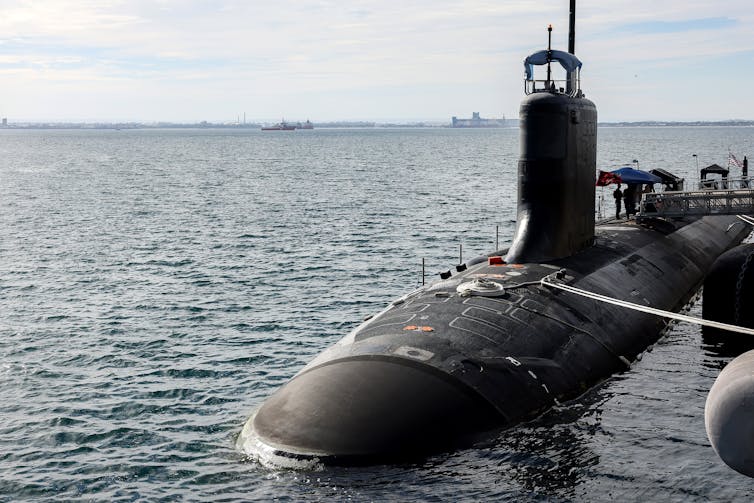
Meanwhile, Australian sailors have been training at US naval facilities[20] and are now crewing US nuclear-propulsion submarines. Under AUKUS, these subs will be stationed at the HMAS Stirling naval base in Western Australia as part of the Submarine Rotation Force West[21], starting next year.
The US and Australia also operate the Joint Defence Facility at Pine Gap, a signals intelligence surveillance base that provides crucial insights into the Indo-Pacific and beyond. Successive Australian governments[22] have viewed this facility as worth the investment.
All of this shows how closely tied Australia is to the US from a military technology, equipment and intelligence standpoint. Finding alternatives to the US would be expensive, as would running legacy systems in parallel for decades.
The principal sources of alternative kit – among them, South Korea, Japan, Sweden and Germany – are all US allies, as well.
Some pundits[23] have speculated that a more independent Australian foreign and defence policy would cost upwards of 4–5% of GDP to sustain. I believe it would cost considerably more.
Conceivably, Trump could weaponise these connections with Australia. However, Australia is not viewed in the same way as Canada on national security matters. The US administration has a keen appreciation[24] of Australia’s importance in generating a deterrent effect in the Indo-Pacific.
Taking a more aggressive approach towards Australia would also bring incalculable harm to US interests[25] in the region. Given what’s at stake, that remains highly unlikely.
How to be less dependent
In 2024, I wrote a paper[26] exploring ways Australia can better respond to the “polycrisis” we face today. This includes the challenges posed by a changing climate, the green industry transformation, overstretched health services, deepening geopolitical shifts, and the growth of artificial intelligence.
I proposed a national institute[27] to survey Australia’s options, and an incentivised but voluntary scheme for community and national service[28]
But addressing these challenges also requires working more closely with our neighbours.
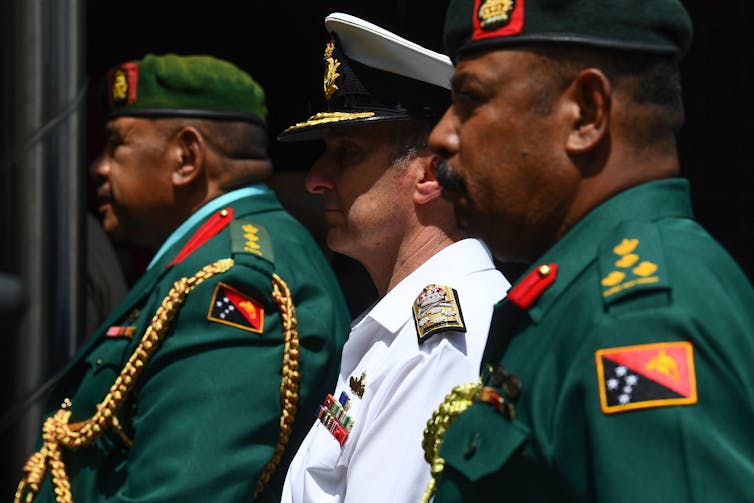
As part of this, we need a more muscular and sophisticated military force[29] closely tied to our neighbours. This would bolster measures already being pursued in the Pacific, such as:
Australia is also taking steps to deepen security ties with Indonesia[30]. I’ve proposed a future “regional maritime cooperation forum[31]” starting with Australia, New Zealand, Singapore, Indonesia and Malaysia that could collaborate on issues ranging from border security to intelligence, as well.
With so many shared interests and concerns, we can deepen ties with Canada, as well. The joint statement by Carney and Albanese[32] last week outlines a substantial range of opportunities for expanding cooperation in critical minerals, defence and security, and strengthening institutions.
Australia is a middle power with small-power pretensions. It must manage its enduring US alliance ties while bolstering other arrangements in the region and beyond.
Working more closely with Canada would help ensure we can be a more confident, self-reliant regional leader, stepping forward in a crisis when others are reluctant. The upturned world order is an opportunity to just that.
References
- ^ breaking down (www.bbc.com)
- ^ strategic cousins (www.mqup.ca)
- ^ fear of abandonment (www.blackincbooks.com.au)
- ^ US could do it for them (link.springer.com)
- ^ atrophied (www.cbc.ca)
- ^ “governor” of the “51st state” (www.nbcnews.com)
- ^ Canadians were incensed (www.ndtv.com)
- ^ arbitrary tariffs (www.cbc.ca)
- ^ including Australia (www.pm.gc.ca)
- ^ 80% of Canadian exports (www.scotiabank.com)
- ^ new series (theconversation.com)
- ^ National Security Strategy of 2025 (www.whitehouse.gov)
- ^ robust military deterrence (yalebooks.yale.edu)
- ^ more invested in Australia (www.state.gov)
- ^ articulated (www.internationalaffairs.org.au)
- ^ dependent (archive.org)
- ^ independent (www.mup.com.au)
- ^ boutique defence force (www.skynews.com.au)
- ^ national security innovation base (www.ussc.edu.au)
- ^ training at US naval facilities (sentry-magazine.com)
- ^ Submarine Rotation Force West (www.asa.gov.au)
- ^ Successive Australian governments (www.minister.defence.gov.au)
- ^ Some pundits (www.blackincbooks.com.au)
- ^ keen appreciation (yalebooks.yale.edu)
- ^ US interests (www.pacom.mil)
- ^ wrote a paper (sldinfo.com)
- ^ national institute (policybrief.anu.edu.au)
- ^ scheme for community and national service (www.policyforum.net)
- ^ more muscular and sophisticated military force (www.theguardian.com)
- ^ security ties with Indonesia (www.foreignminister.gov.au)
- ^ regional maritime cooperation forum (eastasiaforum.org)
- ^ The joint statement by Carney and Albanese (www.pm.gov.au)
Authors: John Blaxland, Professor, Strategic and Defence Studies Centre, Australian National University