Homelessness has been framed as a housing problem in NZ. The reality is more complex
- Written by: Weekend Times
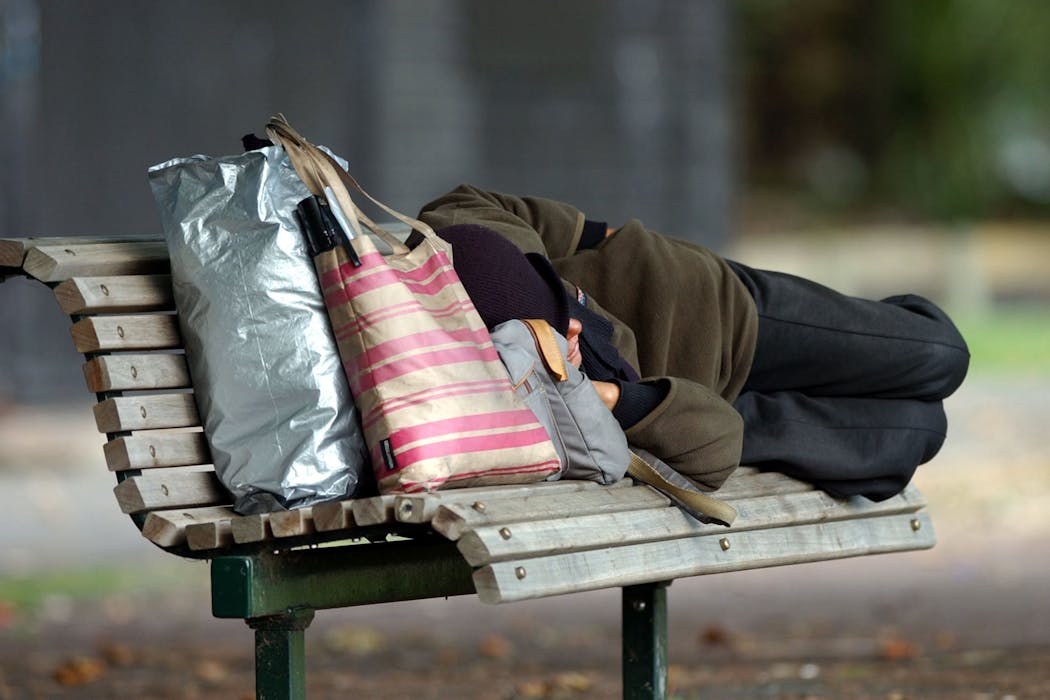
When New Zealand’s government recently earmarked an extra $14.5 million to support people sleeping rough, it underscored the scale of the country’s homelessness crisis.
Even if statistics suggest
the picture is improving in some regions, homelessness is still at record levels nationally, with New Zealand reporting one of the highest rates in the developed world.
The latest investment is sure to be welcomed by advocates and front-line agencies grappling with this complex issue. But, at least in the country’s largest city, it is unlikely to be solved by more funding for housing providers alone.
In Auckland, our research has found homeless people are confronting gaps between public services, from housing and income to health and justice. When these systems do not work together, unhoused people can be pushed further into crisis rather than helped towards stability.
This is hardly a new issue. Service providers themselves have long called have called for a more coordinated response.
But our insights, soon to be published, add what has often been missing from the public discussion: the perspectives of those using these services and experiencing the disconnection everyday.
They also remind us that homelessness is much more than a housing issue, but a systems problem.
Falling through the gaps
To better understand the experiences of Auckland’s homeless, we interviewed 55 people from across the region facing higher – but also differing – housing needs. These included Māori, Pasifika, Rainbow, neurodivergent and disabled people, as well as women and mothers.
Many participants in our study described interactions with social services stretching back to childhood.
One of the biggest challenges was navigating a system with no clear entry point or coordinated pathway. Instead, people in crisis were expected to identify the right services, work out whether they were eligible and coordinate support themselves while being in crisis.
Participants also described repeated breakdowns between housing, health, income and justice agencies, often leaving them to manage complex situations on their own.
One man, for instance, had to breach his police curfew simply to visit the Ministry of Social Development offices to access a phone, join the housing register and search for emergency accommodation. We also spoke with a transgender woman who had spent the previous night sleeping at a bus stop after being released from prison into homelessness.
Another person was hospitalised but failed to notify the Ministry of Social Development. Their benefit was reduced, rent went unpaid and they eventually lost their housing as well as all their belongings – reflecting that each agency saw just one part of this person’s complex circumstances.
Stories like these were not uncommon. After repeated attempts to find help, many described becoming discouraged and eventually giving up. In some cases, these repeated setbacks led people to accept homelessness and hardship as an unavoidable part of life.
Barriers and burdens
If navigating services was difficult enough for those we interviewed, technology often made it even harder.
Many services now rely on online portals and digital communication. But many participants lacked a phone, internet access or the digital skills needed to use them. Losing a phone – or having one stolen – could mean the difference between keeping appointments, receiving messages, filling in forms and staying connected with support services.
This should remind agencies that, as more of their services move online, they will need to ensure people are not locked out simply because they lack access to technology or the skills to use it.
Keeping relationships with individual support workers amid high staff turnover was another common challenge. Trust is central to effective support, but many participants described having to repeatedly recount deeply personal and traumatic experiences as staff came and went. It also meant the quality of support sometimes depended on the individual worker they dealt with, rather than being consistent across the service provider itself.
Learning from lived experience
In announcing the latest funding boost, Housing Minister Chris Bishop described New Zealand’s housing system as “broken”, saying the problem becomes more severe during challenging economic times.
Our findings, however, suggest a much more complicated reality. The picture that emerged was of people trying to navigate a fragmented network of services that often responds too late and creates barriers to stability and independence.
Many organisations working in the sector have already called for a more coordinated social service system that is less vulnerable to policy changes, funding cycles and institutional silos. While examples of better coordination already exist, our research suggests there is still much more to be done.
The people best placed to identify where the system is breaking down are often those trying to navigate it. Their experiences show where links between services need improving – and where people are still falling through the cracks.
Cordelia Stewart receives funding from Auckland City Council and Auckland University of Technology.
Suzette Jackson does not work for, consult, own shares in or receive funding from any company or organisation that would benefit from this article, and has disclosed no relevant affiliations beyond their academic appointment.