NZ’s floated social media ban for under-16s could unite two groups that rarely agree
- Written by: Weekend Times
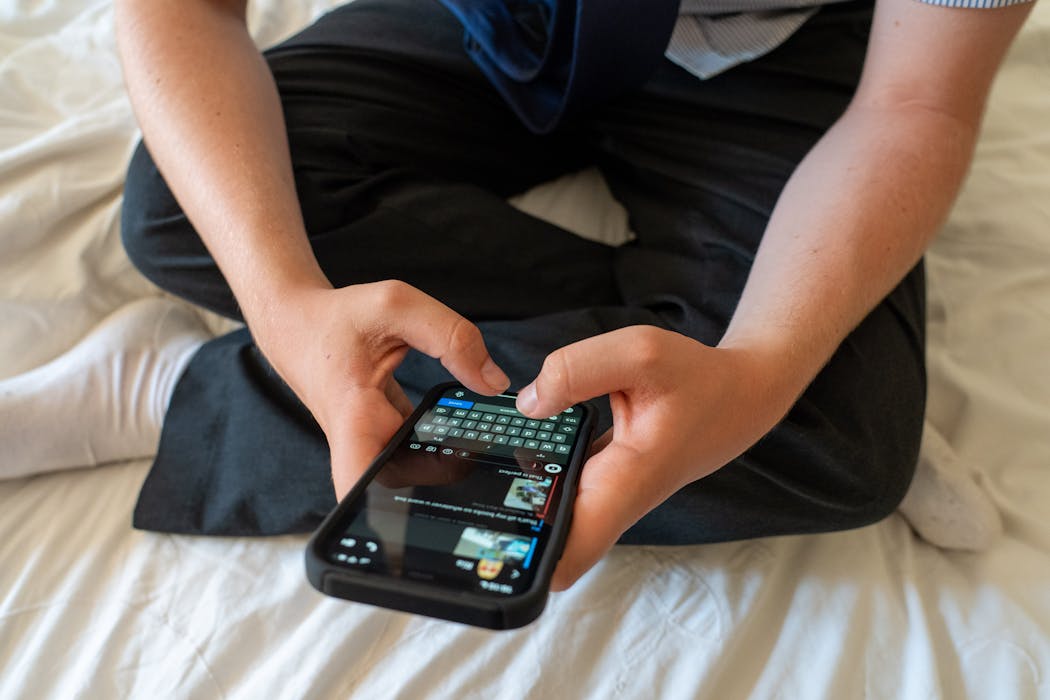
National’s push for a social media ban for under-16s has produced a surprising possibility in New Zealand politics.
After struggling to secure support from parts of its own
coalition, National has increasingly looked to Labour to help advance the policy. The politics are unusual.
In an era of growing polarisation, both major parties appear broadly aligned on restricting young people’s access to social media, even as they disagree on many other issues.
Prime Minister Christopher Luxon has repeatedly sought bipartisan backing, while Labour leader Chris Hipkins has signalled openness to an Australian-style approach.
Yet the more interesting political story may lie elsewhere. If a ban moves forward, opposition is unlikely to divide neatly along left-right lines. Instead, it may draw together an unusual collection of critics who rarely find themselves in agreement.
The Act Party has raised concerns about privacy, age verification and government overreach. The Green party has focused on unequal effects, particularly for young people who rely on online spaces for community, information and support.
These unusual alliances reflect a fault line that cuts across the traditional left-right divide: between policies designed for the majority and concerns about what those policies overlook.
Who does a social media ban work for?
For National and Labour, support for a ban makes political sense.
Most parents worry about social media, and politicians are under pressure to respond. A ban is easy to explain: young people are already restricted from gambling, alcohol and other potentially harmful activities.
The proposal also draws on a familiar image of childhood, one centred on face-to-face friendships, sport, school and family life.
Whatever its accuracy, that vision has broad appeal because it is built around the experience of the average child. Two other groups, however, aren’t so comfortable with the idea.
One group consists of technology experts, privacy advocates, internet governance researchers and free speech campaigners. Their focus is not on whether social media can be harmful, but on the systems needed to enforce a ban.
They’re likely to be asking how age is verified, who stores the information and what new forms of monitoring become normal once they’re introduced.
Recent debates over age assurance, digital identification and even rumours of VPN restrictions show how quickly conversations about child safety can expand into broader questions about privacy and internet freedom.
A system built to identify whether someone is 15 or 16 may also become a system for reshaping anonymity, access and participation online.
The second group of potential opponents are people whose lives do not fit neatly into conventional assumptions about a normal childhood.
Some are disabled, neurodivergent, queer or geographically isolated. Others rely on online spaces for forms of friendship, support and identity exploration unavailable offline.
For these young people, social media is not merely entertainment. It can be infrastructure too.
Research on LGBTQ+ and other marginalised young people has found that online spaces can provide access to community, peer support and identity exploration that may not be available offline. For some, the internet is one of the few places where they can safely find people with similar experiences.
A policy designed around the average teenager may therefore affect them differently. What appears to one person as a minor inconvenience may appear to another as the loss of a vital social resource.
This helps explain why many youth advocates are sceptical of blanket restrictions. They are not defending social media companies. Nor are they denying that online spaces can be harmful.
Rather, they are asking what happens to those who depend most heavily on digital connection when access is restricted in the name of protecting everyone.
Strange bedfellows
Normally, libertarians and social justice campaigners occupy different political worlds.
Yet on social media bans they have arrived at similar concerns from very different starting points. Those tech and privacy-focused observers ask what a ban might do to the internet. And those groups outside the mainstream ask what a ban might do to the people who rely on it most.
If National and Labour unite behind a ban, social media prohibition could become a rare example of centrist politics in New Zealand. The major parties would occupy the same position, while opposition would come from the edges rather than the centre.
In that scenario, privacy advocates, libertarians, disability advocates, queer communities and youth campaigners may discover a temporary alignment of interests.
Not because they share a common political philosophy, but because they are asking questions largely absent from the mainstream debate.
Whether such an alliance could stop a ban is doubtful. A bipartisan National-Labour majority would likely have the numbers. But it would reveal an unusual political configuration: a centrist consensus confronted by critics who disagree on almost everything except this policy.
The deeper divide may not be between left and right. It may be between a politics that prioritises solutions for the majority and one that asks what those solutions leave behind.
Alex Beattie receives funding from The Royal Society of New Zealand for a Marsden-Fast Start project called Saving Screen Time.