


Return of the Red Scare: how the US right is weaponising the word ‘communism’
- Written by: Weekend Times
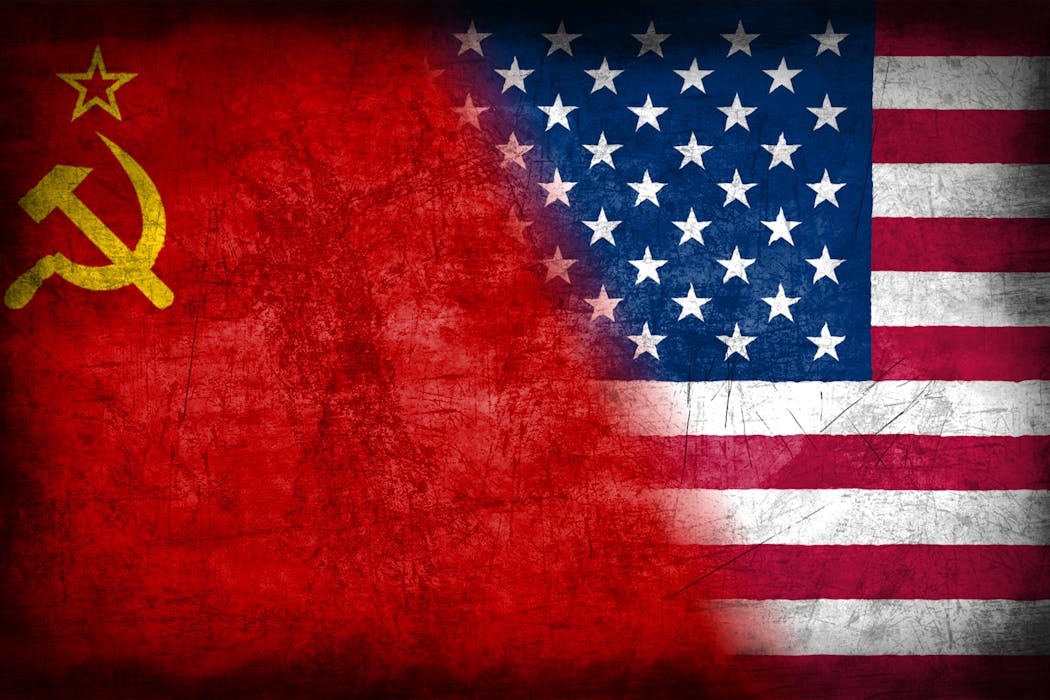
“Communism is no longer a far fetched threat,” speaker of the US House of Representatives Mike Johnson warned on social media recently. “It is here on our SHORES!”
Johnson
is hardly alone. After candidates associated with the Democratic Socialists of America (DSA) movement won several Democratic primaries in June, President Donald Trump alone invoked communism 81 times within two weeks.
He’s called opponents “hardcore, godless communists” and described communism as a cancer that must be cut out.
Around the same time, the US State Department published a 100-page report portraying US journalists, trade unionists and activists as participants in a Cuban-communist influence network.
Just days earlier, the Trump administration had hosted a “Ministerial on the Resurgence of Political Terrorism” attended by representatives from 65 countries.
At the meeting, Trump’s allies focused exclusively on political violence from the left, despite evidence of greater danger from the right, warning of violent “Marxist revolutionaries” and “gulags”. The Republican Party and its media supporters are now on-message and sounding the alarm.
Is America under threat of communist revolution? Definitely not. But the DSA victories created the opening to label all Democrats as communists – and potentially influence crucial midterm elections in November.
One word, four dimensions
Linguistically, the term communist is being used as a “dysphemism” – a deliberately disparaging label substituted for a more accurate or neutral one.
Its power comes from a kind of connotative compression, meaning a word squeezes a bundle of ideas and emotions into one small package. The “communist” label conflates four dimensions:
economic: how much should an economy rely on private ownership, public ownership and government regulation?
political: who governs, how are decisions made, and can rulers be removed?
religious: does a political philosophy require religious belief, atheism or neither?
and the means used to achieve political change: elections, deliberation and peaceful protest versus coercion, violence and revolution.
Twentieth-century communist regimes often combined state control of the economy, one-party dictatorship and official atheism, and many came to power through violent revolution.
Those historical precedents allow modern Republicans (and others) to take a limited economic resemblance between democratic socialism and old-school communism and then smuggle in all the remaining ideological baggage.
Democratic socialists favour greater public ownership and regulation. Therefore, the insinuation goes, they (and all Democrats) must also favour dictatorship, godlessness and violent revolution.
It’s a semantic bait-and-switch.
Socialism looks different outside America
Seen from New Zealand, Australia or Europe, much of the “radicalism” of the DSA-aligned candidates looks unremarkable.
Universal access to affordable healthcare, a decent minimum wage, public education and government retirement benefits are not preparations for proletarian dictatorship. They are ordinary features of mixed economies.
The Nordic countries that democratic socialists want to emulate combine private enterprise and competitive democracy with extensive public services, relatively high taxation and strong unions.
Even New York Mayor Zohran Mamdani, America’s best-known democratic socialist, recently announced more than 50 reforms to reduce red tape for small businesses. Yes, the socialist is helping private enterprise succeed.
Meanwhile, the supposedly free-market Trump administration has taken or announced ownership stakes in 30 private companies. Trump has also reportedly pressured corporations to make large donations to his own pet projects.
So who is the communist here? Neither, of course. Both favour government intervention in a market economy – just different kinds of intervention for different purposes.
Nor do DSA-backed candidates (or even most Democrats) necessarily endorse every plank in the DSA national platform, which is what House Speaker Mike Johnson recently claimed.
Treating the most radical DSA proposal as every Democrat’s position is like claiming all Republicans want state legislatures — not voters — to choose US senators, just because ten Republican representatives have proposed exactly that.
An old scare returns
America has been here before.
The first Red Scare followed the Russian Bolshevik Revolution of 1917. The Palmer Raids of 1919 and 1920 (named after attorney general A. Mitchell Palmer) saw thousands of suspected radicals and immigrants arrested, many without warrants.
In the second Red Scare of the 1950s, Senator Joseph McCarthy used allegations of communist association to destroy careers and silence dissent. The accusation often mattered more than the evidence.
During the Cold War, communism evoked not just a political and economic system, but ideas about revolution, atheism, dictatorship, subversion and treason. Political opponents became enemies within.
That is what today’s rhetoric seeks to revive. But the analogy is an even greater stretch now – and perhaps a sign of desperation, given the timing.
Trump’s approval ratings have fallen to record lows in several recent polls, with the Iran war, high consumer prices and the Epstein files controversy dominating headlines.
With the midterm elections approaching, Republicans are searching for a counterattack. They have been testing the “communism” message with focus groups, and apparently concluded it’s their best weapon.
But while warning that “godless communists” are poised to seize power may be desperate, it is not harmless.
Conflating reasonable political argument with radical extremism stigmatises political opponents as dangerous outsiders rather than fellow citizens. Rational debate becomes impossible.
Communism is not taking over America. But another Red Scare may be.
Theodore E. (Ted) Zorn is a registered Democrat and is a member of Democrats Abroad New Zealand.