Will building an integrated ‘Anzac force’ with Australia cost NZ strategic freedom?
- Written by: Weekend Times
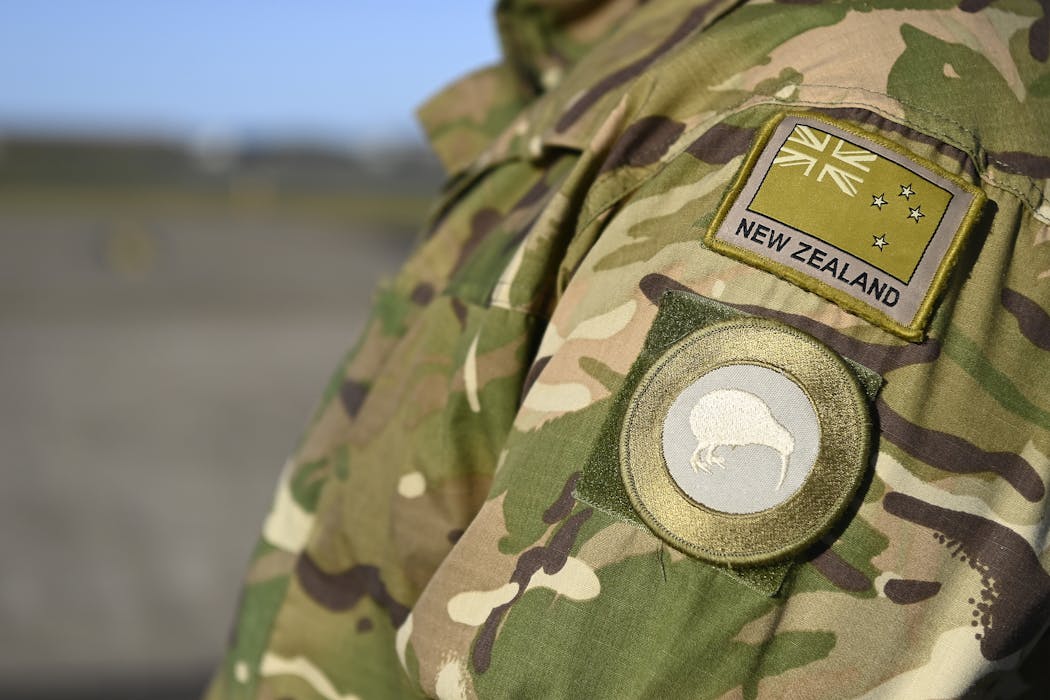
As New Zealand embarks on its largest defence build-up in decades, two questions loom: how closely should it integrate with Australia’s military and how much should it spend?
While New Zealand has committed to lifting defence spending from just over 1% of GDP to 2% over the next decade, US Secretary of War Pete Hegseth recently accused the country of “freeloading” as a partner, arguing at this year’s Shangri-La Dialogue that even 2% was “not enough”.
Instead, he said, 3.5% had become the new global standard. Yet political discussion in New Zealand has focused less on whether 2% is the right target than on whether the country can afford to reach it.
At the same time, New Zealand is aligning ever more closely with Australia under a strategy to build an increasingly integrated, interchangeable “Anzac force” by 2035.
Asked on TVNZ’s Q+A programme how New Zealand could refuse to join an Australian war if its forces were built this way, Defence Minister Chris Penk said they could simply be recalled home, under what he described as “optionality”.
These two debates have largely been treated as separate questions. But they are in fact closely connected – and each has implications for New Zealand’s long-held freedom to act independently.
What the numbers don’t tell us
Before debating whether New Zealand should spend 2% or 3.5% of GDP, it’s worth considering where those targets came from.
Neither was developed from an assessment of New Zealand’s defence needs. Both originated within NATO, changing in response to developments in Europe rather than New Zealand’s own strategic environment.
Nor does a GDP target capture what matters most. It measures how much a country spends, not whether that spending bolsters sovereign capability or builds forces designed to operate within someone else’s military.
On the question of how much freedom New Zealand retains to act independently, it is silent.
That is why it’s important to look beyond how much New Zealand spends – and to ask what it is spending the money on. While much of today’s defence investment is about building capability, it also guides how New Zealand’s forces will operate alongside Australia’s.
This is where the two defence debates meet.
Equipment bought to plug into Australian and US systems counts towards the spending target exactly as sovereign capability does. A government under pressure to reach a number therefore has every reason to buy the most deeply integrated equipment available.
For decades, the objective for defence capability has been interoperability: ensuring New Zealand and Australian forces can operate effectively together while remaining independently commanded.
But that is now changing.
The 2024 Closer Defence Relations statement placed an “increasingly integrated ‘Anzac’ force” at its centre. By March this year, Wellington and Canberra had committed to “deep interoperability and interchangeability” through common procurement.
Interchangeability goes further than interoperability. Rather than simply allowing two militaries to work together, it designs particular New Zealand units to plug into Australian force structures and, at times, stand in for them.
Whether New Zealand can refuse to join its neighbour in war, as Penk was asked, is not in doubt. But once its forces have been designed into Australian planning, saying no becomes politically and strategically more costly.
The cost of integration
None of this argues for New Zealand to spend less on defence, nor to stand further from Australia. Closer trans-Tasman alignment is settled cross-party policy. But decisions about interchangeability are not.
ANZUS, the overarching text that frames New Zealand’s decisions when a crisis arrives, was drafted in 1951. Article IV commits each party only to act “in accordance with its constitutional processes”. But it says nothing about the procurement, force design and institutional lock-in that may already have influenced that decision long before any crisis emerges.
Australia’s new security agreements with Fiji and Papua New Guinea enlarge the circle it is committed to help defend. New Zealand has signed neither, so is under no legal obligation to participate.
But a force designed to slot into Australia’s makes it more likely New Zealand will be expected beside it if those commitments are called on. Integration narrows the distance between legal freedom and political expectation.
New Zealand knows how to make decisions of this kind in the open. The nuclear-free policy was debated for years, written into law in 1987 and accepted despite the consequences for New Zealand’s closest alliance. It was decided democratically, and the country owns it.
Capability decisions above a certain threshold should therefore come before parliament with an explicit assessment of how they affect New Zealand’s freedom to act independently – in much the same way as international treaties are accompanied by a national interest analysis.
New Zealand is still debating what it should join. But it also needs to ask what it has already committed itself to, one procurement decision at a time, and why it is now debating a spending target that was never its own.
Robert-John Broughton does not work for, consult, own shares in or receive funding from any company or organisation that would benefit from this article, and has disclosed no relevant affiliations beyond their academic appointment.