

Is NZ’s foreign policy ‘realism’ working? Why the next government faces a real choice
- Written by: Weekend Times
The 2026 general election is taking place as the world experiences a tumultuous transition.
Russia is sustaining a brutal effort to annex Ukraine, the Israel-Palestine conflict
has devastated Gaza and the West Bank, China’s Pacific presence is growing, the United States is ensnared in a war with Iran, and the tempo of climate change is quickening.
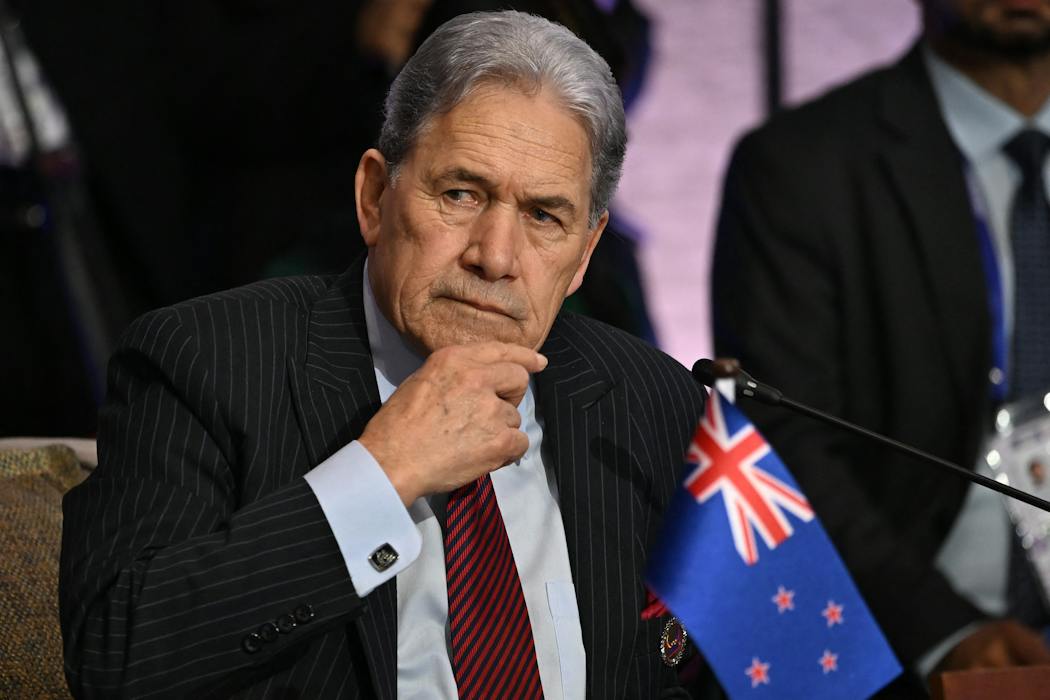
With the core principles of an independent New Zealand foreign policy – support for a rules-based international order and multilateralism – under sustained attack, Foreign Minister Winston Peters recently reflected on his government’s response during the past three years.
He told the Institute of International Affairs the country had faced “the worst international conditions since 1945”.
The challenges it faced included the “return of trade protectionism”, a United Nations hamstrung by the “abuse of the Security Council veto”, and “unwelcome geopolitical manoeuvring in the Pacific”.
The “order-shattering nature of the geostrategic environment”, Peters said, marked a shift “from rules to power”. Consequently, the National-led coalition had opted for “quiet diplomacy” and realism based on accepting “the world as it is, not how we wish it would be”.
This realism, Peters claimed, has “left the next government with more choices, and with more agency” and had prudently served “our country’s national interests”.
But there are substantial reasons to be sceptical about this diagnosis of the contemporary global environment.
Selective realism
The geopolitical rivalries of the 21st century are simply not comparable to those of the Cold War era when the world teetered on the brink of nuclear war on at least three occasions (during the 1962 Cuban missile crisis, the 1973 Yom Kippur war, and NATO’s Able Archer incident in 1983).
The shift from rules to power has been largely confined to three veto-wielding permanent members of the UN Security Council – the US, Russia and China – and their close allies.
Meanwhile, the majority of states are small and middle powers that depend on, and largely adhere to, international rules governing areas such as trade, diplomacy, tourism and scientific collaboration.
And while the government has identified some of the symptoms of global instability, it has been somewhat selective in assigning responsibility to those creating those conditions.
In his speech to the Institute of International Affairs, Peters rightly expressed concern about “Russia’s illegal invasion of Ukraine” and China’s naval exercises and missile tests in the Pacific. But he also welcomed the prospect of expanded US involvement in the Pacific region.
This reflects the government’s seeming unwillingness or inability during the past three years to apply the same criteria to the US, which has also contributed to the declining international situation the foreign minister laments.
In particular, the current US administration under President Donald Trump has shifted deliberately away from an alliance with liberal democracies like New Zealand. Instead, it pursues a global order based on a US-led concert of great powers.
The New Zealand government has had little to say about the Trump administration’s disregard for international law, whether in relation to Gaza, Ukraine, Venezuela or Iran. But that restraint has not spared the economy from the fallout from US trade protectionism and crisis in the Middle East.
In fact, New Zealand has continued to deepen military ties with the US when the ingredients for an alliance – shared values and interests – seem in short supply.
The next government’s choice
The government’s worldview also downplays a major trend of the 21st century – the steady proliferation of urgent issues that pay no heed to national borders.
Climate change, pandemics, transnational terrorism and vulnerable global supply chains are challenges that cannot be addressed without multilateral cooperation – however difficult it is to achieve.
From this perspective, New Zealand’s current “softly softly” foreign policy, especially toward the US, can be seen as anything but realistic. And while the international situation may be alarming, there is also cause for hope.
The three veto-wielding permanent members of the Security Council have intensified geopolitical rivalry, but at a time when their ability to achieve their desired outcomes has declined.
Unilateralism has a poor track record in the 21st century, as the misadventures in Iraq, Ukraine and now Iran have shown.
The post-1945 world, based on the domination of two or three great powers, is dying. The new order, in the words of Norway’s Foreign Minister Espen Barth Eide, struggles to be born.
This is the transition we are living through. But small powers such as New Zealand are not powerless in this global context. The next government, therefore, has a choice to make.
It can continue to tacitly normalise the destruction of international law by not applying the same moral and legal standards to every complicit major power.
Or it can begin the task of realigning its foreign policy to deepen cooperation with other small and middle powers that, like New Zealand, depend on a functioning international rules-based order.
Robert G. Patman does not work for, consult, own shares in or receive funding from any company or organisation that would benefit from this article, and has disclosed no relevant affiliations beyond their academic appointment.