

Politics with Michelle Grattan: Ed Husic urges brakes on data centres ‘swamping’ Australia
- Written by: Weekend Times
Australia is “going too fast” in building data centres and “been swamped by US tech” expanding here to avoid growing American community opposition, former
industry minister Ed Husic has warned.
The outspoken backbencher – who was responsible for the federal government’s artificial intelligence (AI) policy until May last year – told The Conversation’s Politics podcast it still wasn’t clear whether the government’s planned national data centre standards on energy and water would apply to centres being built now.
Husic also shared his views on needing to substantially lift Australians’ lagging wages, the need for a tougher stance against Israel’s actions in Gaza, and his concerns Labor had learnt “the wrong lessons” from the turmoil of the Rudd-Gillard years.
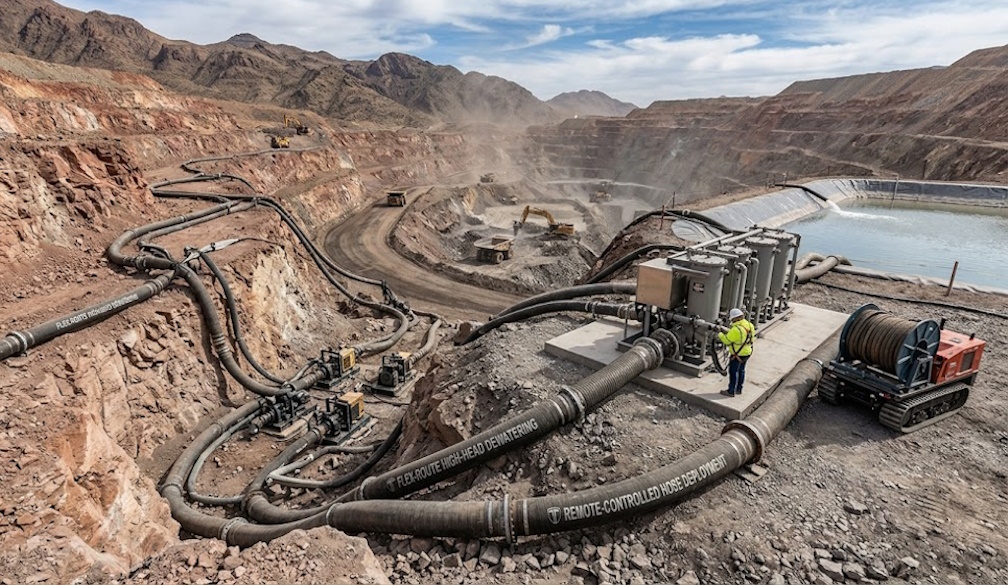
‘Data centres vs homes’ in Australia
The Albanese government has become increasingly engaged with the emerging AI sector, trying to balance how to ensure adequate guardrails around AI while not locking out crucial investment.
Husic said “while I’m much more relieved about us moving from voluntary to mandatory guard rails or standards on data centres, it’s taken us a while to get there” – saying the Albanese government had “waited too long to get to this point”.
There are a lot of data centres being built now that the question is whether or not our proposed standards will capture them. And I think a lot communities want to see that all data centres that are being built since we’ve announced the standards will be captured by them, so that there’s a lot more confidence that we can get this work done.
Husic said that the race to build more data centres was happening “at a time where we don’t have enough construction workers to build the homes we need”, and without enough clarity on the vital power and water supplies they require.
We are going too fast. And I’m concerned some states have been in a race to win the medal of ‘data centre capital of Australia’.
Some states, for example South Australia, have argued this. There was a time it’d be a life-threatening choice to stand between a South Australian and a glass of water in a state that is very conscious of water supply. For them to argue that they want more data centres, in a state where water supply is an issue for [data centre] facilities that use so much water – there should be a pause for thought.
Husic also said it was environmental and economic “lunacy” for states like Queensland to propose using coal and gas to power huge data centres.
Investing in more homegrown AI
Husic wants to see more local investment in Australian AI firms to guarantee we’re not entirely reliant on global companies for the technology.
I think most Australians coming out of the pandemic recognise that we cannot be left vulnerable to dysfunctional supply chains […] We should be developing local capability to sustain Australian business. And it is not an impossible or Herculean task to do so, because […] I’ve seen some of these AI firms in Australia developing AI products themselves that are orders of magnitude cheaper than their US rivals. And we should have more options on the table, as opposed to just doing the biggest deals with US tech.
I’ve been seeing this for years, where we’ve sought to have US tech locate here – and all we’ve got are sales and marketing offices, not a genuine investment in capability development.
[…] I’ve been watching this space for over ten years. We had China poach a lot of Australian thinkers on AI to go and help them develop their AI capabilities. The US twigged that they needed to keep pace, gthey started taking Australian talent over to the other side of the Pacific. And the only ones who didn’t back Australian talent were Australian governments, in terms of putting them to work to develop local capability. I think that’s got to change. And we have to invest in it, and we have to use hard money to make that happen.
On pushing for higher wages
Husic chairs the House of Representatives’ economics committee. He said he wants to challenge the economic orthodoxy that means Australians’ real wages had fallen behind rising costs of living over the past five years.
When you look at the reports about what happened to incomes during COVID, and during a two-year period between 2021 and 23, if you’re on a A$90,000 equivalent income for a year, you had a 5% hit on your income. And the thing, is the repair process based on even [Reserve Bank of Australia] stats would be up to 2036 for it to build back to where it was in 2021.
[…] Inflation is not rising because of wage increases. Inflation is rising because of capacity constraints.
[…] This is the the orthodoxy I want to challenge. And I know I’m being quite radical in doing so. And I know people will say it’s irresponsible to [push for higher wages at a time of high inflation]. But you know, we’ve had the war in Iran, we’ve been told petrol prices would go up. They went up – and so did the profits of the major companies providing oil.
We were told if petrol goes up, fuel prices go up, grocery prices will up. Woolies, Coles recording huge profits, while people have had to pay for that.
And the OECD has said that that type of focus on profit has driven inflation.
Read more: Real wages have gone backwards. Even earning $100,000 isn’t what it used to be
Why voters want to ‘kick the system’
Husic said business should be willing to do more to pay higher wages – and ordinary Australians are increasingly frustrated with a system that’s been failing them.
You can understand why Australians aren’t very happy about where they’re at. I have people turn up to me in the street saying ‘you know I feel like […] my nose is just above water, that one big bill will knock me out’.
[…] I do think that we need to look at how we can improve the bargaining position of employees, ensure that the [wage] outcomes are better. And I’ve got to say, if the political system is unable to find a way to do that, we will see more people move to other parties like One Nation. Because people want to give a kick to the system that is not finding solutions to the everyday problems that they’re experiencing.
Australia’s stance on Gaza
Husic is one of only a few Muslim federal members of parliament. On Israel and Gaza, he’s not satisfied the federal government has gone anywhere near far enough.
I’m proud of the fact that we’re the first Australian government to recognise the state of Palestine.
[…] Am I comfortable with what else we’re doing? No. I mean, I’d rather be upfront with you […] I think the Netanyahu government has been prepared to ride out criticism. It has shown scant regard for international humanitarian law. The number of, in particular, innocent Palestinians that are being killed, and especially think about young children, babies, that have been killed through what’s happening there.
[…] So, no, I’m not happy. I think we need to suspend trade with the illegal [Israeli] settlements. I think we do need to, for instance, suspend our defence and diplomatic arrangements in Tel Aviv […] I think we can do more. I’m disappointed we’re not. And I think the expectation of our party base and supporters is that we do more.
Labor has learned ‘the wrong lessons’
Husic said the Rudd-Gillard years had made Labor too reluctant to argue about the big issues facing the country, for the sake of avoiding perceived instability.
I don’t think that we need to be involved in a rolling brawl as a government. I think governments do win points for stability, absolutely. And I think that has been a hallmark of this government. But I think the wrong lessons of previous instability have been learned […] particularly that period of Rudd-Gillard years. Those differences were not driven by policy, but by personality.
[…] I think it’s important that we have those discussions [on difficult issues …] Just because we’ve had that argument doesn’t mean we’re riven by division.
And I think if I may ever so gently say that the press gallery maybe needs to take a different view too: that just because those debates occur in government does not mean that this is a government in chaos […] This is part of the reason why people won’t speak up, they’re worried that it’ll be written up as government in chaos.
But you saw the Hawke-Keating governments have those big arguments. Five elections in the trot. So it was 1983, ‘84, '87, '90, '93. I mean, we won five terms in office – but we had those big debates. We were able to win successive elections and we were able to change the country as a result. I think there’s something to be learned from in that.
*This interview was recorded before news broke about the attack on independent member for Indi, Helen Haines.
Michelle Grattan does not work for, consult, own shares in or receive funding from any company or organisation that would benefit from this article, and has disclosed no relevant affiliations beyond their academic appointment.