

What really drove NZ’s election overhang and what can be done about it
- Written by: Weekend Times
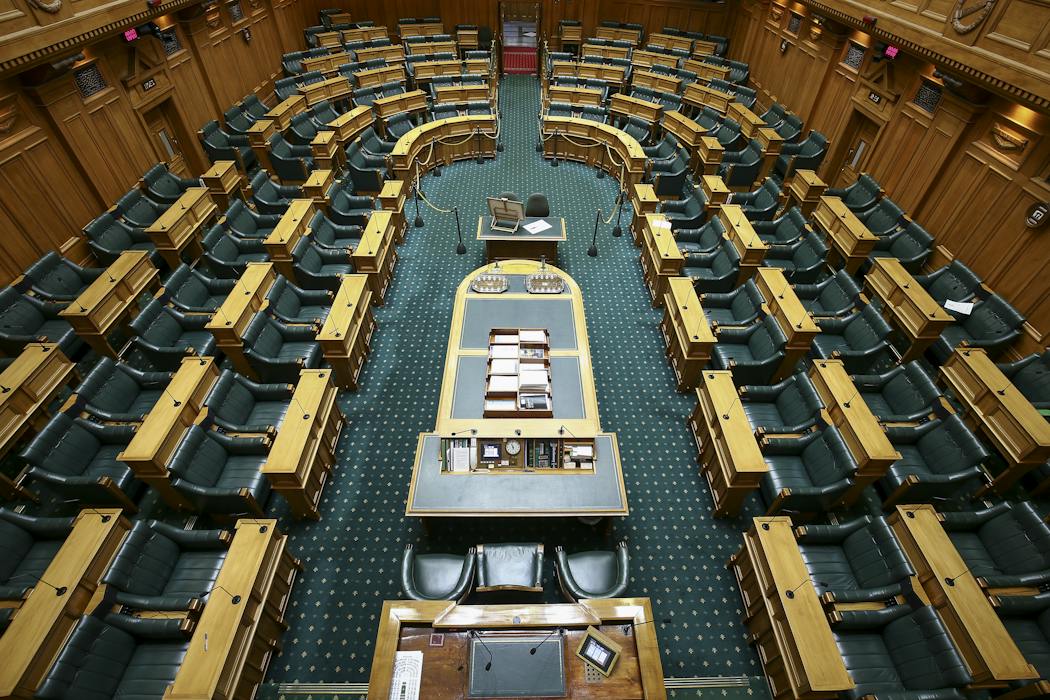
Based on provisional election results, New Zealand’s parliament could grow by up to 11 overhang seats – without accurately representing the proportion of party votes cast.
There
are now growing calls for reform of the mixed member proportional (MMP) electoral system adopted after the 1993 referendum to avoid undermining the legitimacy of future elections.
MMP is based on two votes: one for a party and one for an electorate candidate. The party vote is intended to shape the overall composition of parliament, topping up seats from party lists after the electorate contests have been determined.
Overhang seats are added to parliament when a party wins more electorates than its party vote share entitlement. But for the party vote to have enough seats for this process to deliver proportional representation, there need to be enough list seats available.
In 1986, the Royal Commission on the Electoral System recommended a list to electorate ratio of 60 seats each. But parliament didn’t follow the recommendation and created 65 electorate seats and only 55 list seats for the first MMP election in 1996.
The ratio was not fixed because the number of general electorate seats was set to maintain 16 seats in the South Island. As a result, uneven population growth between the north and south islands led to an increasing number of electorate seats and fewer list seats.
By the 2020 election, there were 72 electorate seats and only 48 list seats. In 2026, because of population growth in the South Island, the number of electorate seats went down slightly to 71 and list seats rose to 49.
The Electoral Act acknowledges the possibility that parties might win more electorate seats than their party vote entitlement. In that case, the number of list seats rises but the calculation to ensure proportionality remains based on a 120-seat parliament.
For example, the Green party was assigned 16 seats on a party vote of 13.3%. But this calculation is made on a baseline of 120 seats, even though parliament will increase to adjust for the overhang of 11 seats. In a 131-seat parliament, the Greens’ seat share represents only 12.2%.
A baseline of 131 seats would give the Greens an extra seat – but also increase the size of parliament to 132. Applying the same formula to the other parties not benefiting from overhang would further increase the list seats and the size of parliament.
The baseline seat total would have to rise accordingly as other parties entitlements were calculated.
Germany’s amendments to MMP
Germany, whose MMP electoral system was the model for New Zealand’s, also encountered this problem as votes for smaller parties rose and larger parties fell, and overhangs became more prevalent.
The country’s constitutional court required an amendment to more fully compensate for overhang. But this led to a huge increase in the number of seats in the German Bundestag, its lower House of Parliament.
In 2023, the law was amended again to cap the size of the house and simply exclude candidates elected in overhang seats. They were ranked by vote share, with those with the lowest share losing their seats. This can leave those electorates unrepresented in the Bundestag.
Two reviews of New Zealand’s MMP system have recommended abolition of overhang seats, but not in a way that could restore proportionality. In fact, this solution would further reduce it.
The 2012 Electoral Commission’s review and the 2023 Independent Electoral Review Committee both proposed the size of parliament should be retained at 120 even if parties gained more electorate seats than entitled by their party vote. The number of list seats would go down, thus further reducing their compensatory role.
This reform could consequently enhance the incentives that promote overhang strategies, encouraging strategic voting that could reduce proportionality even more.
Te Pāti Māori could continue to employ its electorate-vote-only strategy and efforts to promote vote splitting on the right could intensify.
Larger parliament, more list seats
An increase in the number of list seats would go part way to addressing the problem.
The National Party’s provisional overhang of about seven seats is unlikely to have been generated by strategic voting intended to subvert proportionality, except on the very margins.
It is more likely an artefact of a population distribution across electorates that concentrates National votes and disperses Labour votes. Campaigning by Green candidates that split left electorate votes, and the incumbency advantages of National’s many sitting electorate MPs, would also have had an effect.
National’s overhang would probably be almost gone if there were 140 seats in parliament, with matching electorate and list seats of 70 each – the original half-and-half ratio proposed by the Royal Commission.
But this would not address the strategy employed by Te Pāti Māori, or more aggressive and persistent strategies on the right that would almost certainly continue, if only to try to offset that of Te Pāti Māori.
Germany’s solution to the problem almost completely destroys the incentives for the active pursuit of overhang. But it means some electorate candidates initially elected on low vote shares don’t sit in parliament and their electorates are not directly represented.
A unique variation of this model might allow those candidates to sit as MPs, but their party would only be able to cast party votes in the house consistent with its party vote share entitlement. Most significant votes in parliament are now conducted through this process.
A more dramatic solution would be to fuse party and electorate votes, thus moving to a one-vote version of the MMP system. But this would destroy one of the merits of New Zealand’s current model, which allows us to distinguish between our local MP and the party they represent.
Whatever the case, any changes to MMP will require decisions to be made in government and within and between political parties, all of whom have incentives to maintain their power and positions.
But we would all benefit from a system that ensures fair and proportional electoral outcomes that can be accepted as legitimate representations of public preferences.
Jack Vowles receives funding from the Research Trust of Victoria University of Wellington and the New Zealand Electoral Commission.