Neurodiversity can be a workplace strength, if we make room for it
- Written by: Miriam Moeller, Senior Lecturer, International Business, The University of Queensland
Emma can recognise patterns within complex code. James can develop several different solutions when faced with complicated problems. But it is unlikely either will find a job where they can put their specialist skills to work — or any job, actually.
Emma has dyslexia. James has been diagnosed with attention deficit hyperactivity disorder. These conditions mean communicating can be a challenge, particularly in a stressful situation such as a job interview. They may also find it difficult to work in a typical office environment with noise and bright lights.
But often the significant challenges is other people assuming they will be less capable or difficult to work with.
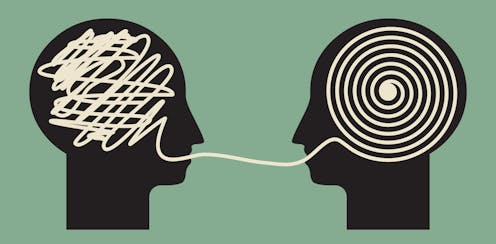
About 15-20% of the global population[1] are “neurodiverse”. This term, coined by Australian sociologist Judy Singer[2] in 1998, conveys the idea[3] that the neurological differences shaping how people think and interact are natural variations to the human genome. Neurodiversity therefore isn’t something to be “fixed” but understood and accommodated.
But despite this understanding, and the gains made more generally in promoting workplace diversity, prejudices keep the employment prospects for neurodiverse individuals shockingly low.
The cost is personal — denying individuals the chance to do meaningful work — as well as social, sending individuals to the dole queue. It also means workplaces are failing to benefit from highly valuable employees, and missing the opportunity to become better organisations in the process.
What neurodiversity covers
Neurodiversity is often referred to as an ‘invisible disability’ and covers a range of conditions. The most common are:
Attention Deficit Hyperactivity Disorder (or ADHD) manifests as inattention, distractability and impulsivity. It affects about 4% of children and 3% of adults[4].
Autism Spectrum Disorder (or ASD) typically involves degrees of difficulty in communicating with others and sensory overload. About 1% of the global population[5] is estimated to be on the spectrum, with higher rates being diagnosed among children.
Dyslexia involves difficulties with reading and spelling. There is no agreed diagnosis. Estimates of its prevalence range from 3% to 20% (with 10-15%[6] commonly cited).
Dyspraxia involves challenges with coordinating physical movements, including muscles for speaking. About 2% of the population are severely affected, with 6-10%[7] estimated to be affected to some degree.
Dyscalculia involves challenges with numbers. It affects up to 10%[8] of the population, with 3-6%[9] commonly cited.
Tourette syndrome causes involuntary physical and vocal “tics”. It affects an estimated 0.6% of the population[10].
High unemployment
The capabilities of neurodivergent people can vary considerably from severely challenged to gifted. Some are nonverbal and fully reliant on care givers. Others have special abilities in things such as pattern recognition, memory or mathematics[11].
Yet even those with exceptional talents find it hard to get and hold a job. While unemployment estimates are imprecise, they suggest these conditions are the least accepted in the working world.
For autistic adults aged 16-64, for example, UK statistics suggest 78% are unemployed[12]. This is the highest unemployment rate of any group, compared with 48% for all disabled people and 19% for all adults.
Australian statistics put the unemployment rate for people with autism at 34%[13]. That’s still more than three times the unemployment rate of 10% for people with disabilities and almost eight times the 4.6% rate for people without disabilities.
Read more: Expecting autistic people to 'fit in' is cruel and unproductive; value us for our strengths[14]
Supporting neurodiversity at work
One problem, as Joanna Szulc and her fellow researchers at the University of Huddersfield have put it[15], is “management practices frequently overlook the relationship between the above-average human capital of neurodivergent employees, their subjective well-being in the workplace and performance outcomes”.
In other words, with understanding colleagues and a flexible work culture, neurodiverse individuals can reach their potential and be recognised as highly valuable employees.
One case study demonstrating this is professional services giant Ernst and Young, which globally employs close to 300,000 people.
In 2016 it established its first “Neurodiversity Center of Excellence[16]” as part of a pilot program to offer jobs to neurodiverse candidates.
The company says it “considered business metrics only” in evaluating the program. It concluded the neurodiverse employees were comparable to neurotypical staff in work quality, efficiency and productivity. The bonus was “the neurodiverse employees excelled at innovation”.
Australia’s Department of Defence has employed high-performing autistic individuals in its cyber security[17] work. Their strengths for this work include “a remarkable eye for detail; accuracy and consistency; a logical and analytical approach to detecting irregularities; pattern-matching skills; and a high tolerance for repetitive mental tasks”.
Read more: Neurodiversity at work benefits everyone – why companies are hiring autistic people[18]
These lessons are being taken on board by others. In July, Google’s cloud computing division announced its Autism Career Program[19], which includes training up to 500 managers “to work effectively and empathetically with autistic candidates”.
We all vary naturally. By understanding and encouraging neurodiverse individuals to be fully engaged in society, we will all reap the rewards.
References
- ^ global population (academic.oup.com)
- ^ sociologist Judy Singer (www.autismawareness.com.au)
- ^ the idea (autismawarenesscentre.com)
- ^ 4% of children and 3% of adults (www2.deloitte.com)
- ^ 1% of the global population (www.autism-society.org)
- ^ 10-15% (dyslexiaassociation.org.au)
- ^ 6-10% (adc.bmj.com)
- ^ up to 10% (www.ncbi.nlm.nih.gov)
- ^ 3-6% (www.dyslexia.uk.net)
- ^ 0.6% of the population (tourette.org)
- ^ pattern recognition, memory or mathematics (hbr.org)
- ^ 78% are unemployed (www.ons.gov.uk)
- ^ at 34% (www.abs.gov.au)
- ^ Expecting autistic people to 'fit in' is cruel and unproductive; value us for our strengths (theconversation.com)
- ^ have put it (pure.hud.ac.uk)
- ^ Neurodiversity Center of Excellence (www.ey.com)
- ^ cyber security (www.defence.gov.au)
- ^ Neurodiversity at work benefits everyone – why companies are hiring autistic people (theconversation.com)
- ^ Autism Career Program (cloud.google.com)
Authors: Miriam Moeller, Senior Lecturer, International Business, The University of Queensland
Read more https://theconversation.com/neurodiversity-can-be-a-workplace-strength-if-we-make-room-for-it-164859