Weekend Times


Google Workspace

Business News

What will the fuel excise cut save you? Not as much as the Treasurer says

  • Written by John Hawkins, Senior Lecturer, Canberra School of Politics, Economics and Society and NATSEM, University of Canberra
What will the fuel excise cut save you? Not as much as the Treasurer says

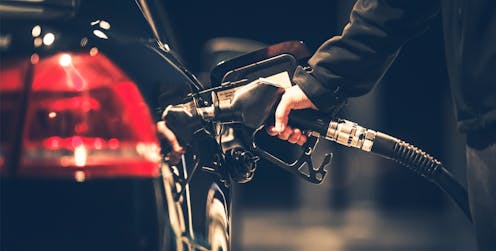
As an appeal to middle Australia, to the voters politicians routinely describe as working families or battlers, the Morrison government’s centrepiece budget move[1] to halve the fuel excise for six months has obvious attractions.

“A family with two cars who fill up once a week could save around $30 a week or around $700 over the next six months,” declared Treasurer Josh Frydenberg on budget night[2], a point he’s repeated many times since[3].

But our calculations show most households, particularly those on lower incomes, won’t gain anything near the amount touted by Frydenberg.

At a cost of about $3 billion, cutting 22 cents in tax from every litre of petrol for six months will disproportionately help wealthy households. The economic gain is doubtful. Depending on what happens with the global oil prices, it may even contribute to inflationary pressures.

Who benefits most?

We’ve calculated the effects of the fuel excise cut on household budgets using a computer model[4] developed by the National Centre For Social And Economic Modelling[5].

Our results show the six-month cut to the fuel excise will save the average household in inner-urban areas of Sydney and Melbourne about $132. The average households in outer suburbs will save about $242. Those in the outer suburbs of smaller cities will save less as they need to drive shorter distances. The average household in rural and remote areas will save $194.

Author provided/The Conversation, CC BY-ND[6] These amounts reflect average outcomes across all households, including those with just one vehicle, or no vehicle. It’s possible some two-car households will save the $700 cited by Frydenberg, but not many. That would require a household spending well over $10,000 a year on petrol, buying about 150 litres a week. The budget papers themselves say the cut will “deliver an average benefit of around $300 to households with at least one vehicle”. Why economists oppose the cut In The Conversation’s pre-budget survey of 46 leading economists selected by the Economic Society of Australia, not one thought cutting the fuel excise a good idea. About a third rated it among the worst possible policies. Read more: Cut emissions, not petrol tax; fund childcare, not beer. What economists want from next week's budget[7] Their reasons are the uncertain economic benefit and inconsistency with important long-term policy goals to reduce dependence on oil-based imports, lower greenhouse gas emissions and cut government debt. Frydenberg has promoted[8] the cut as anti-inflationary, reducing consumer prices by 0.25 percentage points in the June quarter. But prices will simply rise by the same amount in the December quarter. Global fuel prices may fall long before the end of six months. Last week benchmark oil prices fell 13%[9] on news the US will release more from its strategic reserves[10] as well as a truce in the long-running civil war in Yemen. The United States will be releasing a million barrels of crude oil every day for the next six months from its Strategic Petroleum Reserve.
The United States will be releasing a million barrels of crude oil every day for the next six months from its Strategic Petroleum Reserve. Eli Hartman/Odessa American/AP

If oil prices drop the government will be adding billions of dollars to the deficit for no real economic gain. It could even be adding to underlying inflationary pressures by increasing household spending, pushing the Reserve Bank to increase interest rates[11] sooner or by more.

Furthermore, while the fuel excise cut is legislated to be in place just six months, history shows governments find it hard to reverse cuts once implemented. In 2001, for example, the government of John Howard was panicked by poor opinion polls to suspend indexation of the petrol excise when prices reached $1 a litre. Indexation was not restored for 14 years, at a cost of more than $40 billion[12] in forgone tax revenue.

Well distributed?

Economists prefer targeted measures, and the problem with cutting the fuel excise is that lot of the benefit will go to sustaining the driving habits of wealthier households.

On average those in the most affluent 40% of households drive about 50% more kilometres[13] than those in the poorest 40%.

Read more: 5 maps that show why free public transport benefits the affluent most[14]

Wealthier households are more likely to have second or third cars, and to have larger cars – such as SUVs – that use more petrol. They also have the money for leisure pursuits such as weekend getaways.

A better approach would be target help to businesses that must buy fuel and to those on low incomes, such as through a cash bonus, leaving it to them to decide if they want to spend on petrol or other things.

This would also help those without a car, those who do not drive much and those with electric vehicles, who all face cost pressures as petrol prices feed into prices at the supermarket.

References

  1. ^ budget move (theconversation.com)
  2. ^ on budget night (joshfrydenberg.com.au)
  3. ^ many times since (www.abc.net.au)
  4. ^ computer model (www.sciencedirect.com)
  5. ^ National Centre For Social And Economic Modelling (www.governanceinstitute.edu.au)
  6. ^ CC BY-ND (creativecommons.org)
  7. ^ Cut emissions, not petrol tax; fund childcare, not beer. What economists want from next week's budget (theconversation.com)
  8. ^ promoted (www.theguardian.com)
  9. ^ benchmark oil prices fell 13% (www.aljazeera.com)
  10. ^ its strategic reserves (theconversation.com)
  11. ^ the Reserve Bank to increase interest rates (www.afr.com)
  12. ^ more than $40 billion (australiainstitute.org.au)
  13. ^ 50% more kilometres (www.sciencedirect.com)
  14. ^ 5 maps that show why free public transport benefits the affluent most (theconversation.com)

Authors: John Hawkins, Senior Lecturer, Canberra School of Politics, Economics and Society and NATSEM, University of Canberra

Read more https://theconversation.com/what-will-the-fuel-excise-cut-save-you-not-as-much-as-the-treasurer-says-180330

The Weekend Times Magazine

Effective Pest Control Solutions in Ballarat: What You Need to Know

Living in Ballarat means enjoying a beautiful regional lifestyle, but it also comes with its share of challenges—one of which is managing pests. From termites threatening your home’s structure to...

Dentists in Sydney: Your Guide to Dental Care

Sydney, Australia is home to the absolute best dental experts in the country. With a different range of services and specialties, dental specialists in Sydney take care of different needs...

How pool putty can be a lifesaver when it comes to pool repairs

Pool putty is a great way to repair your pool. It works well for all types of repairs, especially when you need to patch up a hole in the liner...

oOh!media puts Neon up in lights

oOh!media has transformed its high-impact Panorama sites across the country for a campaign to mark the merger of Neon and Lightbox under the Neon brand. Sky’s ‘Get it on Neon’ campaign...

Make Your Holiday Merry with Christmas Inflatables

The holiday season is all about bringing joy and festivity to your home or event. One of the most fun and visually captivating ways to do this is by incorporating...

How Pest Control Albury Protects Homes And Businesses From Harmful Pests

Residents and business owners in regional New South Wales understand the challenges that seasonal pests can bring. Many turn to Pest Control Albury to keep their properties safe, hygienic and free...

Protecting Properties with Durable Security Fencing

From residential homes to large commercial facilities, strong and reliable fencing provides peace of mind by keeping intruders out and safeguarding what matters most. Among the many options available, security...

All the Things You Need to Know Before Flying to Cairns

Cairns is the gateway to Queensland, offering a tropical climate and a relaxing atmosphere, making it an ideal destination for outdoor activities. The city has iconic destinations, charming cafes, lively...

The Best Tech Inventions to Cover the Next Decade

Online casino gaming is one piece of evidence to prove that the tech world is constantly evolving and becoming better. Thanks to the coming of technology you can get to...