The RBA has lost some patience on rates, but it isn't rushing to push them up: here's why
- Written by: Isaac Gross, Lecturer in Economics, Monash University
It is coming up to 18 months[1] since Australia’s Reserve Bank last cut its cash rate.
And what it did then was merely a further cut, from an unprecedented low of 0.25% to a fresh unprecedented low of 0.10%
Since it last changed the direction of rates (started cutting instead of hiking) it has been 10 years and five months[2].
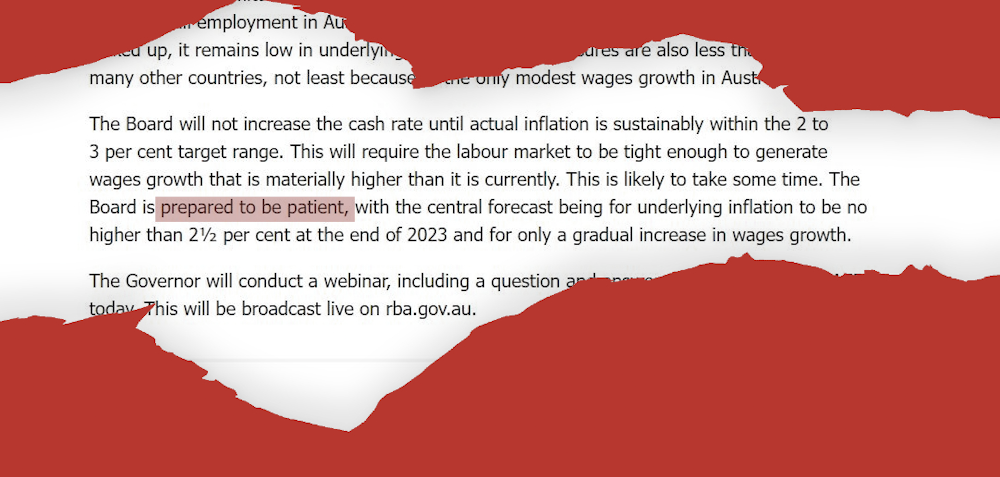
Which is why it has been telling anyone who asked (and repeatedly using the phrase in its official communications) that it is “prepared to be patient[3]” before changing again. It wants to be sure conditions necessitate such a move.
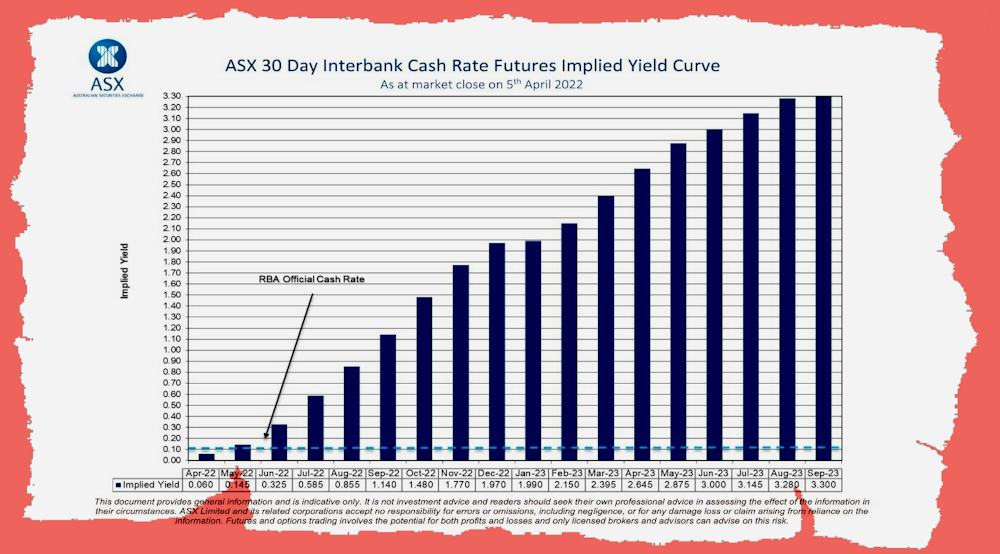 Australian Securities Exchange[10]
This is probably an upper bound for what we can expect. Market economists (the people who advise traders) as opposed to market traders expect the bank to hike no more than a handful of times in the second half of this year.
While jobs growth is strong, with underemployment at its lowest in a decade and unemployment close to its lowest in five decades, the bank will be cautious about slowing the recovery before it delivers widespread higher wage growth.
Read more:
Despite record job vacancies, Australians shouldn't expect big pay rises anytime soon – and here's why[11]
This raises the question of why interest rates are tipped to remain so low when unemployment is approaching its lowest level in half a century.
It is partly because high household debt means any increase in rates will have a much larger impact on household budgets and spending than it would have.
Interest rates won’t stay close to zero forever. But it will be a long time before they are back to the high levels of 4%+ last seen when the bank began cutting in 2010.
References^ 18 months (www.rba.gov.au)^ 10 years and five months (www.rba.gov.au)^ prepared to be patient (www.rba.gov.au)^ The Reserve Bank's usual wording (datawrapper.dwcdn.net)^ missing (www.rba.gov.au)^ April 27 (www.abs.gov.au)^ external (theconversation.com)^ wages growth (www.rba.gov.au)^ Why Australia's Reserve Bank won't hike interest rates just yet (theconversation.com)^ Australian Securities Exchange (www.asx.com.au)^ Despite record job vacancies, Australians shouldn't expect big pay rises anytime soon – and here's why (theconversation.com)Authors: Isaac Gross, Lecturer in Economics, Monash University
Australian Securities Exchange[10]
This is probably an upper bound for what we can expect. Market economists (the people who advise traders) as opposed to market traders expect the bank to hike no more than a handful of times in the second half of this year.
While jobs growth is strong, with underemployment at its lowest in a decade and unemployment close to its lowest in five decades, the bank will be cautious about slowing the recovery before it delivers widespread higher wage growth.
Read more:
Despite record job vacancies, Australians shouldn't expect big pay rises anytime soon – and here's why[11]
This raises the question of why interest rates are tipped to remain so low when unemployment is approaching its lowest level in half a century.
It is partly because high household debt means any increase in rates will have a much larger impact on household budgets and spending than it would have.
Interest rates won’t stay close to zero forever. But it will be a long time before they are back to the high levels of 4%+ last seen when the bank began cutting in 2010.
References^ 18 months (www.rba.gov.au)^ 10 years and five months (www.rba.gov.au)^ prepared to be patient (www.rba.gov.au)^ The Reserve Bank's usual wording (datawrapper.dwcdn.net)^ missing (www.rba.gov.au)^ April 27 (www.abs.gov.au)^ external (theconversation.com)^ wages growth (www.rba.gov.au)^ Why Australia's Reserve Bank won't hike interest rates just yet (theconversation.com)^ Australian Securities Exchange (www.asx.com.au)^ Despite record job vacancies, Australians shouldn't expect big pay rises anytime soon – and here's why (theconversation.com)Authors: Isaac Gross, Lecturer in Economics, Monash University