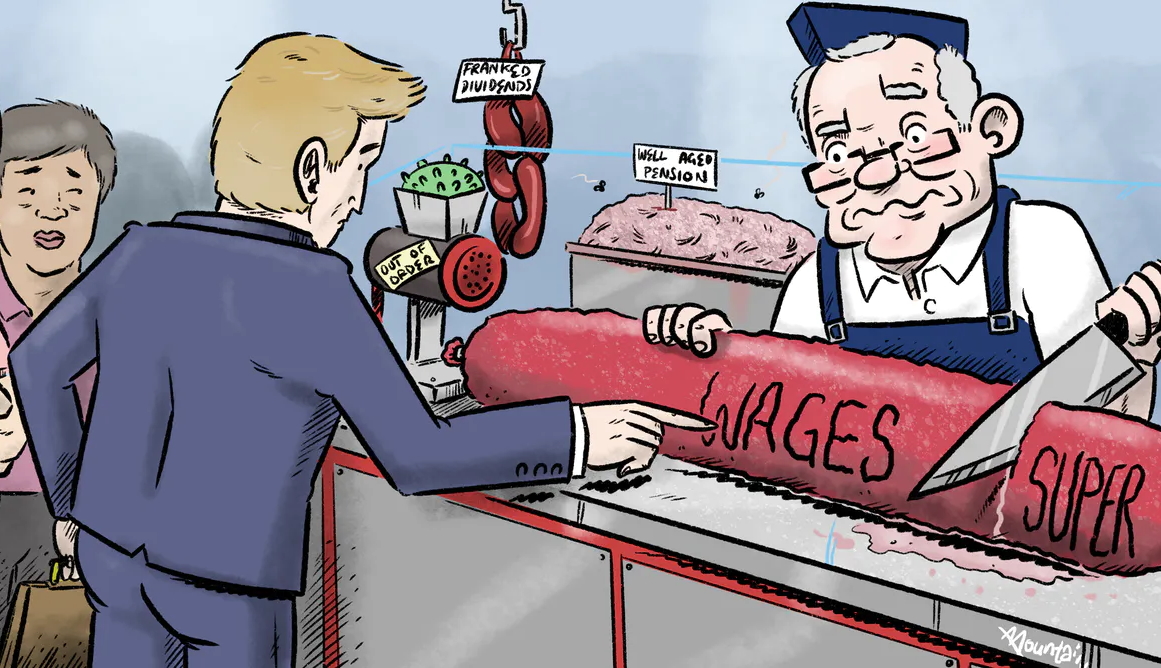
Even if next week’s budget avoids the issue, it’s time New Zealand seriously considered a wealth tax
- Written by: Lisa Marriott, Professor of Taxation, Te Herenga Waka — Victoria University of Wellington

Tax is back in the news. Often this means a looming budget or election, as is indeed the case now, with the government’s 2022 budget delivered next week.
The election is much further away, but if the past couple of weeks are anything to go by, the interim will see the parties’ contrasting tax positions given plenty of attention.
So it’s probably time to discuss “wealth taxes” – a term broadly used here to capture the bucket of potential taxes on wealth, including capital gains, inheritance, gift, land or other types of tax on assets.
As recently as May 3, Prime Minister Jacinda Ardern said her government doesn’t have current plans[1] to introduce a wealth tax but was also refusing to rule one out. Either way, it’s an issue that is unlikely to go away any time soon.
What we tax
To put it in context, there are three primary means of taxation, or three “limbs”, to use a frequently used tax term.
The first is income – taxes on earnings such as wages, salaries or company earnings. The second is taxing consumption – taxes on purchases of goods and services. Finally, there are taxes on wealth – taxes on what you own, usually assets.
In Aotearoa, we have comprehensive regimes for the first two of these.
Income tax is mostly paid by individuals and companies. In 2020-21, individuals paid income tax of NZ$45 billion or 46.4%[2] of total taxation revenue. Companies paid $15.8 billion or 16.2% of total taxation revenue in the same period. While not without its issues, it is better than many income tax systems.
Read more: Inflation has already eroded tomorrow's minimum wage rise – NZ’s low-income workers will need more support[3]
Our goods and services tax (GST) is a broad-based consumption tax. This does what it says: it taxes goods and services.
Globally, our GST is often referred to as a model system due to its broad base and few exemptions. GST collected in 2020-21 was $25.6 billion (net), or 26.3% of total tax revenue.
Other consumption taxes include fuel, tobacco, and alcohol excise and duty. These are also all paid by the final consumer and totalled $5 billion in 2020-21 (5.2% of total tax revenue).
The primary issue with GST and excise taxes is that they fall more heavily[4] on lower income earners as a proportion of earnings.
The missing limb
But where is limb three? This is largely absent in Aotearoa, although we do tax assets in a small number of specific situations, such as the “bright-line[6]” test for residential housing.
But the default is that we don’t tax wealth, and unless a transaction is explicitly included in the legislation, it will not attract tax. Why is this a problem?
First, as the OECD puts it, wealth accumulation[7] “operates in a self-reinforcing way and is likely to increase in the absence of taxation”.
Read more: With a mandate to govern New Zealand alone, Labour must now decide what it really stands for[8]
The OECD also argues “there is a strong case for addressing wealth inequality through the tax system”. This is because higher income earners have greater capacity to save, which facilitates investment creation and further wealth accumulation.
Additionally, wealth inequality is greater than income inequality. But income is comprehensively taxed while wealth is not.
Not the law’s fault
The discussion inevitably comes back to fairness. We’re all familiar with the stories of the untaxed passive gains made by property owners, while those earning wages or salaries pay tax on every dollar earned.
We can’t blame “the wealthy” for this outcome. They are only following the rules as outlined in tax legislation, as they are required to by law.
We can, however, blame governments – and not just the current one, despite its parliamentary majority offering an opportunity for action that recent past governments haven’t had.
Read more: With their conservative promises, Labour and National lock in existing unfairness in New Zealand's tax system[9]
The issue is that none appear willing to tackle the political unpalatability of introducing a wealth tax. And in the absence of a government willing to take a leadership role, the wealthy continue to benefit at the expense of those who have less.
It is important to note that wealth taxes are not typically directed at an individual’s personal home. They are intended to tax wealth in the traditional meaning of the word – for example, people who own multiple houses or are “land banking”.
Importantly, taxes are flexible instruments, they can have exclusions where appropriate, such as for Māori land.
An informed debate
Revenue minister David Parker’s recent proposals[11] indicate some positive steps forward. Capturing more accurate information about high wealth individuals has the potential to provide the mandate for change.
As Parker said, current data used for policy purposes “effectively ignores the wealthiest”. He cited evidence that the maximum net worth collected in the current survey data used for policy purposes was $20 million, which is “out by a factor of hundreds”.
The question is, what will the government do when that information is available?
Collecting information is just the first step to inform debate in a democratic society. The issue is how much inequality our democracy is willing to tolerate.
Better quality data on who wins and who loses from a wealth tax will contribute to better quality debate. Whether we want a wealth tax, however, can only be determined at the ballot box. This should be put to the vote.
References
- ^ doesn’t have current plans (www.newshub.co.nz)
- ^ NZ$45 billion or 46.4% (www.treasury.govt.nz)
- ^ Inflation has already eroded tomorrow's minimum wage rise – NZ’s low-income workers will need more support (theconversation.com)
- ^ fall more heavily (taxworkinggroup.govt.nz)
- ^ Kerry Kissane/Getty Images (www.gettyimages.com.au)
- ^ bright-line (www.ird.govt.nz)
- ^ wealth accumulation (www.oecd.org)
- ^ With a mandate to govern New Zealand alone, Labour must now decide what it really stands for (theconversation.com)
- ^ With their conservative promises, Labour and National lock in existing unfairness in New Zealand's tax system (theconversation.com)
- ^ Lynn Grieveson/Getty Images (www.gettyimages.com.au)
- ^ recent proposals (www.beehive.govt.nz)
Authors: Lisa Marriott, Professor of Taxation, Te Herenga Waka — Victoria University of Wellington