Regional towns are at risk of being wiped out by the move to net-zero. Here's their best chance for survival
- Written by: Esther Suckling, Research Associate, Grattan Institute
Australia’s mining and heavy industry sectors are on the cusp of a revolution as the world shifts to net-zero. Demand for traditional industrial commodities – coal, oil, and gas – is set to slide.
The International Energy Agency believes global coal use will have to fall 90%[1] if the world is to achieve net zero emissions by 2050.
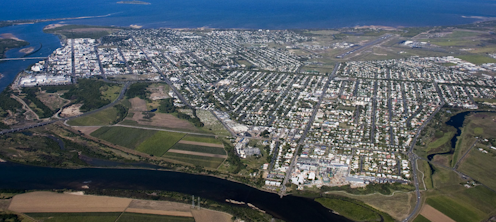
That will hit hard Australia’s two main coal mining regions: Mackay and surrounds in Queensland, and the Hunter Valley in NSW.
Coal mines in Queensland’s Mackay region and the NSW Hunter Valley
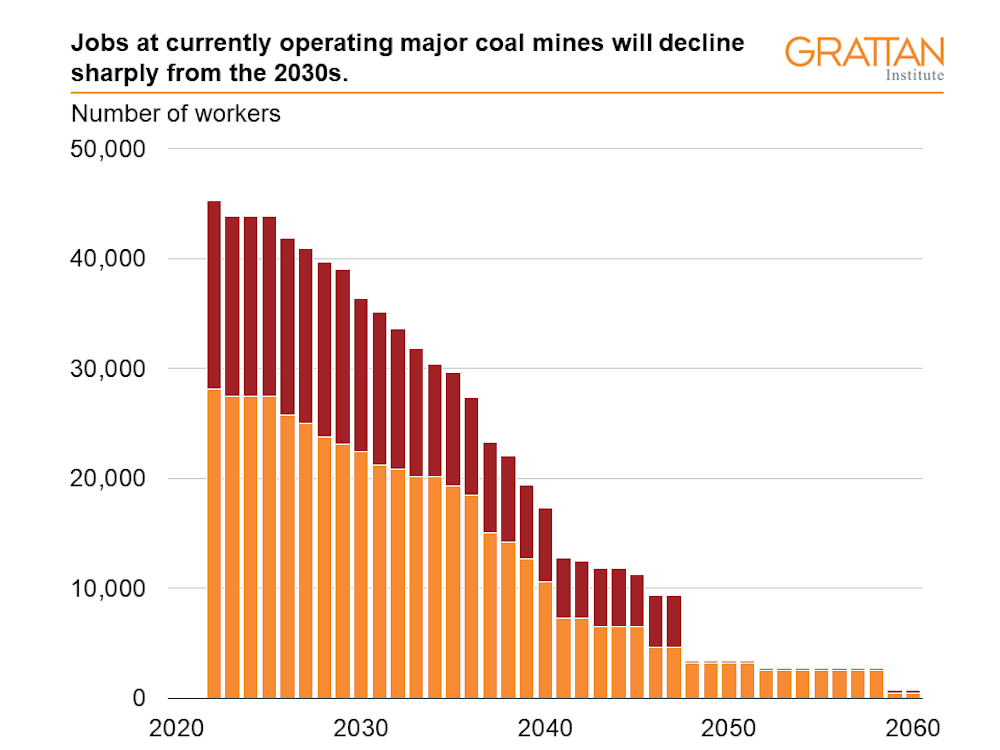
But the end of coal need not mean the end of Singleton, Mackay, Muswellbrook, and the Isaac area. It means those places need a plan.
In planning for the difficult transition, they can learn from the experience of the Latrobe Valley in Gippsland, Victoria.
Latrobe shows what can work
After the shock early closure of the Hazelwood coal-fired power station in 2017, the Victorian government established the Latrobe Valley Authority[3] to help transform its industrial base.
The authority got to work on a range of initiatives.
Its “worker transition service” provided peer-to-peer advice on skills, personal finances, and job-seeking.
Its “worker transfer scheme” helped people who wanted to stay in the industry to move to other power stations elsewhere. And it offered financial support for retraining.
Read more: NSW's biggest coal mine to close in 2030. Now what about the workers?[4]
The authority also administered an “economic growth zone”, in which new businesses creating jobs for ex-Hazelwood workers received payroll tax deductions and exemptions from fees and charges for property purchases.
Five years on, unemployment in the Latrobe Valley sits at the same level as before the Hazelwood closure, and the region is exploring options to diversify into offshore wind generation.
Latrobe example shows how such transitions can work. But what works for one region might not work for another. Each has its own strengths and weaknesses.
Top-down doesn’t cut it
As an example, Singleton in NSW scores in the top 10% of regions on research and development[5], a measure that includes the number of engineers and scientists and the number of annual patent applications.
By contrast, the Isaac region in Queensland is in the middle of the pack.
Road and rail are in better shape in Muswellbrook in NSW than in the Central Highlands in Queensland.
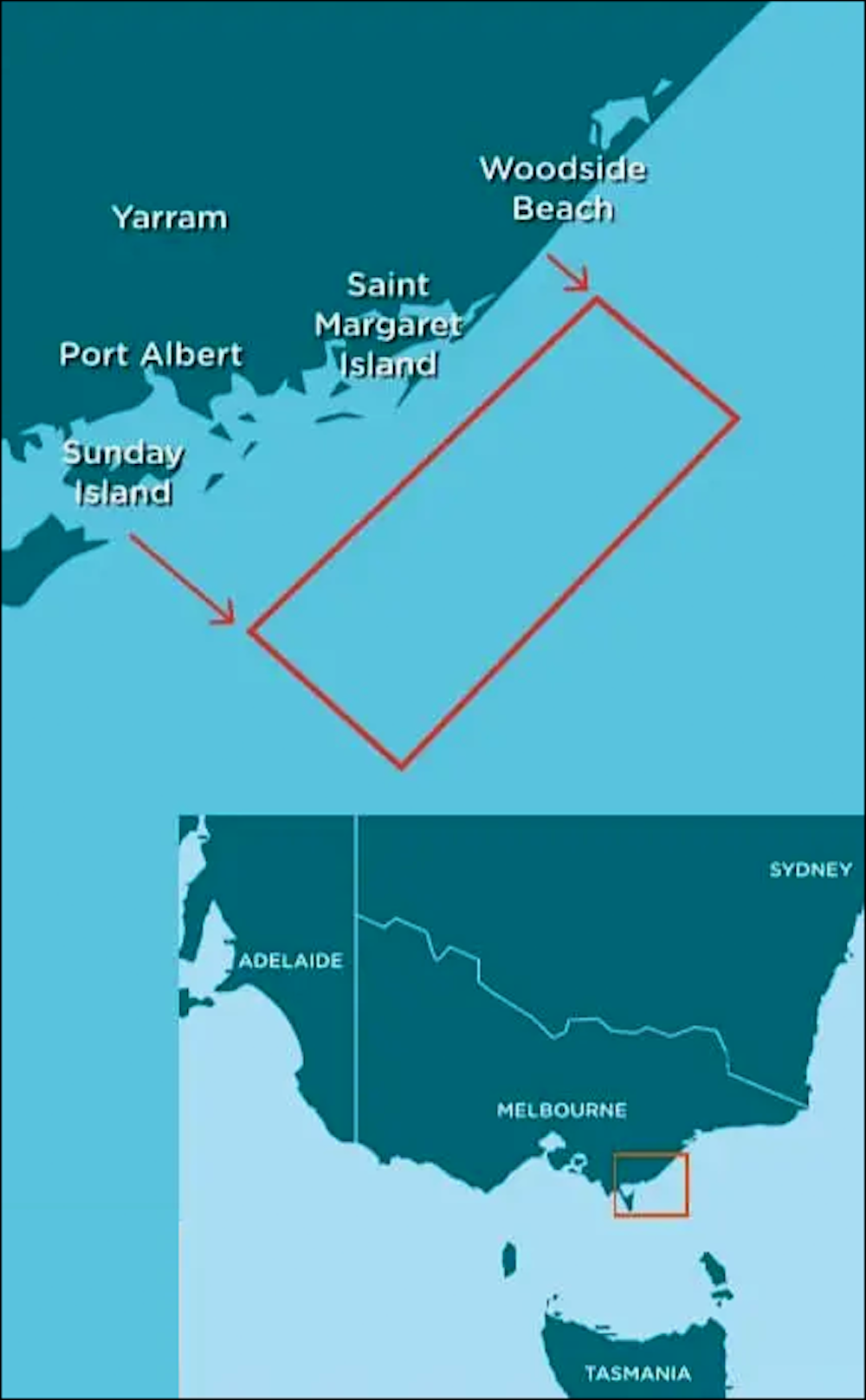 Proposed location of Latrobe offshore windfarm.[6]
But Muswellbrook is still in the bottom half of the country on infrastructure, whereas Newcastle, the nearest major regional centre, is in the top 10%
New industrial opportunities will also look different for each region.
The Latrobe Valley’s opportunity in offshore wind rests on its proximity to the strong and consistent winds off the Bass Strait.
In other areas, good renewable energy infrastructure will provide an edge in making “green” industrial products – green steel for electricity infrastructure and electric cars, green aluminium for wind turbines, and green ammonia for use in the fuel cells of ships.
This means a centrally imposed cookie-cutter approach won’t do the job.
The NSW Hunter Valley and Queensland’s Mackay region each need their own transition authority, made up of people who live and work there.
Governments, federal and state, should fund and support these groups but not seek to dominate them.
The best tip is to start early
Though the economic transition will be different for every region, there’s one common rule: transition takes time.
In the Latrobe Valley, unions, environmental organisations, community groups, and local and state government representatives began discussing the region’s future in the early 2000s.
The Latrobe Valley Authority says transition will take at least ten years.
The challenge confronting the Hunter Valley and Mackay regions is daunting. Governments must help these regions to begin the hard work now.
It will take time, money, and collaboration – but success will mean these regions can thrive in the push to net zero.
References^ fall 90% (iea.blob.core.windows.net)^ Grattan Institute report (grattan.edu.au)^ Latrobe Valley Authority (lva.vic.gov.au)^ NSW's biggest coal mine to close in 2030. Now what about the workers? (theconversation.com)^ scores in the top 10% of regions on research and development (insight.regionalaustralia.org.au)^ Proposed location of Latrobe offshore windfarm. (www.starofthesouth.com.au)Authors: Esther Suckling, Research Associate, Grattan Institute
Proposed location of Latrobe offshore windfarm.[6]
But Muswellbrook is still in the bottom half of the country on infrastructure, whereas Newcastle, the nearest major regional centre, is in the top 10%
New industrial opportunities will also look different for each region.
The Latrobe Valley’s opportunity in offshore wind rests on its proximity to the strong and consistent winds off the Bass Strait.
In other areas, good renewable energy infrastructure will provide an edge in making “green” industrial products – green steel for electricity infrastructure and electric cars, green aluminium for wind turbines, and green ammonia for use in the fuel cells of ships.
This means a centrally imposed cookie-cutter approach won’t do the job.
The NSW Hunter Valley and Queensland’s Mackay region each need their own transition authority, made up of people who live and work there.
Governments, federal and state, should fund and support these groups but not seek to dominate them.
The best tip is to start early
Though the economic transition will be different for every region, there’s one common rule: transition takes time.
In the Latrobe Valley, unions, environmental organisations, community groups, and local and state government representatives began discussing the region’s future in the early 2000s.
The Latrobe Valley Authority says transition will take at least ten years.
The challenge confronting the Hunter Valley and Mackay regions is daunting. Governments must help these regions to begin the hard work now.
It will take time, money, and collaboration – but success will mean these regions can thrive in the push to net zero.
References^ fall 90% (iea.blob.core.windows.net)^ Grattan Institute report (grattan.edu.au)^ Latrobe Valley Authority (lva.vic.gov.au)^ NSW's biggest coal mine to close in 2030. Now what about the workers? (theconversation.com)^ scores in the top 10% of regions on research and development (insight.regionalaustralia.org.au)^ Proposed location of Latrobe offshore windfarm. (www.starofthesouth.com.au)Authors: Esther Suckling, Research Associate, Grattan Institute