Weekend Times


The Times

Business News

The summit needs to get us switching jobs. It'd make most of us better off

  • Written by Dan Andrews, Visiting Fellow and Director – Micro heterogeneity and Macroeconomic Performance program, Crawford School of Public Policy, Australian National University
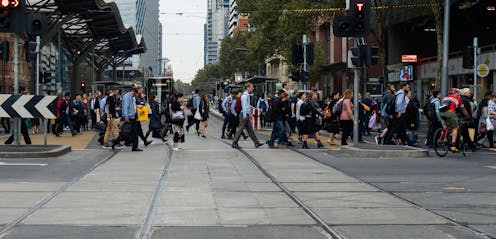
The summit needs to get us switching jobs. It'd make most of us better off

This article is part of The Conversation’s series looking at Labor’s jobs summit. Read the other articles in the series here[1].

After 20 years of declining educational standards, as well as recent disruptions to migrant flows, discussions at this week’s jobs summit will rightly emphasise the importance of growing skills.

But reforms to education policy can take a long time to reap benefits, and there is no guarantee that changes to migration policies can rapidly return Australia to pre-pandemic population intakes.

This means discussions at the summit should focus not only on growing our stock of talent, but also on allocating our existing talent more efficiently.

In a study entitled Better Harnessing Australia’s Talent[2] released this morning prepared for the non-profit e61 Institute[3] we demonstrate that’s not yet happening.

e61 Institute[4] We find there aren’t enough people changing jobs, there aren’t enough new firms being created, and there isn’t enough competition between firms. What we need is for Australians to be resigning from jobs and seeking new ones along the lines of the great resignation[5] that was said to be taking place in the United States. We find the industries that are the least dynamic (where there are the least resignations) are the ones where the rate at which productivity growth is turned into wages growth has slipped the most, probably because of a decline in worker bargaining power. The probability that the average Australian worker switches jobs has fallen from 12.8% in the mid-1990s to 9.5%. Workers that do switch jobs get an 8% pay bump on average. And it’s better for their mental health. Switching from a poorly-matched to a well-matched job gives a boost to reported mental health equivalent to getting married. Singles: take note. We also have fewer new companies. The rate at which new companies were being created fell from 13% in the mid-2000s to 11% in the mid-2010s. Industry concentration has increased. The share of industry revenue going to the four biggest companies has doubled since 2010. Those at the top are safer than ever. The probability of a market leader being displaced from the top has declined by about seven percentage points since the mid-2000s. So, what can we do to make Australia more dynamic? It needs to be easier to change jobs. There’s lots we could look at. Easier job switching We could harmonise and reduce occupational licensing restrictions across states (something the states and the Commonwealth are working on) and remove taxes like stamp duties that make it expensive for people to relocate. We could reduce barriers faced by new firms. Non-compete clauses, planning and zoning laws, and visa quotas are ripe areas for reassessment. And we could shift our tax breaks for small business supports towards new small businesses. It is young employers, not small employers, that most create jobs. Old employers (taken together) destroy them. Read more: Australia's 'great resignation' is a myth — we are changing jobs less often[6] Penalties for anti-competitive conduct and laws restricting mergers in already concentrated markets ought to be strengthened, as suggested by Assistant Treasurer Andrew Leigh[7] last week. But we need to acknowledge that market dynamism is not great for everyone. Most workers benefit from dynamic markets, in jobs, in wages and in choice. But more dynamism would mean more workers would lose jobs and struggle to get new ones. An improved safety net The decline in reported mental health that follows the loss of a job is equivalent to that following a serious injury or illness. Lost earnings take years to recover. We need to consider reforms to our income support system. Our present system of unemployment benefits offers support, but not much insurance for workers considering a change of jobs. To meaningfully help workers, the summit will need a plan to fix Australia’s stagnant economy. Anything less will be addressing the symptoms, not the cause. The views expressed in this article are those of the authors, and do not necessarily reflect the views of the e61 Institute. References^ here (theconversation.com)^ Better Harnessing Australia’s Talent (www.e61.in)^ e61 Institute (www.e61.in)^ e61 Institute (www.e61.in)^ great resignation (theconversation.com)^ Australia's 'great resignation' is a myth — we are changing jobs less often (theconversation.com)^ Andrew Leigh (ministers.treasury.gov.au)Authors: Dan Andrews, Visiting Fellow and Director – Micro heterogeneity and Macroeconomic Performance program, Crawford School of Public Policy, Australian National University

Read more https://theconversation.com/the-summit-needs-to-get-us-switching-jobs-itd-make-most-of-us-better-off-189462

The Weekend Times Magazine

Body Contouring Melbourne: Sculpting Confidence with Safe and Effective Treatments

Achieving your ideal body shape often takes more than just diet and exercise. For those looking to enhance their natural contours, body contouring Melbourne clinics offer advanced treatments designed to reduce...

Dentists in Sydney: Your Guide to Dental Care

Sydney, Australia is home to the absolute best dental experts in the country. With a different range of services and specialties, dental specialists in Sydney take care of different needs...

Essential Packaging Materials That Support Business Efficiency in Melbourne

Reliable access to packaging materials is a key factor in how smoothly businesses operate across storage, shipping, and distribution processes. Companies that depend on packaging supplies Melbourne understand that packaging is...

Vacancies increase sharply in outer Sydney, as inner-city suburbs ease

The REINSW Vacancy Rate Survey results for July 2020 show that COVID-19 continues to impact the residential rental market. Vacancies in Sydney overall increased for the fifth successive month and now...

Does Sydney Australia Have a Good Nightlife Scene?

In the last several years, Sydney's nightlife has changed dramatically. The New South Wales state government adopted Draconian lockout regulations in 2014, forcing city center venues to close their doors...

Ensuring a consistent Australian foreign policy - Scott Morrison

The Morrison Government will introduce new legislation to ensure the arrangements states, territories, councils and universities have with foreign governments are consistent with Australian foreign policy.   The Commonwealth Government has exclusive...

How Offroad Caravans For Sale Offer Freedom, Durability And Adventure-Ready Performance

Australians who love exploring rugged landscapes and remote travel destinations often look for reliable offroad caravans for sale that can withstand tough terrain while providing a comfortable home on wheels...

How Homeowners Can Prepare for Asbestos Removal in Melbourne

If you own an older home in Melbourne, there’s a chance asbestos-containing materials may be present somewhere on your property. That’s why professional asbestos removal Melbourne services are necessary, but as...

Car subscription offers part-time workers access to a car during COVID-19

New research commissioned by Carly, Australia’s first flexible car subscription provider, surveyed more than 1200 Australians and found that 48% of part time workers would consider car subscription instead of...

hacklink hack forum hacklink film izle hacklink online casinos australiaonwinonline casino australiaGrandpashabetbetparkjojobetbetasusslot sitelerisbobetgrandpashabetgrandpashabetcasibomjojobetholiganbet