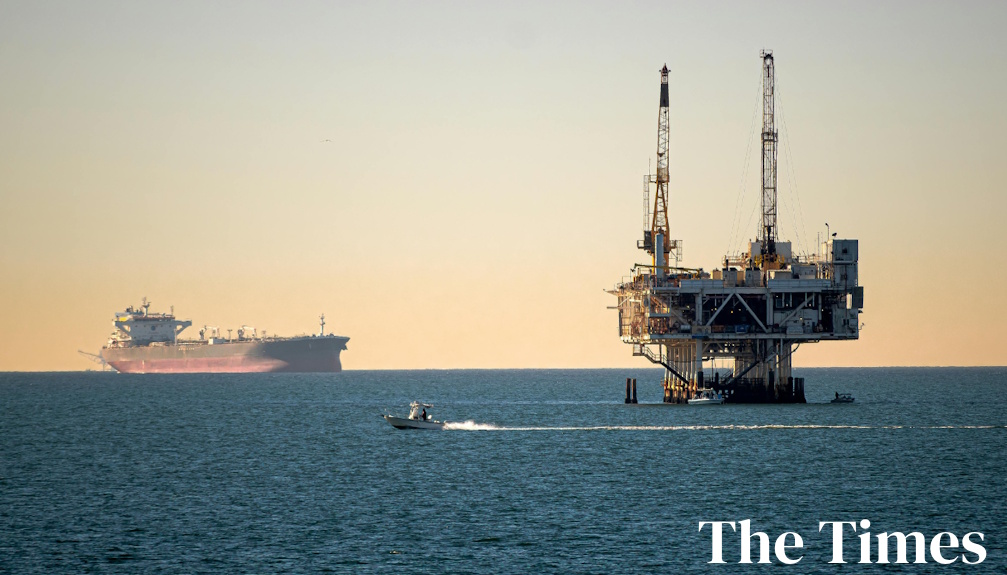
Have we seen the last of $2 petrol for a while?
- Written by: Vlado Vivoda, Honorary Fellow, The University of Queensland
Average fuel prices in Australian capital cities remain well below the peaks seen in March and June. Recent data[1] reveal fuel is around 30-35 cents per litre lower than the highs of two months ago. As of last week, the average price of 95 octane unleaded across eight capitals stood at A$1.90 per litre.
The question on the minds of many motorists and businesses relying on road transport to deliver goods and services is: have we seen the last of $2 petrol for a while?
Given this year’s trends in international oil prices (a key component[2] of Australia’s petrol prices), the answer would be: “It depends on the fuel excise”.
Read more: What Russia's war means for Australian petrol prices: $2.10 a litre[4]
A fuel excise cut after Russia invades Ukraine
A fuel excise[5] is a tax on fuel levied by the Australian government.
In March this year, as Russia’s invasion of Ukraine began to drive international oil prices up, the previous federal government announced[6] a 50% cut in fuel excise for six months. In other words, it would charge less tax on fuel until September (in an effort to soften the impact of soaring international oil prices on Australian consumers). After this decision, the cost of petrol reduced by 22 cents per litre.
While the general trend is downwards in recent months, crude oil prices have ranged[7] between US$92 and US$123 per barrel – much higher than the norm in recent years.
With Australia’s halved fuel excise[8], this price range translates to average 95 octane unleaded petrol prices across eight capitals of between A$1.90 and A$2.25 per litre.
Globally, crude oil is down about 25%[9] from the June high of US$123 per barrel. That’s in part due to growing fears a global economic slowdown would affect consumption, as central banks around the world raise interest rates to combat spiralling inflation.
The potential revival of a deal[10] between Iran and Western countries that could lead to more Iranian oil exports has also helped drive oil prices[11] down. This is generally good news for petrol prices in Australia.
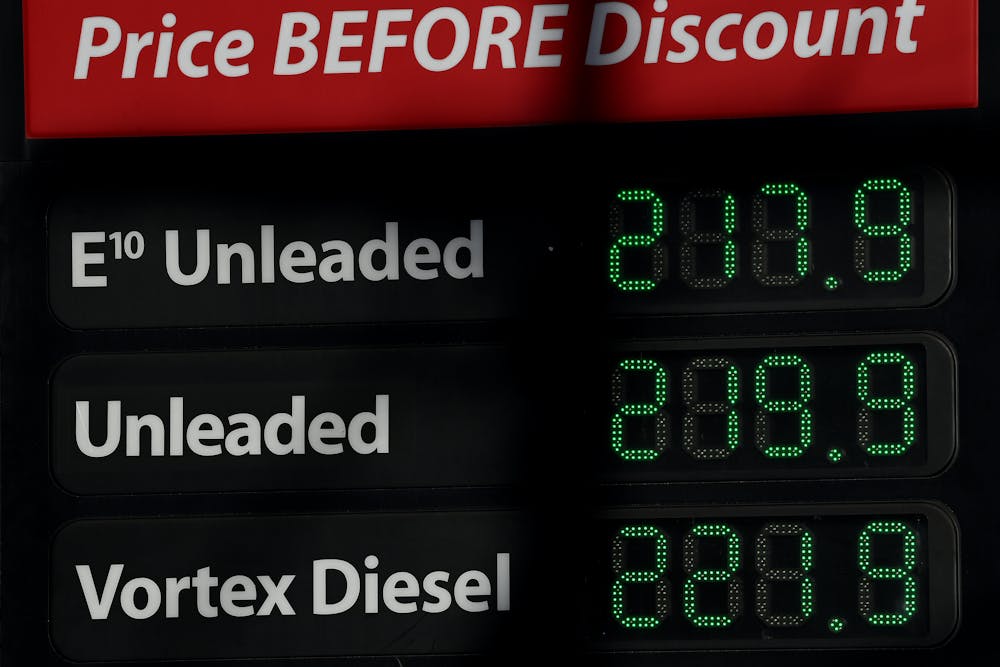 Petrol prices soared earlier this year.
AAP Image/Bianca De Marchi
Petrol prices soared earlier this year.
AAP Image/Bianca De Marchi
What next for the fuel excise in Australia?
However, a lot will depend on what the Australian government does about the fuel excise.
It is uncertain whether the new government will extend the fuel excise cut brought in by their predecessors in March.
The excise cut is set to expire in September, right in the middle of a cost-of-living crisis in Australia.
In July, amid calls to extend the fuel excise, Treasurer Jim Chalmers said an extension is not an option[12]:
We’ve tried to be upfront with people and say they shouldn’t expect that petrol price relief to continue forever.
According to the federal budget, the six-month excise cut has resulted in a A$3 billion hit[13] on the economy.
Recent news reports indicated the prime minister was “examining” a fuel excise cut extension[14], but remains adamant the cut is a temporary measure.
If the cut is not extended, average petrol prices in Australia will almost certainly return to the above $2 territory by early October.
However, the solution to Australians being held hostage to volatile global prices and geopolitical developments will not come from extending the fuel excise cut.
The solution will come from reducing demand for oil-based fuels through policies promoting local energy generation and switching to low-emissions vehicles.
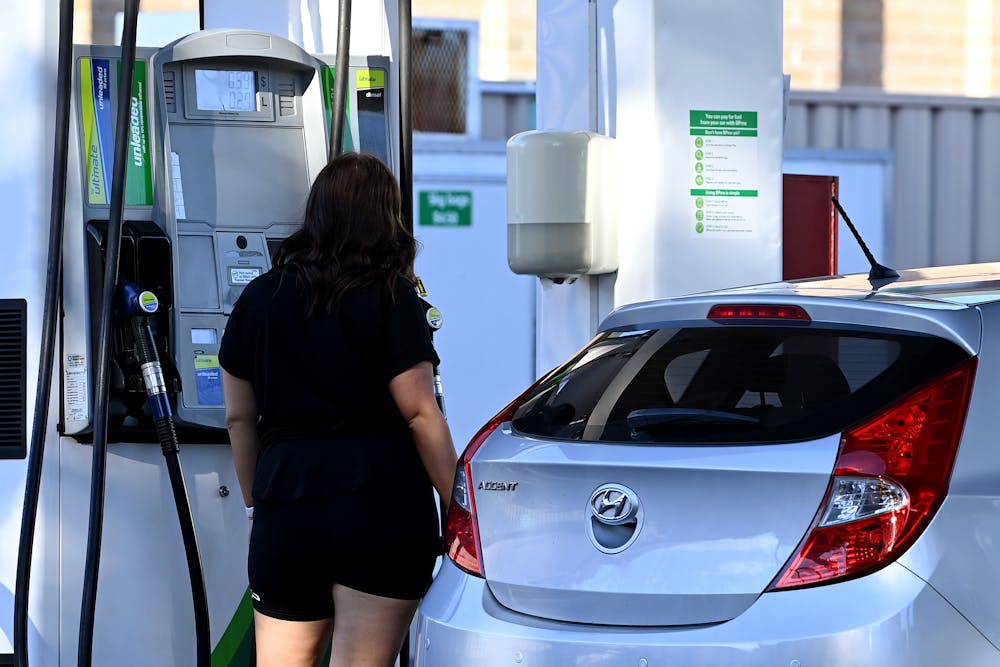 The solution to Australians being held hostage to volatile global prices and geopolitical developments will not come from extending the fuel excise cut.
AAP Image/Bianca De Marchi
The solution to Australians being held hostage to volatile global prices and geopolitical developments will not come from extending the fuel excise cut.
AAP Image/Bianca De Marchi
The longer-term outlook
Over the longer term, there is hope oil and petrol prices will not affect the pockets of Australian motorists and the Australian economy to the same extent as they have earlier this year.
The new Australian government has acknowledged[15] the country is “significantly behind the pack when it comes to electric vehicles.”
Only 2% of cars sold in Australia are electric, five times lower[16] than the global average.
The government recently released some detail on plans to set up a National Electric Vehicle Strategy[17], with a discussion paper on the matter due to be released soon for consultation.
At the heart of the strategy will be a plan to grow the Australian electric vehicle market, in a bid to improve uptake of electric vehicles and improve affordability and choice.
Australia is the only OECD country[18] to not have, or be in the process of developing, mandatory fuel-efficiency standards for road transport vehicles.
The new government will seek to introduce[19] vehicle fuel efficiency standards to help increase the supply of electric cars, improve affordability for motorists and drive down emissions.
Read more: High petrol prices hurt, but cutting excise would harm energy security[20]
References
- ^ Recent data (www.drive.com.au)
- ^ a key component (theconversation.com)
- ^ CC BY (creativecommons.org)
- ^ What Russia's war means for Australian petrol prices: $2.10 a litre (theconversation.com)
- ^ fuel excise (www.accc.gov.au)
- ^ announced (budget.gov.au)
- ^ prices have ranged (www.marketwatch.com)
- ^ halved fuel excise (theconversation.com)
- ^ down about 25% (tradingeconomics.com)
- ^ deal (finance.yahoo.com)
- ^ drive oil prices (finance.yahoo.com)
- ^ an extension is not an option (www.sbs.com.au)
- ^ A$3 billion hit (theconversation.com)
- ^ extension (www.crikey.com.au)
- ^ has acknowledged (www.cnbc.com)
- ^ five times lower (www.iea.org)
- ^ National Electric Vehicle Strategy (infrastructuremagazine.com.au)
- ^ the only OECD country (theconversation.com)
- ^ will seek to introduce (www.cnbc.com)
- ^ High petrol prices hurt, but cutting excise would harm energy security (theconversation.com)
Authors: Vlado Vivoda, Honorary Fellow, The University of Queensland
Read more https://theconversation.com/have-we-seen-the-last-of-2-petrol-for-a-while-189330