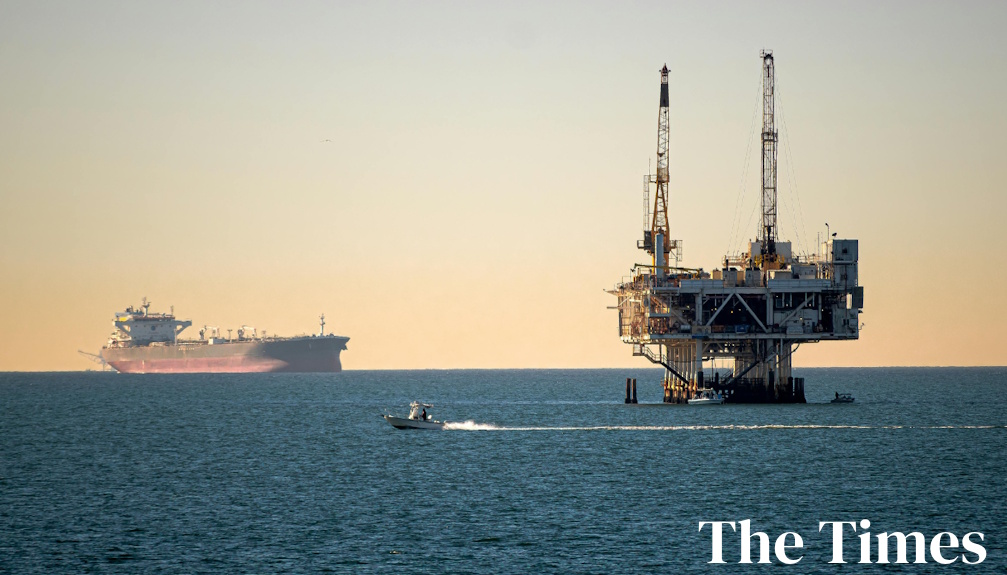
What now for petrol prices? Global doom and gloom makes the outlook surprisingly positive
- Written by: Joaquin Vespignani, Associate professor, University of Tasmania
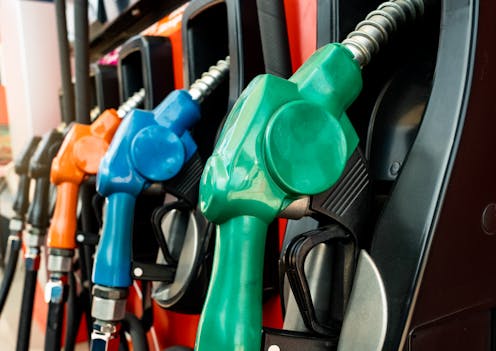
In early March Russia’s invasion of Ukraine pushed global oil prices up by about 30% and Australians faced paying more than $2.15 a litre for petrol. Contrary to economists’ advice[1], the Morrison government decided to halve of the fuel excise for six months, reducing the cost of petrol by 22.1 cents a litre.
That discount period ends at midnight. So what can you expect local fuel prices to do now?
To begin with, the fuel excise is indexed[2] so it will add 23 cents to a litre of petrol. But not immediately. Your local service station’s tanks are likely to still hold fuel for which the retailer paid the discounted excise.
Federal treasurer Jim Chalmers has cited industry estimates[3] of about 700 million litres of discounted fuel still being “in the system”. To put that in perspective, Australians consumed an average of about 42.5 million litres[4] of petrol a day in 2021. So it may be one to two weeks, depending on where you live, before you’re paying extra.
But what you will then be paying probably won’t be that different to before Russia invaded Ukraine, with global oil prices dropping due to efforts to increase supply and a deteriorating global economic outlook suppressing demand.
Read more: What is petrol excise, and why does Australia have it anyway?[5]
Global prices dictate local prices
Australia imports about 90% of its refined fuel needs[6], so the main determinants of the price of petrol and diesel in Australia are international oil prices and the value of Australian dollar to the US dollar (because oil prices are determined in US currency).
Read more: Conflict in the South China Sea threatens 90% of Australia's fuel imports: study[7]
Over the past six months the Australian dollar’s buying power has declined from about 75 to 65 US cents (a 13% drop). But that has been offset by oil prices falling more than 30% since June.
There is no single oil price because oil is traded in different markets according to its quality (with names reflecting the historical source of that type of oil). The following graph shows two commonly cited benchmarks – West Texas Intermediate (from Texas) and Brent Crude (from the North Sea).
Prices spiked after the invasion of Ukraine due to Russia’s signicance as an oil exporter (the second-biggest after Saudi Arabia, accounting for about 8% of exports in 2021[8]) and uncertainty about what the conflict would mean for those exports, as well as Russia’s gas exports to Europe and markets generally.
Increased supply, faltering demand
The steady decline since June is due to two main reasons.
First, the efforts of the European Union and the United States to increase non-Russian oil supplies. This has been both to ease inflationary pressures on their own economies as well as to drive down the windfall revenue Russia has made from its oil exports (mostly to China and India[9]).
The G7 is working on a plan to further choke off those revenues through imposing a price cap[10] on Russian oil exports. Whether this will succeed depends first on finding agreement in Europe[11], which is divided over the plan.
The Australian government is supporting the price cap[12] but this is mostly symbolic. At this point I can’t see it having much practical impact on Australian petrol prices.
Second, the global economy is weakening, which is taking the pressure off demand. The OECD’s economic outlook published this month predicts global economic growth will slow to 2.2% in 2023[13].
As a consequence, the International Energy Agency’s Oil Market Report[14] last month revised upwards its outlook for world oil supply (though it also warned “another price rally cannot be excluded” given disruption risks).
Crude oil prices are now below US$90 a barrel – less than at the start of Russia’s invasion of Ukraine. For the next 12 months oil prices can be expected to decline to below US$80. This will put Australian petrol and diesel prices back to where they were in 2021. Which is good news for motorists, if not the global economy.
References
- ^ economists’ advice (theconversation.com)
- ^ fuel excise is indexed (www.ato.gov.au)
- ^ cited industry estimates (www.abc.net.au)
- ^ 42.5 million litres (www.energy.gov.au)
- ^ What is petrol excise, and why does Australia have it anyway? (theconversation.com)
- ^ 90% of its refined fuel needs (theconversation.com)
- ^ Conflict in the South China Sea threatens 90% of Australia's fuel imports: study (theconversation.com)
- ^ 8% of exports in 2021 (www.worldstopexports.com)
- ^ China and India (oilprice.com)
- ^ a price cap (www.brookings.edu)
- ^ agreement in Europe (www.bloomberg.com)
- ^ supporting the price cap (indaily.com.au)
- ^ 2.2% in 2023 (www.oecd.org)
- ^ Oil Market Report (www.iea.org)
Authors: Joaquin Vespignani, Associate professor, University of Tasmania