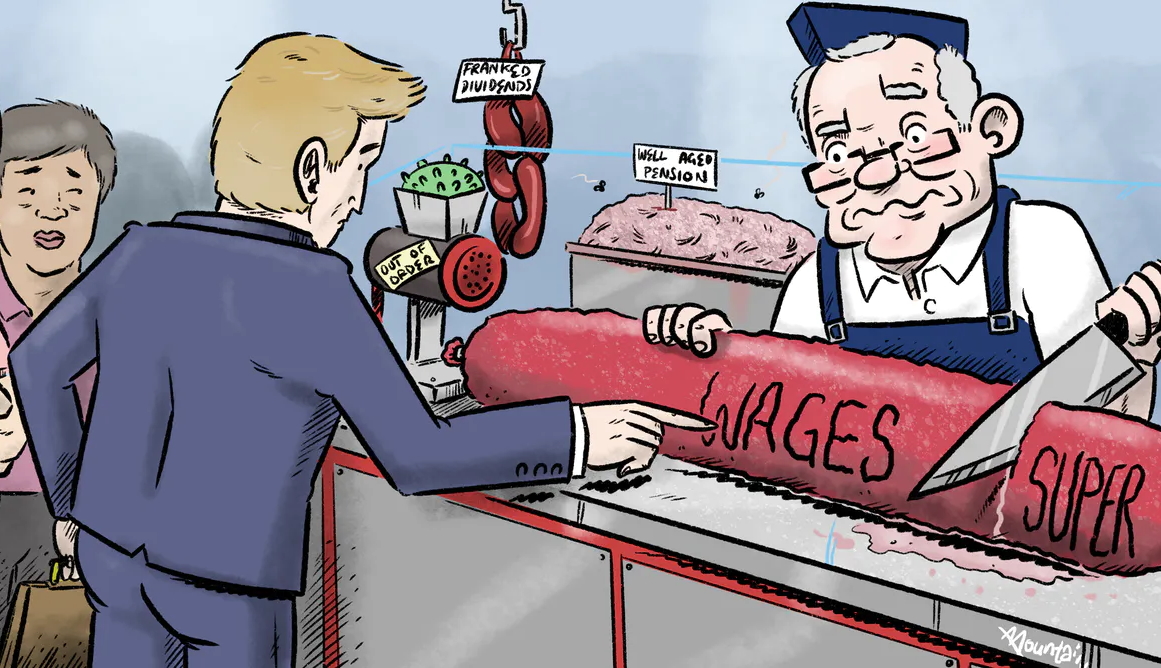
With unemployment steady at 3.5%, inflation fears shouldn't stop Australia embracing a full employment target
- Written by: Jeff Borland, Professor of Economics, The University of Melbourne
Despite warnings of a global economic downturn, Australia has again defied the odds with its official unemployment rate remaining steady at 3.5%[1] in March.
Behind that number though, plenty happened. The total number of people in jobs grew by 53,000. The increase of 116,600 in employment in the past two months surpasses anything seen since the middle of 2022, when the unemployment rate first hit 3.5%. It seems there is still plenty of strength in labour demand.
The only reason Australia doesn’t have an even lower unemployment rate is that labour-force participation rose by about the same amount as employment – 51,500. In fact, the similar size of increases in employment and labour-force participation in the past two months, together with continued high vacancy rates, suggests employment growth now depends on new entrants to the workforce.
Another month with low unemployment is another month of the benefits that brings. Low unemployment means higher GDP, with more of the nation’s available labour supply being used to produce output.
It also means greater equity. Groups that have the most difficulty getting into work see the biggest boost in employment[2] when unemployment is low.
With these benefits in mind, you might expect that making unemployment as low as possible would be a constant policy objective for government. Yet I don’t believe that has been the case in recent times.
Instead, the focus has been on achieving the target rate of inflation. Since that target was adopted, in the early 1990s, attention to unemployment has progressively declined.
Too much fear of inflation
Certainly, there has been concern when the rate of unemployment has threatened to rise above 5% or 6%, as it did with the Global Financial Crisis of 2007-2008, and with the onset of COVID-19 in 2020.
But apart from those times, we haven’t seriously attended to how low the rate of unemployment should be, or designed policy to seek that objective. By not thinking more seriously about the rate of unemployment, Australia missed the opportunity to push the rate lower in the 2010s.
In economics, it’s standard to regard full employment as the lowest unemployment rate possible without labour demand causing excessive wage growth and inflation.
This number – known as the non-accelerating inflation rate of unemployment, or NAIRU – is a matter of debate. Prior to the pandemic it was generally thought the unemployment rate couldn’t get lower than about 5%[3] without being likely to cause wage inflation.
Read more: Vital Signs: Australia's 5% jobless rate is not full employment; pushing up interest rates would be wrong[4]
But during 2021-22, with the stimulus from fiscal policy to deal with COVID-19, the rate of unemployment fell to its current level, 3.5%, without accelerating wage inflation.
We need a new unemployment target
What is needed now, therefore, is a rebalancing of macroeconomic policy objectives. We need a full employment target, expressed as a level or acceptable range of unemployment or labour underutilisation[5], to accompany the existing inflation target.
A full employment target will force governments to engage with what is the minimum rate of unemployment possible to sustain; and increase accountability for taking action to achieve that goal.
Choosing the target needs to balance the benefits of a lower rate of unemployment for national output and equity, against the potential inflationary consequences of trying to push unemployment too low.
It needs to draw on a wide variety of indicators of labour market outcomes; beyond just the NAIRU, which ignores the output and distributional benefits of low unemployment.
Underemployment counts too
Ideally, the target should also be constructed recognising that the policy problem is broader than unemployment. What should motivate policy is people not being able to work the hours they want or are willing to work.
Unemployment is part of this. But increasingly so is underemployment. By 2022, about 45% of extra hours that could have been worked in the Australian labour market were due to workers being underemployed.
Read more: Technically unemployment now begins with a '3'. How to keep it there?[6]
Hence, whatever way the full employment target is expressed, it needs to take account of the variety of types of labour underutilisation.
Finally, along with aggregate full employment target, we also need specific policy action for groups who require extra assistance. Even with the current low rate of unemployment, some groups are still missing out on employment opportunities to an unacceptable level – such as First Nations people, those with a disability, and people living in disadvantaged regions.
References
- ^ steady at 3.5% (www.abs.gov.au)
- ^ biggest boost in employment (theconversation.com)
- ^ lower than about 5% (www.rba.gov.au)
- ^ Vital Signs: Australia's 5% jobless rate is not full employment; pushing up interest rates would be wrong (theconversation.com)
- ^ labour underutilisation (www.abs.gov.au)
- ^ Technically unemployment now begins with a '3'. How to keep it there? (theconversation.com)
Authors: Jeff Borland, Professor of Economics, The University of Melbourne