Weekend Times


Google Workspace

Business News

Up to one in six recent migrants are paid less than the minimum wage. Here’s why

  • Written by Brendan Coates, Program Director, Economic Policy, Grattan Institute
Up to one in six recent migrants are paid less than the minimum wage. Here’s why

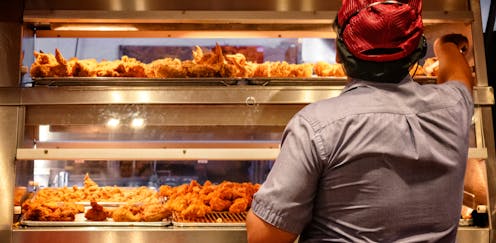
From working 20 to 30 hours[1] of unpaid overtime each week in one of Australia’s fanciest restaurants to picking fruit while being exposed to dangerous chemicals for less than $10 an hour[2], the underpayment of migrant workers is rife.

The Grattan Institute’s new report, Short-changed: How to stop the exploitation of migrant workers in Australia[3], show a broad pattern.

We’ve used two nationally representative Australian Bureau of Statistics surveys of employees and employers – Characteristics of Employment[4] and Employee Earnings and Hours[5] – to find out whether employees are paid below the national minimum hourly wage in Australia, currently $21.38 an hour or $26.73 an hour for casuals[6].

We estimate that recent migrants – those who arrived in Australia within the past five years – are twice as likely to be underpaid as migrants who have been in Australia for at least 10 years, and those born here.

Underpayment is widespread

In 2022, 5% to 16% of employed recent migrants were paid less than the national minimum wage. Between 1% and 8.5% of recent migrants were paid at least $3 less than the hourly minimum.

This compares with 3% to 9% of all employees in Australia being paid below the national minimum wage; with 0.5% to 4.5% paid at least $3 an hour less. These numbers are likely to under-represent the extent of underpayment because our analysis only counts those being paid less than the national minimum wage. It does not count cases where workers are underpaid against appropriate award rates, which typically pay more than the national minimum wage, penalty rates, or are not paid their superannuation. Factors contributing to exploitation Part of reason recent migrants are more likely to be underpaid is because they tend to work in industries where underpayment is more prevalent, such as hospitality and agriculture. For example, temporary visa holders account for nearly 20% of workers in hospitality, the industry with the highest reported rate of underpayment.
Migrants also tend to be younger workers. Employees aged 20 to 29 are nearly six times more likely to be paid less than the national minimum wage than workers aged 30 to 39. But even after accounting for age, industry and other demographic characteristics, migrants are still more likely to be underpaid. Migrants who arrived in the past five years are 40% more likely to be underpaid than long-term residents with similar skills working in the same job with the same characteristics. Migrants who arrived five to nine years ago are 20% more likely to be underpaid. Several things explain this. First are visa rules, which make temporary visa holders more vulnerable to exploitation. For example, many international students put up with mistreatment for fear their visa may be cancelled for working more hours than permitted by their visa rules. Two-thirds of recent migrants are on a temporary visa[7]. Migrants have less bargaining power than local workers, partly because they have small social networks to help them find a job. They may not know what workplace rights they are entitled to and face discrimination in the labour market. Read more: What's in a name? How recruitment discriminates against 'foreign' applicants[8] Our analysis shows the likelihood of underpayment is also higher among those working less-skilled jobs with fewer qualifications. Without change, underpayment will rise again Rates of underpayment for migrant workers and locals alike have fallen since the pandemic began In 2018, 8% to 22% of recent migrants were paid less than the minimum hourly wage (compared with 5% to 16% in 2022). This probably reflects the decline in the number of temporary visa holders living in Australia, especially students and working holiday makers, and labour shortages boosting worker’s bargaining power. But with borders open again and temporary visa holders coming back in big numbers[9], the rate of underpayment seems sure to rise again without action from government to stamp out exploitation. The federal government needs to reform the visa rules that make migrants vulnerable, boost resources to enforce workplace and migration laws and make it easier for migrants to claim money owed. Underpayment has been widespread for too long. Now is the time to put a stop to it. Read more: How to improve the migration system for the good of temporary migrants – and Australia[10] References^ 20 to 30 hours (www.smh.com.au)^ less than $10 an hour (www.smh.com.au)^ Short-changed: How to stop the exploitation of migrant workers in Australia (grattan.edu.au)^ Characteristics of Employment (www.abs.gov.au)^ Employee Earnings and Hours (www.abs.gov.au)^ $21.38 an hour or $26.73 an hour for casuals (www.fairwork.gov.au)^ Two-thirds of recent migrants are on a temporary visa (grattan.edu.au)^ What's in a name? How recruitment discriminates against 'foreign' applicants (theconversation.com)^ temporary visa holders coming back in big numbers (www.theaustralian.com.au)^ How to improve the migration system for the good of temporary migrants – and Australia (theconversation.com)Authors: Brendan Coates, Program Director, Economic Policy, Grattan Institute

Read more https://theconversation.com/up-to-one-in-six-recent-migrants-are-paid-less-than-the-minimum-wage-heres-why-206067

The Weekend Times Magazine

Tammy Hembrow's Saski Collection re-launches Mesh Collection

The new range from fitness expert Tammy Hembrow’s clothing range Saski Collection has dropped its original Mesh Collection for the second time.   The new luxury athleisure label’s collection, which is worn by the likes of J Lo and available...

How Custom Made Inflatables Can Turn Your Backyard into a Kids' Wonderland

If you're planning an event for your kids at home, transforming your backyard into a magical wonderland is easier than you think. Custom made inflatables offer a versatile and fun...

Airbnb bans party houses

PARTY HOUSE BAN BY AIRBNB WELCOMED BY STRATA SECTOR A decision by Airbnb to ban so called party houses has been applauded by the strata sector in New South Wales and...

The Best Luxury Cars in 2021

The best luxury cars that you can look out for this year. You are probably looking for the most comfortable car this year. You go for these types of cars...

Tinseltown - Keeping up with the Kardashians no more: the complicated legacy of reality’s first family

Kim Kardashian West has announced to her 160m followers on Instagram that Keeping Up with the Kardashians will end after its next season. The Kardashians, particularly Kim, have been at the...

The official ANZ launch of EPOS

Sydney - Following a panel discussion with Australian businessman Mark Bouris and panellists Alyce Tran, Scott Bidmead and Jahan Sheikh from Microsoft EPOS was launched. Attendees experienced...

Lifestyle Awnings – Bringing Style and Comfort to Melbourne Outdoor Living

Melbourne homeowners are always looking for ways to make better use of their outdoor areas. Whether it's entertaining, relaxing, or adding value to the property, installing Lifestyle Awnings is one of...

Camplify Research Reveals 2020 is the Year of the Local Road Trip

Camplify has today released a research report highlighting that 2020 is no doubt the year of the local road trip. With COVID-19 restricting international travel, Australians have hit the roads...

What is Medicines Optimisation and Why is it Important?

Medicines optimisation is a patient-focused approach to safe and effective medication use that helps people get the best possible outcomes from their treatments. Rather than simply ensuring patients take their...