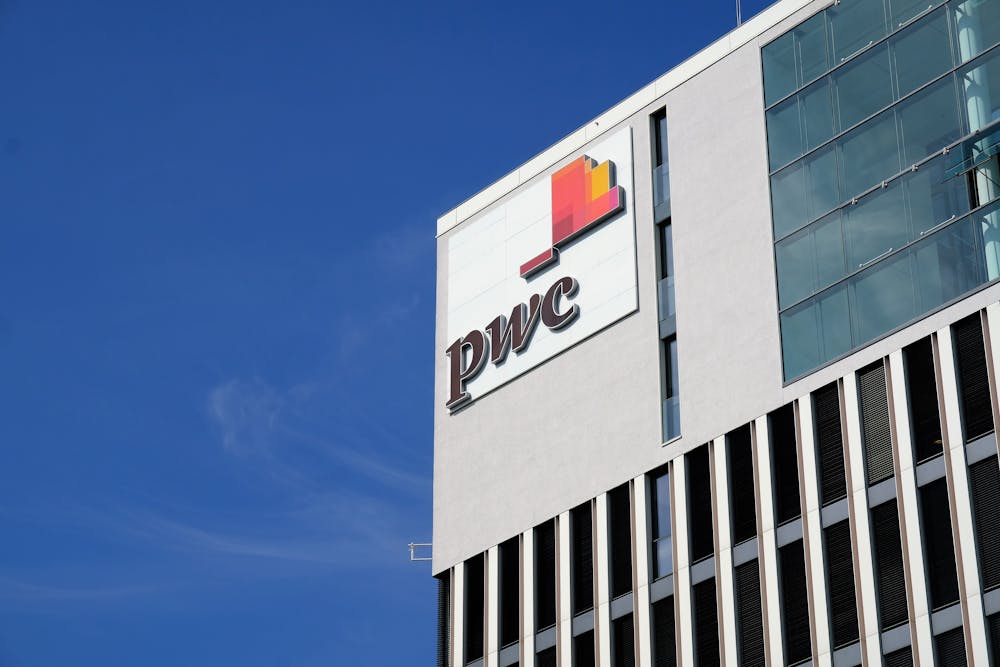
You can't buy much for $1, except maybe a global company. Why PwC could be sold for less than the price of a stamp
- Written by: My Nguyen, Senior Lecturer in Finance, RMIT University

In a move that has taken the business world by surprise, PwC Australia this week offloaded its government consultancy business to Allegro Funds for just $1.
It’s what’s known as a peppercorn[1] transaction.
Peppercorn transactions, which involve a minimal payment to fulfil the requirements of a legal contract, are not as unusual as they may seem.
They are used when companies seek to rid themselves of liabilities as well as opportunities.
PwC’s decision comes in the aftermath of a scandal triggered by a former PwC tax partner who, while advising the federal government on laws to prevent corporate tax avoidance, shared confidential information with colleagues[2].
Read more: Self-interest versus public good: the untold damage the PwC scandal has done to the professions[3]
You might wonder why the asking price was set at $1 and not $2, or $100. It’s because the $1 is a nominal price, which is all that is needed to make the sale legally binding.
Under contract law, sales are valid if they are in return for a “consideration[4]”.
The actual value of the transaction is far greater than the price paid, including things such as the ability of the purchaser to operate the business successfully, meet operational commitments (including those to staff), and pay down outstanding debt.
The purchaser, Allegro Funds, will be shouldering not just the business (and whatever opportunities it brings) but also liabilities and ongoing contracts.
In the past, several football and Formula 1 teams have also been sold for a nominal price of $1, a price that takes into account the transfer of liabilities and obligations along with opportunities.
Caterham Sports, a UK company that designed and built cars for the Caterham Formula 1 team, was sold for just £1[5] (A$1.90) in 2014.
Football clubs Chelsea[6], Portsmouth[7] and Swansea City[8] were sold for £1 in 1982, 1997 and 2001 respectively, with the buyers taking on the debts and obligations as well as the opportunities.
While these transactions often occur when a company is struggling or wants to offload certain liabilities, they can also take place when things are better but not as good as they could be under a new owner, and for nominal prices that exceed $1.
Some of the most transformative offloadings have been sold for billions.
The most notable was Facebook’s US$1 billion[10] purchase of Instagram in 2012, in which Facebook not only gained the platform and its user base, but also took on any obligations or liabilities.
Amazon’s 2017 A$13.7 billion[11] acquisition of Whole Foods in 2017 was similar.
Read more: Who needs PwC when consultancy work could be done more efficiently in-house?[12]
All that’s different between these billion-dollar price tags and a price tag of $1 is the best guess of the old owner about the asset’s prospects under the new owner (and in PwC’s case, the imperative to find a new owner quickly).
When a business is dragged down with liabilities, and it becomes clear it has better (although uncertain) prospects under a new owner, the price needn’t seem to make sense.
PwC’s government consultancy business might well be worth much, much less than $1 to its existing owners if it stayed in their hands. They faced the prospect of having to continue to fund the business with few or no government contracts.
The UK football teams that were bleeding money until sold for £1 would also have been worth a lot less than £1 to their existing owners.
Instagram was also probably worth less than the US$1 billion it sold for, until it was bought by a new owner with the ability to integrate it with something bigger and make it far more valuable. A recent guess is US$100 billion[13].
References
- ^ peppercorn (news.bbc.co.uk)
- ^ shared confidential information with colleagues (www.pwc.com.au)
- ^ Self-interest versus public good: the untold damage the PwC scandal has done to the professions (theconversation.com)
- ^ consideration (www.australiancontractlaw.info)
- ^ sold for just £1 (www.carthrottle.com)
- ^ Chelsea (www.dailymail.co.uk)
- ^ Portsmouth (www.independent.co.uk)
- ^ Swansea City (news.bbc.co.uk)
- ^ Shutterstock (www.shutterstock.com)
- ^ US$1 billion (archive.nytimes.com)
- ^ A$13.7 billion (archive.nytimes.com)
- ^ Who needs PwC when consultancy work could be done more efficiently in-house? (theconversation.com)
- ^ US$100 billion (earthweb.com)
Authors: My Nguyen, Senior Lecturer in Finance, RMIT University