From viral social media ‘pranks’ to hooning, what makes teens behave so badly?
- Written by: Kathryn Daley, Senior Lecturer, Youth Work & Youth Studies, Social Equity Research Centre, RMIT University
Two teens were arrested in Melbourne last month after horrific video footage[1] of them pushing an unsuspecting elderly fisherman off a pier went viral.
The “prank” appeared to have been undertaken and filmed for the purpose of social media content. The man had to be rescued by good samaritans and the teens have been charged.
Soon after this, a schoolboy made headlines after being filmed on a footbridge pouring a whole bottle of milk[2] on women enjoying a boat ride on Melbourne’s Yarra River.
It is easy to explain this behaviour away as poor parenting, problem children or with the old rationale that “kids will be kids”. But we can better explain human behaviour by considering biological, psychological and social influences.
Read more: Why do young children sometimes steal? And what should parents do about it?[3]
Invisible risks, invisible consequences
Perhaps the most important factor to consider is the development of a young person’s brain. The evidence[4] is clear that a person’s brain does not fully mature until they are well into their 20s.
The prefrontal cortex of the brain is the last part to develop fully. The function of the prefrontal cortex is higher-order tasks such as decision-making and emotional regulation. Importantly, this is the part of the brain that considers information that is not immediately obvious.
So when a child rides their bike on a footpath, the adult behind them might tell them to slow down just in case a car reverses from a driveway. But the child doesn’t foresee this risk because there is no car to be seen. The potential risk is clear to the adult but, as it isn’t immediately identifiable, it is invisible to the child.
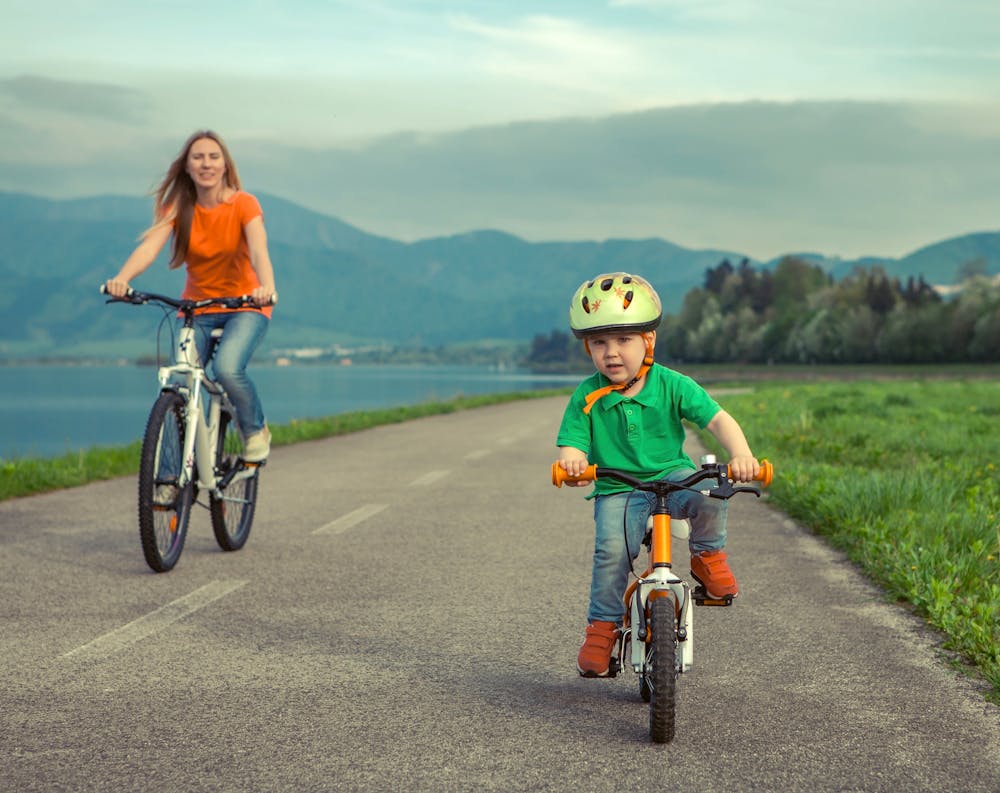
Humans have a self-preservation instinct: when we understand the risk of death, we avoid it. When a usually sensible young man drives his car too fast, he is not consciously taking a risk. He is simply enjoying the rush of going fast. The risk is not tangible or visible, and therefore not present in his decision-making.
For the teenaged boys in the viral videos, they’re in the same prank-like mindset of an annoying older brother. It is not that they are choosing to ignore potential consequences, it’s just that not all the consequences are visible to them. They might be driven by the immediate attention of laughs or internet notoriety, but harm to others, police charges and potential school expulsion are probably not in their thought process.
Personalities formed through nature and nurture
Some people have a larger appetite for risk. One child will dive head-first into an ocean and another won’t get their feet wet.
This is likely due to a combination of environmental and biological factors: some people are more comfortable with the feeling of fear, whereas some may have had parents who were overprotective, or perhaps an early life experience of trouble near water that has left a legacy.
These factors all contribute to a person’s psychology. A person who is risk-averse is more likely to be “scared” of pranks or unsafe behaviour. This is not necessarily because they are cognitively more able to think through the potential outcomes, but because they are acting on their fear of new or unknown environments. A new situation elicits fear and, in turn, cautionary behaviour.
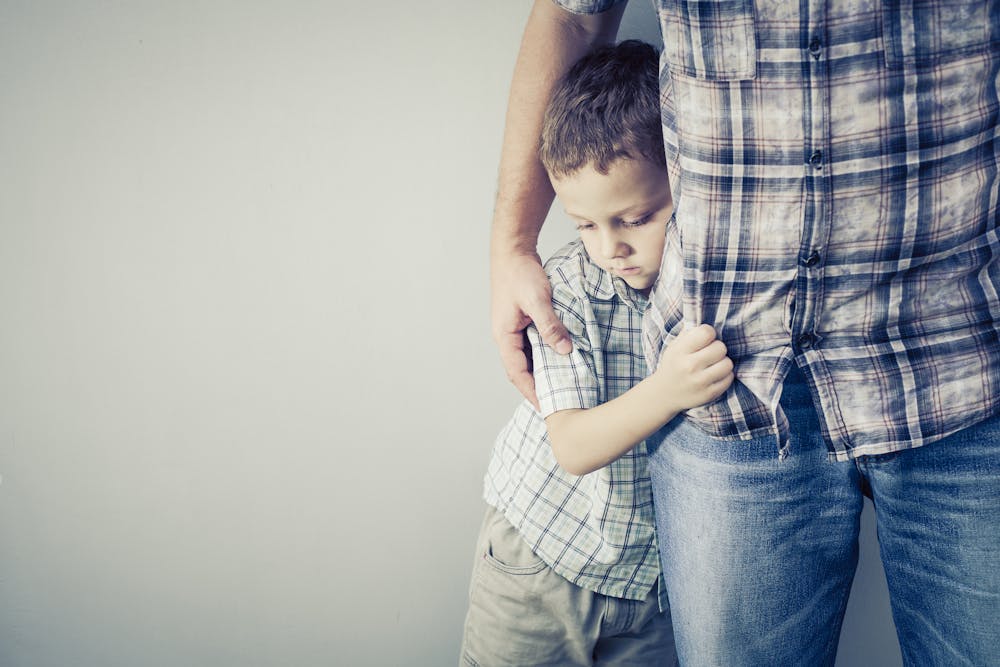 Some children have a higher capacity for fear than others.
Shutterstock[6]
Some children have a higher capacity for fear than others.
Shutterstock[6]
A young person who is less fearful will be less reluctant in new environments. So it’s not a coincidence that the “good” child who appears not to make “reckless” decisions is often the same child who struggles more with adapting to life changes, such as starting school. Similarly, the “naughty” toddler or the “class clown” might be the most adaptable and open to new environments.
Read more: 'It's real to them, so adults should listen': what children want you to know to help them feel safe[7]
The urge to fit in
Finally, our behaviour is influenced by those around us. When we are in a group we behave differently from when we are alone. We are all driven by a desire to fit in, to be liked, and sometimes we might do things we would not normally to be included.
For young people today, this is amplified through social media. Their audience is not only those right near them, but those who are in their wider digital circle. There is an instant reinforcement of a behaviour when there is a large, online audience.
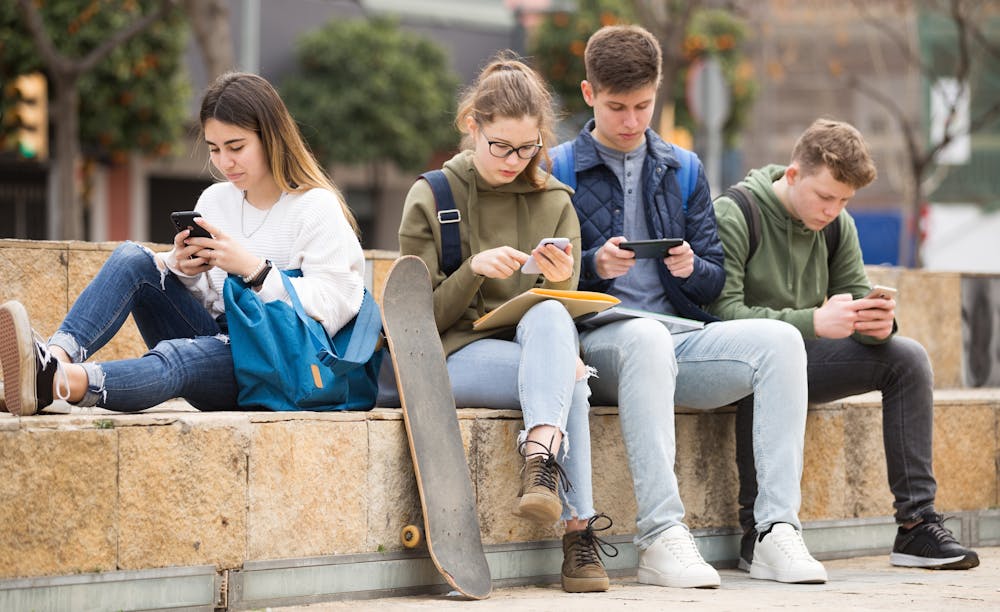 Young people are often driven by a desire to fit in, especially on social media.
Shutterstock[8]
Young people are often driven by a desire to fit in, especially on social media.
Shutterstock[8]
Frequently, we see prankster behaviour when young people are on school holidays. They are bored and looking for entertainment.
There are few spaces that are welcoming for groups of teenagers to simply “hang out”, and there are many that are actively hostile to groups of youths. Move-on laws[9] for example, were designed with the intention of being able to prohibit young people from gathering.
Finally, a crucial factor is the construction of gender, where boys’ larrikinism can be seen as hyper-masculine and cool, making these types of behaviours more likely to be socially endorsed.
What can be done?
Unfortunately, not a lot. You cannot expedite the development of a brain and you can’t do much about someone’s psychology. School programs might be understood by some young people but not by others, and are expensive to deliver. Nationwide organisations like Life Education[10], which offers a program of health education to primary school students, and Elephant Ed[11], which is increasingly used by schools to deliver sex education, are provided at cost to the school.
Read more: Teenage brain matures with onset of puberty[12]
However, social influences can be changed, albeit slowly.
If we can provide young people with social places to be where they are engaged, they will then be less bored. The Adolescent Community Reinforcement Approach[13] (an intervention developed to reduce “antisocial” behaviours by connecting people to their communities) is based on the premise that behaviour change shouldn’t be focused on stopping a problem behaviour.
Instead, it should provide young people with opportunity for positive “prosocial activity”. So for example, offering more access to free basketball courts for young people interested in basketball gives them a positive way to spend their time.
When we continue to see young people as wild criminals who have no respect, we create a greater divide between young people and ourselves.
References
- ^ video footage (www.heraldsun.com.au)
- ^ bottle of milk (www.heraldsun.com.au)
- ^ Why do young children sometimes steal? And what should parents do about it? (theconversation.com)
- ^ The evidence (www.ncbi.nlm.nih.gov)
- ^ Shutterstock (www.shutterstock.com)
- ^ Shutterstock (www.shutterstock.com)
- ^ 'It's real to them, so adults should listen': what children want you to know to help them feel safe (theconversation.com)
- ^ Shutterstock (www.shutterstock.com)
- ^ Move-on laws (youthlaw.asn.au)
- ^ Life Education (www.lifeedvic.org.au)
- ^ Elephant Ed (www.elephanted.com.au)
- ^ Teenage brain matures with onset of puberty (theconversation.com)
- ^ Adolescent Community Reinforcement Approach (www.youthaodtoolbox.org.au)
Authors: Kathryn Daley, Senior Lecturer, Youth Work & Youth Studies, Social Equity Research Centre, RMIT University