ASIO’s threat assessment is underpinned by confusing logic
- Written by: Greg Austin, Adjunct Professor, Australia-China Relations Institute, University of Technology Sydney
Recently, Australia’s internal security agency declared[1] there is a greater threat to Australian security than new terrorist attacks. Instead, it’s systemic and existential. The report read:
In 2024, threats to our way of life have surpassed terrorism as Australia’s principle security concern.
So, what is the principle security concern? It’s foreign interference.
In its last annual report[2], the agency, the Australian Security Intelligence Organisation (ASIO), reported 2016 was its busiest year in the past decade for disrupting terrorist attacks. 2022 was its peak year for disrupting foreign spies.
Amid ongoing worldwide conflicts and a former politician[3] collaborating with a foreign country, is this assessment adequately capturing what Australians need to know about all the possible threats?
Read more: Explainer: what is sabotage and why is the ASIO chief worried about it?[4]
Terrorism only ‘possible’
In the latest annual threat assessment, ASIO is still assessing the terror threat as lower than in earlier years. In 2022, it was changed from a “probable” likelihood (where it sat for eight years[5]), and it’s now rated as “possible”.
This is against the backdrop of growing community unrest since October 7 last year, when Hamas launched the third-deadliest[6] terrorist attack in the world since 1970, according to the Center for Strategic and International Studies.
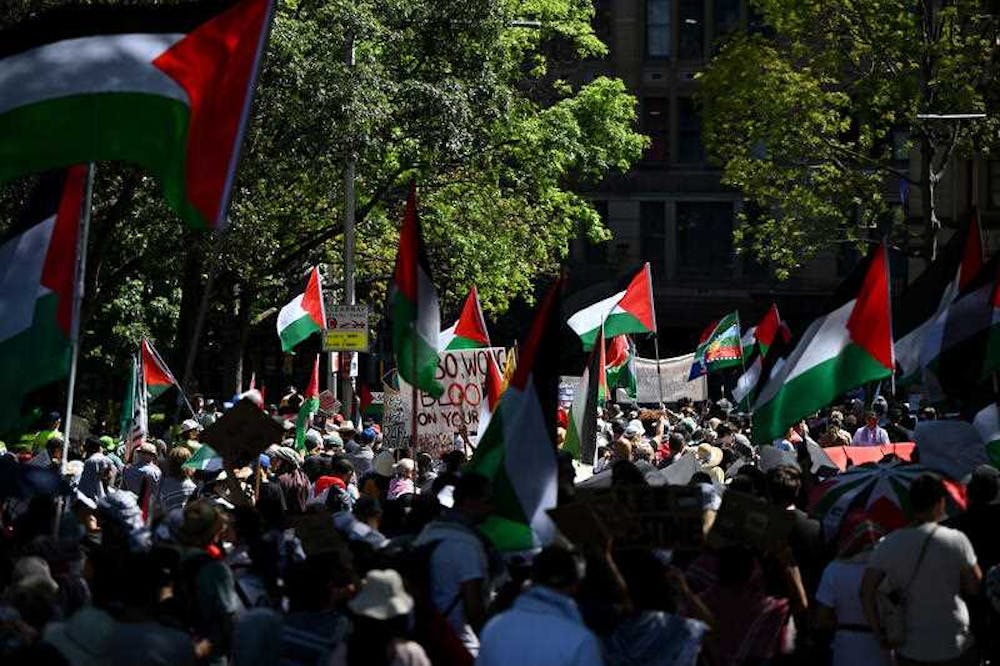
Israel’s response has been a war on Hamas in Gaza, which has resulted in tens of thousands[7] of Palestinian fatalities, many of them women and children, though it’s difficult to verify the exact figure. Regardless of the precise numbers, the rage and hatred prompted by these deaths can fuel extremism, both here and overseas.
Two leading US Middle East security specialists have flagged the danger of new attacks[8] both in the Middle East and beyond in response to these events. They also outlined the actual incidents that have happened since October 7, attesting to the new heightened risk. In ASIO’s view, we should not discount the risk at home even while keeping the terrorist threat level unchanged.
Threat concern reveals mixed logic
The most pertinent threat to Australia is foreign espionage and foreign interference. The agency says it’s “deeper and broader than you may think”.
Moreover, ASIO says, the threat level is “certain” (not merely “possible” or “probable”, as the terrorist threat had been).
This latest threat assessment, issued personally by the director general, Mike Burgess, calls out one country in particular, but doesn’t name it. He sketches a foreign espionage and influence-seeking campaign that is pervasive and well-resourced. He mentioned the specific case of an Australian politician (way back before 2018) who was, he says, collaborating with the foreign spies and selling out Australia in the process.
Read more: Amid warnings of 'spy hives', why isn't Australia using its tough counter-espionage laws more?[9]
Interestingly, Burgess says that ASIO foiled the plans of the foreign county and neutralised the threat from this politician.
In fact, Burgess went on to say the tradecraft of this adversary (how its spies do their business) has been good, but not good enough to defeat ASIO, supported by its intelligence partners.
This is just one of several points where the logic of the 2024 threat assessment begins to break down. Can the unnamed foreign country really be an existential threat if ASIO has cracked its espionage operations and disrupted its efforts at political influence? Is Australia’s security more threatened by these failed spies than by terrorists who may achieve a mass casualty attack involving Australian victims?
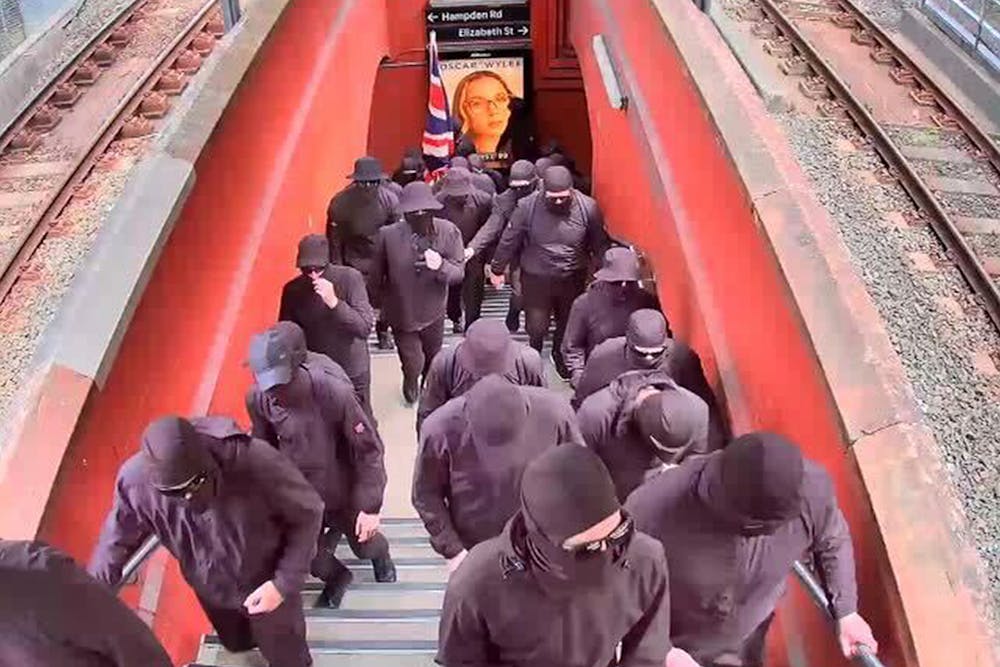 Far-right demonstrations in Sydney on Australia Day earned the ire of the prime minister.
Transport for NSW/AAP
Far-right demonstrations in Sydney on Australia Day earned the ire of the prime minister.
Transport for NSW/AAP
Far-right extremism downplayed
We don’t know which country is the source of this alleged threat to Australia’s way of life, but if it is China, there is room to question the ASIO line of thinking.
In the decade of its expansion of espionage and covert influence operations, China’s overall level of influence in major liberal democracies has radically declined[10], not increased. This is largely because of China’s anti-democratic or aggressive actions on the world stage.
In fact, as Burgess notes, ASIO faces dilemmas in prioritising the threats it follows and how to present them publicly. He’s limited by what can be revealed publicly, so omission may be distorting how the general public understands what he is saying.
He says terrorism remains a pervasive threat “even with a lower national threat level”. Well at that point, while we can agree with him, we might be forgiven for being a little confused.
The confusion is compounded by the way in which the annual threat assessment and other ASIO reporting appear to downplay right-wing extremism.
Read more: ASIO's language shift on terrorism is a welcome acknowledgment of the power of words[11]
The language on this issue in the 2024 threat assessment is defensible to a point (it says “the threat persists”), but the significance of this appears to be softened. Now, ASIO says right-wing extremists are “primarily focused on recruitment and radicalistaion”.
The future threats to internal security implied by the intimidating behaviour of neo-Nazis on Australia Day in Sydney this year, condemned by Prime Minister Anthony Albanese[12], do not appear to be adequately captured by the assessment of focusing on recruitment and radicalisation, even if that is true.
We can commend ASIO for its transparency under the directorship of Burgess and for its obvious operational successes.
On the other hand, we have now had five annual threat assessments from him. As a body of work meant to inform, reassure and even alert Australians, there are several reasons to question the effectiveness of its current format and guiding logic.
References
- ^ declared (www.asio.gov.au)
- ^ last annual report (www.transparency.gov.au)
- ^ former politician (www.theguardian.com)
- ^ Explainer: what is sabotage and why is the ASIO chief worried about it? (theconversation.com)
- ^ eight years (www.theguardian.com)
- ^ third-deadliest (www.csis.org)
- ^ tens of thousands (www.aljazeera.com)
- ^ new attacks (www.lawfaremedia.org)
- ^ Amid warnings of 'spy hives', why isn't Australia using its tough counter-espionage laws more? (theconversation.com)
- ^ radically declined (www.pewresearch.org)
- ^ ASIO's language shift on terrorism is a welcome acknowledgment of the power of words (theconversation.com)
- ^ condemned by Prime Minister Anthony Albanese (www.theguardian.com)
Authors: Greg Austin, Adjunct Professor, Australia-China Relations Institute, University of Technology Sydney