


Australia’s first women’s shelters were acts of radical grassroots feminism
- Written by: Emma McNicol, Research Fellow at Monash Sustainable Development Institute, Monash University
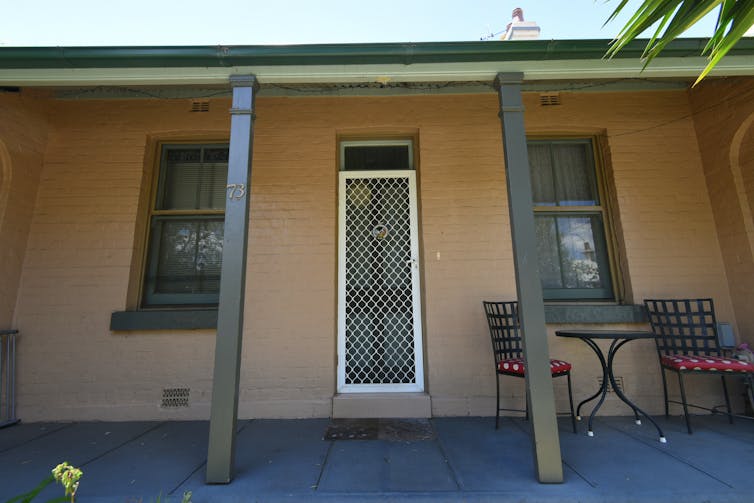
50 years ago, there wasn’t a single women’s shelter in Australia.
Then feminists squatted two terraces in Sydney, opening “Elsie”, Australia’s first domestic and family violence refuge.
Commissioned by Elsie co-founder Anne Summers, I’ve recorded oral histories with the women who built and sustained Australia’s refuge movement.
Australia’s refuge movement is a story of courageous grassroots feminist activism.
Read more: The Whitlam government gave us no-fault divorce, women's refuges and childcare. Australia needs another feminist revolution[1]
Choose to act
In the 1970s in Australia, there was nowhere for women experiencing male violence at home to go.
One night almost exactly 50 years ago, around 40 women’s liberation activists changed that, claiming squatters’ rights over two derelict Glebe terraces. They broke a window, changed the locks and turned on the gas and water, opening “Elsie”, Australia’s first women’s refuge.

As Elsie worker Ludo McFerran explained, Elsie’s mission was a “space for women, run by women”, which the residents would control. Elsie did not offer “charity”, the founders aimed at “change”, and therefore refuges would one day become obsolete.
Cooma, Kamilaroi woman Mary Ronyane, who today manages Wilcannia Safe House, proposed that Elsie was created because, when together women draw from their strength, they can “make a choice”. They chose to act.
McFerran described the refuge work as “highly vulnerable”. At the beginning, the work was entirely voluntary, and refuge work never proved a lucrative career.
The activists sacrificed all their time, energy, health and often their safety. In the “wild west”, as McFerran described it, perpetrators would “regularly turn up, threaten to burn the house down and kill everyone inside.”
There was no legal protection for residents or workers, so when perpetrators failed to return children after visits, workers would “go and try find them” and where possible “grab the kids back and make a run for it.”
Desperately trying to cover the operating costs, some of the workers started dealing marijuana to pay for necessities. Sydney’s artists and intellectuals started seeking out “Elsie Pot”.
With an intention to secure funding, the activists started encouraging various government ministers to come and see the conditions Elsie’s residents were enduring. Founder Christina Gibbeson told me how she kidnapped Doug Everingham, the minister for health at the time. She forced her way into a car carrying Everingham and instructed his driver to take them to Elsie. She mused:
“I would’ve gone to jail for it today, I suppose.”
Ceding power and privilege
Australia’s early refuges operated collectively. Everyone was obliged to scrub bathrooms and care for resident children. Decisions took time and often went to a vote. Former resident and worker, Bundjalung woman Christine Robinson, believes “at Elsie, we all had a say and a voice.”
The founders recognised residents’ insights and skills that came with their life experience. In 1980, six years after Marrickville refuge opened, the refuge’s residents informed staff that it was time for them to leave and let them take the reins, and they did.
The activists wanted liberation for all women, not just those who looked like them. Women’s Halfway House worker Di Otto noted that they viewed the refuge “as a site in which they could make contact with women outside of [their] circles […] and work towards a collective and inclusive liberation.”
 Refuges were often places where women found their political voices.
Australian Information Service/National Library of Australia[3]
Refuges were often places where women found their political voices.
Australian Information Service/National Library of Australia[3]
Vivien Johnson shared:
[…] [us] middle class white women were consistently confronted by our class prejudices [and] with the racism we held towards the women with whom we claimed to be equal with.
Christine Robinson believes Australia’s refuge movement “valued diversity.” She explained that Elsie’s staff all learned how to sit with, and learn from, fellow feminists calling out their racism.
Robinson explained at Elsie, she and fellow Aboriginal leaders had a platform to culturally educate their non-First Nations colleagues, whom she described as a “captive audience”, “trying” to get it right.
Space for activism
Elsie’s founders sought to cultivate an environment in which residents could build confidence and reclaim control over their lives. In 1975, Bobbie Townsend, a working-class woman, arrived at Elsie with two children.
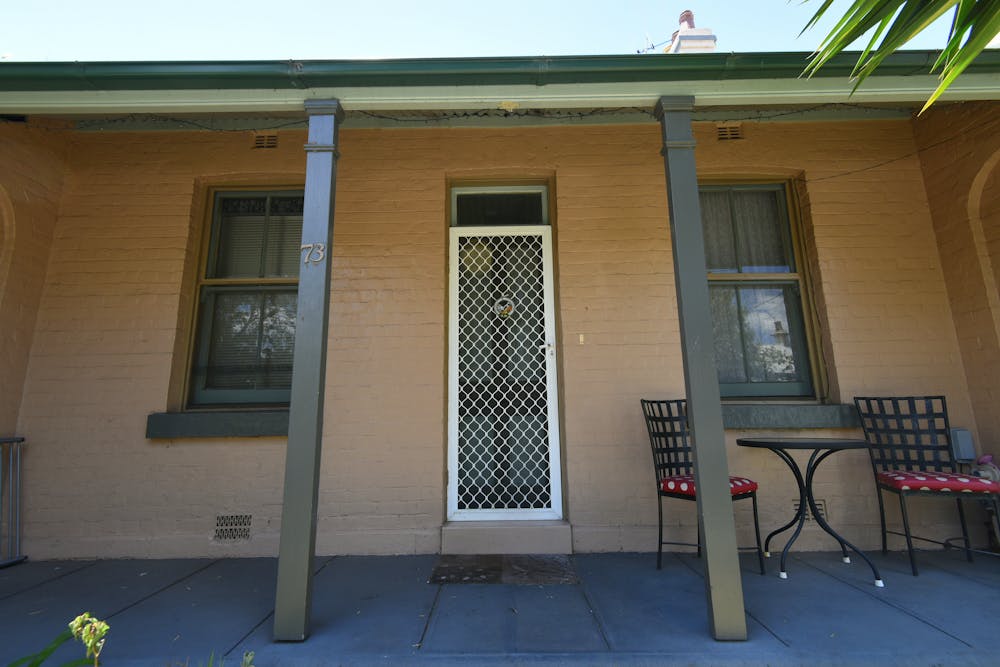 The original Elsie Refuge, before it relocated, as taken in 2018.
Sardaka/Wikimedia Commons, CC BY-SA[4][5]
The original Elsie Refuge, before it relocated, as taken in 2018.
Sardaka/Wikimedia Commons, CC BY-SA[4][5]
Townsend believes the late night discussions at Elsie’s dinner table “saved her”, and shared:
[…] for 26 years nobody had asked me what I thought about anything […] The first time someone asked me in a collective meeting what I thought, I didn’t know what to say […] Elsie was about taking control.
Robinson, like Townsend, also a resident turned staff member, reflected that “Elsie gave women power to make decisions for themselves.”
Today, there is nothing quite like Elsie
The founders all described an atmosphere of hope. Under Whitlam, things were possible.
McFerran explained that today, tendering practices have forced out community-run refuges. Run by Christian, centralised institutions, few refuges observe the grassroots collectivist principles that animated the movement’s early years.
While Elsie still opens its doors to victim-survivors today, it is run by St Vincent de Paul.
References
- ^ The Whitlam government gave us no-fault divorce, women's refuges and childcare. Australia needs another feminist revolution (theconversation.com)
- ^ Australian Information Service/National Library of Australia (nla.gov.au)
- ^ Australian Information Service/National Library of Australia (nla.gov.au)
- ^ Sardaka/Wikimedia Commons (commons.wikimedia.org)
- ^ CC BY-SA (creativecommons.org)
Authors: Emma McNicol, Research Fellow at Monash Sustainable Development Institute, Monash University








Elsie-2.jpg)