The Victorian government wants to trial electronic monitoring devices on young people. It’s a bad idea
- Written by: Kathryn Daley, Senior Lecturer, Youth Work & Youth Studies, Social Equity Research Centre, RMIT University
The Victorian government has recently announced a plan[1] to trial electronic monitoring devices for young people on bail and abandon proposed reforms to bail laws for young people. This is at odds with their recent bail reforms in the adult system.
The reforms in the adult system moved back to a model of a presumption of bail. This followed the knee-jerk changes made after the Bourke Street Massacre in 2017[2], which caused overflowing prisons and disproportionately affected Indigenous people[3].
Read more: 3 ways the Victorian government’s bail reforms fall short – and why it must embrace 'Poccum's Law'[4]
What is bail?
In recent years, “bail” has become a loaded term. Heavy media coverage[5] of offences occurring while an alleged perpetrator was on bail have created a public discomfort with bail altogether.
But many conflate bail with parole, and there is a very distinct difference: people on bail are not convicted of any crime. Twenty-four-hour monitoring of those who may be innocent is ethically fraught, and there is no evidence to suggest it will reduce crime.
Those on parole have been convicted and completed a custodial sentence before being released into the community. In a system that rests on the presumption of innocence, detaining people who are on bail is a breach of a potentially innocent person’s liberty.
Because of this, bail should only be refused in circumstances where the potential threat to the community is so great it warrants the risk of detaining an innocent person.
Electronic monitoring
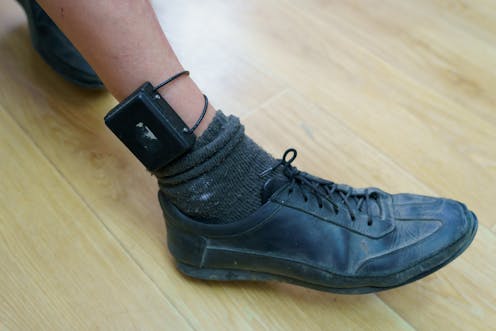
Victorian Attorney-General, Jaclyn Symes, has made the unexpected proposal to implement a trial of electronic monitoring ankle bracelets for young people who are charged with, but not convicted of, serious crimes. This is in a context of the Allan government under scrutiny from media, and even influencer Bec Judd[6], for being “soft on crime”.
Symes’ argues electronic monitoring will ensure bail conditions are being met, and that claim certainly appeases community concerns. But ankle monitors do not prevent people from breaching bail – it simply tracks them doing so. It is also a policy that allows 24-hour GPS monitoring of an unconvicted citizen.
When we accept such impingements on people’s right to the presumption of innocence and individual freedoms, we set a precedent for this happening elsewhere in our justice system.
While this idea sounds effective, there is no evidence it will help curb further crime, and some data to suggest[7] it will only entrench offending.
Young people with visible monitoring devices become so stigmatised they are excluded from the broader community. This means those with ankle bracelets often only associate with other accused offenders - none of whom are able to engage in any meaningful activity because of the barriers wearing a monitor creates. Ironically, there is some speculation[8] having a monitor is seen as a “badge of honour” to show off to friends.
Queensland has trialled ankle monitors for young people over 15 who are on bail and facing charges that can face a jury (indictable offences). One of the important eligibility criteria for the ankle bracelet is that they must have previously been convicted of an indictable offence.
So few meet this criterion[9] that in the first 12 months of the trial, only eight young people were eligible to be included. Because of these low numbers it could not be adequately evaluated. The program has been extended until 2025.
Given most young offenders are not committing crimes serious enough to make them eligible for the monitoring devices, it leads one to ask why the government would continue with it at all? A sceptic might suggest it is to save face: sure, it impinges the freedoms of some, yet it placates the fears of many. (Although it might actually increase crime.)
Reducing youth crime
In Victoria, and most of Australia, rates of youth crime are low[10] and serious offending is very rare. Those who are repeat and/or serious offenders are typically known to many other systems prior to their offending. Young people in the criminal justice system have backgrounds so disadvantaged we are almost desensitised to the statistics. For example:
Often the blame is placed at the feet of the parents, but given how often child protection services are involved, it’s curious more responsibility is not placed at the feet of the state.
Rather than seeing these young people as victims of multiple community and government failures, we seek to treat them as criminals even before they have been tried, almost certainly leading to entrenched crime and lifelong disadvantage.
Read more: From viral social media 'pranks' to hooning, what makes teens behave so badly?[11]
How should we address youth crime?
Youth crime is largely an issue of social inequality. Entrenched crime requires responses that seek to give young people a legitimate and valued place in the community and offer them viable futures.
The numbers of young people committing crime is low. Serious crime is rare. But those who are committing crime are often highly vulnerable, with backgrounds of serious disadvantage.
It’s in everybody’s best interest to understand jailing these people forever won’t work and would come at huge expense to taxpayers. Investing in whole-of-community responses[12] to help those who are on the margins to be included in a meaningful way of life is cheaper, more ethical and safer for us all.
References
- ^ announced a plan (www.abc.net.au)
- ^ Bourke Street Massacre in 2017 (www.theage.com.au)
- ^ disproportionately affected Indigenous people (www.theguardian.com)
- ^ 3 ways the Victorian government’s bail reforms fall short – and why it must embrace 'Poccum's Law' (theconversation.com)
- ^ Heavy media coverage (www.heraldsun.com.au)
- ^ even influencer Bec Judd (www.skynews.com.au)
- ^ some data to suggest (www.abc.net.au)
- ^ there is some speculation (desbt.qld.gov.au)
- ^ So few meet this criterion (desbt.qld.gov.au)
- ^ rates of youth crime are low (www.aihw.gov.au)
- ^ From viral social media 'pranks' to hooning, what makes teens behave so badly? (theconversation.com)
- ^ whole-of-community responses (www.aic.gov.au)
Authors: Kathryn Daley, Senior Lecturer, Youth Work & Youth Studies, Social Equity Research Centre, RMIT University