There is a ceiling on rate increases. It’s time to look for alternatives to local government funding
- Written by: Guy C. Charlton, Associate Professor, University of New England
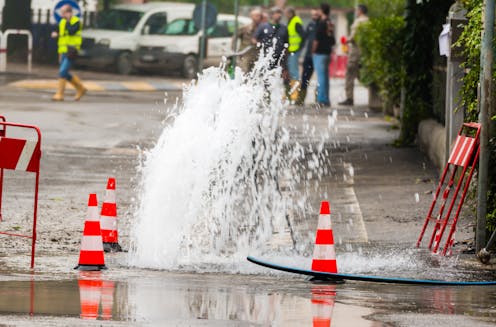
Auckland Mayor Wayne Brown’s recent unsuccessful demand[1] to have the central government repay the GST levied on property rates is the latest salvo in the battle over funding for local government in New Zealand.
It points to the topsy-turvy state of local government finance and the inability of central government to address local government financial and public policy concerns.
It’s also the result of poor decision-making by local governments[2] to properly invest or adequately monitor their operating costs.
These problems hurt both ratepayers’ pocketbooks and quality of life. The issues also starve local governments of the funds they need to provide services and invest in important infrastructure.
But it doesn’t have to be this way. Central government can ease the burden on ratepayers while helping local government to balance the books. The question is: will it?
Rates are on the rise
Auckland has proposed, on average, a 13.75% increase in rates. The Wellington Regional Council is proposing a 19.8% increase and Lower Hutt has proposed a 16.9% increase starting July 1. Hamilton is proposing a 25.5% rate hike, while Buller District Council is proposing a 31.8% rates increase.
These increased rates are the result of inflationary pressures that have impacted local government operations. It is estimated the increase in operating costs and infrastructure will require councils to scrap or delay 20% of proposed projects.
Read more: Don't believe the backlash – the benefits of NZ investing more in cycling will far outweigh the costs[3]
Like many local governments across the world, New Zealand’s local governments rely on property taxes to fund a major portion of their operations. However, local taxation has not risen despite increasing responsibilities and public expectations.
In February, S&P Global Ratings reported that local government rates had not increased[4] as a percentage of the economy (around 2%) in the past 100 years. This is compared with central government taxation, which has gone up 200% in the same period.
Councils carrying the weight of national objectives
This lack of growth is particularly alarming given the increased obligations assigned to local governments under the Resource Management Act, Local Government Act 2002 and a host of other legislation.
The lack of alternate sources of funding and tax authority has led to an over-reliance on rates. Rates account for more than half of council funding.
Even with increased central government transfers, the needed investments and increased costs faced by local councils have created an unsustainable situation which has been papered over by local government debt.
As a consequence, local councils’ average debt levels are much higher[5] than similarly rated northern European countries – about 180% of revenue.
At the same time, the central government has a comparatively low debt rate. According to the OECD[6], the debt in 2023 was 56.6% of GDP. This compares with a 120.8% on average across the OECD. Clearly, there is room for more central government involvement.
These problems are exacerbated by the government’s repeal of the Auckland petrol surcharge[7] and the axing of Labour’s Three Waters reform[8]. This reform would have amalgamated the 67 council-owned authorities managing drinking, waste and stormwater.
Supporters of the reforms argued larger entities would have the financial capacity to address underlying infrastructure deficiencies. Similarly, the Auckland region petrol tax was meant to fund infrastructure improvements and public transport alternatives.
But with the government’s unequivocal rejection of these local financing options, one wonders where sufficient funding to repair and replace ageing infrastructure will be sourced, much less the new infrastructure and services needed to meet the needs of a growing population.
Councils need to have the authority to enact accommodation levies, congestion charging, expanded tax incremental and development districts, tourist levies and sales and excise taxes, such as the recently removed petrol levy in Auckland, as well as increased access to GST funds.
Read more: If we want to improve NZ’s freshwater quality, first we need to improve the quality of our democracy[10]
The central government also needs to provide funding in lieu of rates[11] on Crown property or allow local councils to charge rates on Crown land.
This would avoid the often unfair or strained use of targeted rates to raise funds which should be borne more generally by all taxpayers, as well as the odd “tax-on-a-tax” Auckland’s mayor was complaining about.
At the same time, the central government needs to increase transfers to local councils and provide additional funding that can be put toward particular policy objectives, such as the 2018 Provincial Growth Fund[12].
Poor funding puts communities at risk
The Future of Local Government[13] report noted local government needs to deal with three different kinds of infrastructure: physical infrastructure (for example, roads, water and waste); social infrastructure (libraries and parks); and civic infrastructure (actions and practices that can leverage community engagement).
Funding shortfalls put these objectives at risk.
When New Zealand was first organised as a self-governing colony in 1853, the basic unit of government was considered to be local provinces and cities. Over time, policymakers appreciated the need to centralise policy and finance. This is reflected in the growth of the central government over the past 100 years.
However, centralisation and distance from on-the-ground problems have created the need for a new social compact. While central government finances are in relatively good shape, local governments have struggled.
This is unfair and counterproductive.
It does not recognise that New Zealanders move about the country in search of economic opportunity and quality of life. Their tax dollars should provide a basic level of local services and infrastructure.
References
- ^ Auckland Mayor Wayne Brown’s recent unsuccessful demand (www.stuff.co.nz)
- ^ poor decision-making by local governments (www.nzherald.co.nz)
- ^ Don't believe the backlash – the benefits of NZ investing more in cycling will far outweigh the costs (theconversation.com)
- ^ S&P Global Ratings reported that local government rates had not increased (www.interest.co.nz)
- ^ local councils’ average debt levels are much higher (www.interest.co.nz)
- ^ According to the OECD (data.oecd.org)
- ^ government’s repeal of the Auckland petrol surcharge (www.beehive.govt.nz)
- ^ the axing of Labour’s Three Waters reform (www.interest.co.nz)
- ^ F Armstrong Photography/Shutterstock (www.shutterstock.com)
- ^ If we want to improve NZ’s freshwater quality, first we need to improve the quality of our democracy (theconversation.com)
- ^ provide funding in lieu of rates (newsroom.co.nz)
- ^ 2018 Provincial Growth Fund (www.growregions.govt.nz)
- ^ The Future of Local Government (www.dia.govt.nz)
Authors: Guy C. Charlton, Associate Professor, University of New England