Why moving to the right could be wrong for Dutton and the Coalition
- Written by: Mark Kenny, Professor, Australian Studies Institute, Australian National University
Evidence that support for the Liberal Party is softening in its affluent inner-city homelands continues to accrue, while its hopes of capturing disgruntled voters in Labor seats in the suburbs and regions presume a historic shift in voting patterns.
When Peter Dutton took the Coalition reins in 2022 after a humiliating loss of office, his first priority was unity.
A punchy and well-schooled parliamentarian, Dutton knew that if ever he was to contest the prime ministership, his primary challenge was to make it to the next election.
In car racing, the saying goes “to finish first, first you must finish”. For opposition leaders, the rule is that to finish first, first you must neutralise the only threat to you between elections – your party-room colleagues.
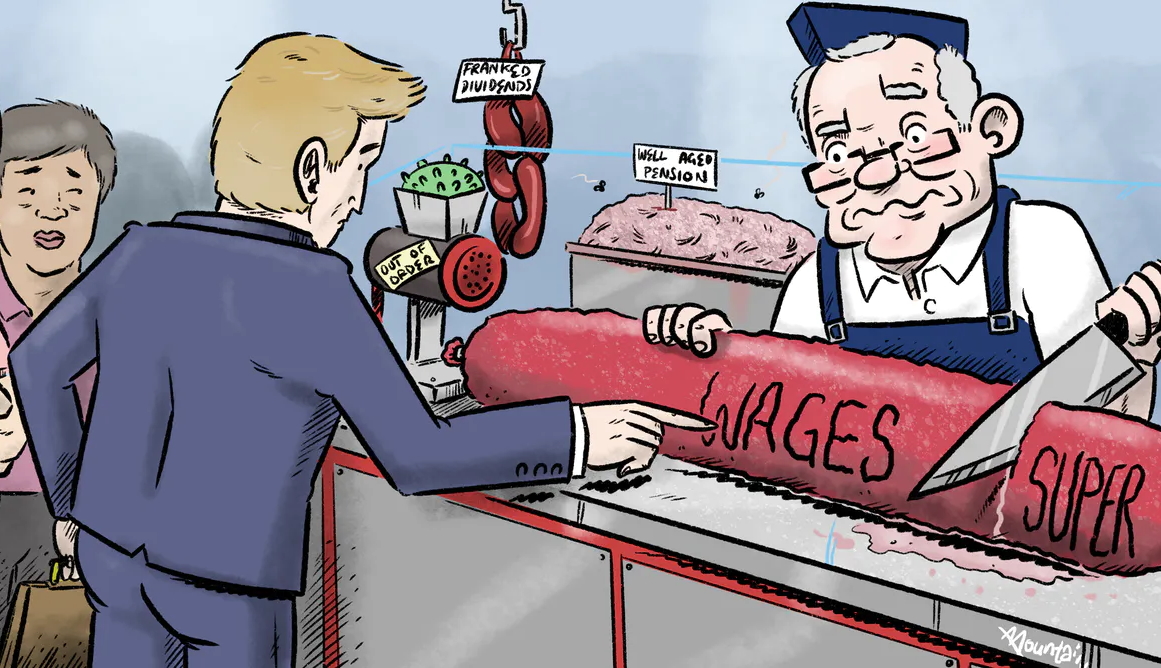
In political circles, this inward focus is known as throwing red meat to the base. It usually entails belligerent oppositionism, taking the rhetorical fight up to the new government, and sometimes the adoption of core policy ideas deeply held by the true believers. Dutton’s soon-to-be-unveiled nuclear energy policy is shaping as an example of the latter.
The alienation this policy creates among mainstream urban voters could more than offset its popularity in the joint party room (particularly within the anti-renewables Nationals).
Adding to the degree of difficulty in his “base first” approach is the fact that in 2022 it had been the Liberal Party’s well-heeled base itself that cracked and shifted most consequentially.
Scott Morrison’s prime ministership ended in a sharp withdrawal of public confidence. This was most pronounced among professional women voters. Many of them live in higher-income urban and inner-city electorates.
In all the mainland capitals, the very foundations of the Liberal Party’s conservative dominance over decades fractured as six of its wealthy blue-ribbon jewels fell to well-organised community independents.
In Sydney, Melbourne and Perth, safe Liberal seats fell to just these kind of female independents – often called “teals” – in Curtin (WA), Goldstein (Vic), Kooyong (Vic), Mackellar (NSW), North Sydney (NSW) and Wentworth (NSW). They joined Warringah (NSW) on Sydney’s North Shore, lost spectacularly in 2019 to the original “teal”, Zali Steggall.
In Brisbane and Adelaide, seats regarded as good Liberal territory fell to the Greens (Ryan and Brisbane) and Labor (Boothby). Even in Labor-friendly Canberra, the Liberal Party lost its long-standing federal representative when the arch-conservative Zed Seselja was unable to reach a quota against a progressive independent challenger, David Pocock, in the territory’s Senate race.
The scale and particular character of the Liberal carnage was widely overlooked amid talk of Labor’s pallid primary vote of just 32.6% – a record low for a winning party.
The Liberals clung on to just ten of the 51 metropolitan federal seats in Melbourne and Sydney.
Amazingly, it would get worse.
A year later, in a byelection in the “safe” Liberal seat of Aston (Victoria) Dutton’s party suffered another historic rejection. It was the first federal opposition in 102 years to lose one of its existing seats to a government mid-term.
Read more: Labor's unexpected Aston win is body blow for Dutton[1]
The bad news has kept on coming. Last month, albeit at a state level, the Liberal Party in South Australia surrendered another key seat[2] at a byelection – the first time it had occurred there in 116 years. Well-to-do citizens in the state seat of Dunstan – a seat within the now-ultra-marginal Liberal-held federal seat of Sturt (0.5%) – preferred to increase Labor’s parliamentary majority between elections rather than re-elect a Liberal.
While not attributable to Dutton’s federal leadership per se, both byelections signal a wider brand malaise for the Liberal Party. Its identity and appeal are dissipating as affluent centre-right voters break free in search of more active solutions on issues such as gender equality and social inclusion, climate protection, health and education funding, and political transparency.
This is Dutton’s real task. The Morrison government went into the 2022 election with 77 seats in the 151-member House of Representatives, and came out as a Dutton-led opposition with just 58.
So the problem of how Dutton gets to 76 (a majority) without recovering most or all of the teal seats is a serious one. In the absence of a major crisis for the Albanese Labor government, it may not be possible at all.
Two former Liberal ministers told columnist Niki Savva in April[3] that the current strategy of taking the party further to the right is arithmetically flawed.
Noting that fewer than 30% of women voted Liberal at the 2022 election, Linda Reynolds said female candidates had displaced Liberals in all but four of the 18 seats surrendered in the election.
“Until the party understands and harnesses the electoral power of women, mathematically it appears impossible for Peter Dutton to become our next prime minister,” Reynolds told Savva.
Another ex-minister, Karen Andrews, says playing up to the party’s base only works if the base constitutes a majority, otherwise it is a losing strategy.
Faced with these challenges, an obvious response would be to entice dejected ex-Liberal voters back with a mix of policies aimed at assuaging their concerns.
However, Dutton’s strategy, outlined at his first press conference as leader and reinforced through words and practice since, emphasises a further hardening towards the populist right.
Far from leaning into the centre to chase the café and wine bar set, as Scott Morrison once derisively categorised[4] urban professionals – surely his “basket of deplorables” moment – Dutton’s focus instead favours leveraging suburban resentment among traditional Labor voters over high energy prices, interest rates, the rising cost of living and, most crucially, immigration.
This means speaking to fears about high immigration levels and irregular boat arrivals and their perceived effects on housing shortages, traffic snarls and hospital wait-times.
As with his effective destruction of the Voice, Dutton’s message is, at heart, a divisive one. It sets the cosmopolitan preoccupations of Labor, Greens and teals – which his supporters lambast as “woke” – against a nostalgic idyll of the Australian way of life in the suburbs. It is a view also imbued with an old-fashioned Australian masculinity.
So it is both gendered and geographical. Here, Dutton’s Queensland and suburban sensibilities inform his approach. He speaks to the frustrations of ordinary suburban voters who sense that the further one gets from the CBD, the less cultural, economic and political clout they wield.
“Our policies will be firmly aimed at the forgotten Australians in the suburbs, across regional Australia,” he had said at that first press conference.
Read more: Quotas are not pretty but they work – Liberal women should insist on them[5]
It is a kind of resentment politics, or as one of his own hard-line senators Alex Antic recently labelled[6] “the gender card”, it is a “grievance narrative”. Antic’s acerbic comments, by the way, came after he controversially displaced Dutton’s own moderate frontbencher, Anne Ruston, in the most winnable number one spot on the South Australian Liberal senate ticket.
That needless act, and the brash language justifying it, brought no interjection from Dutton.
It was an example of just the kind of braggadocio that could see even more Liberal women heading for the exits.
References
- ^ Labor's unexpected Aston win is body blow for Dutton (theconversation.com)
- ^ surrendered another key seat (www.abc.net.au)
- ^ told columnist Niki Savva in April (www.smh.com.au)
- ^ categorised (theconversation.com)
- ^ Quotas are not pretty but they work – Liberal women should insist on them (theconversation.com)
- ^ recently labelled (www.theguardian.com)
Authors: Mark Kenny, Professor, Australian Studies Institute, Australian National University