Does One NZ’s new ad campaign connect? Many adopted people might not think so
- Written by: Annabel Ahuriri-Driscoll, Associate Professor, School of Health Sciences, University of Canterbury
Adoption is often portrayed as a beautiful, loving act. It enables people to become parents to a child who is given a second chance at being part of a loving family. And a birth mother is relieved of a burden she was either unprepared for, or unable to carry.
Mother and child are later reunited, and joy ensues, happy endings all round. A nice story, right? Yes it is, and one can see why telecommunications giant One NZ chose to capitalise on the redemptive power of these adoption tropes with its “Let’s Get Connected” advertising campaign.
After all, closed adoption[1] represents the epitome of disconnection for adopted people and their birth families. Under the current law[2], birth identity and relationships are legally erased while new adoptive identities and relationships are created.
So far, we have only seen one “episode” in what is clearly an ongoing story in the campaign. But for a number of us who have experienced adoption directly, this first episode all too easily glosses over the pain and loss at the heart of adoption.
Fantasy and reality
Until the Adult Adoption Information Act[3] was passed in 1985, many adopted people in Aotearoa New Zealand were raised with little or no information regarding their birth origins. They had to wait until age 20 to access their original birth certificate.
So, for adopted people, the promise of connection is particularly poignant – as the advertisement depicts.
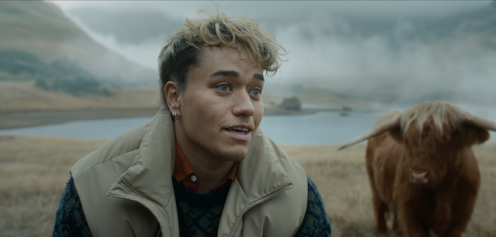
The “plot” of the One NZ campaign is unusual, however, in that it centres on a transracial adoptive family who have apparently not disclosed or discussed adoption. This is despite it being plainly apparent from the physical differences between the Māori son and his very Pākehā adoptive parents.
In real life, such late or non-disclosure of adoption and whakapapa[4] would be unethical and out of step with current adoption realities or good practice[5]. The fact this and other aspects of the adoptive experience are depicted for comic effect is deeply insensitive to those directly affected.
The adoptive parents in this scenario assure their son that biology makes no difference – except it does. For many adopted people, even if we are loved and cared for by the parents who adopted us, such assertions don’t negate our interest and investment in knowing our biological origins.
It is also our right, and something we should be free to decide the significance of, irrespective of the feelings or perspectives of others. Research shows[6] that when adoptive parents deny the importance of biology, and the differences adoption can make, this can result in negative outcomes for adopted people.
Read more: 'Nobody's child' – despite a compelling case for reform, NZ's adoption laws remain stuck in the past[7]
Changing the adoption narrative
The son at the centre of the One NZ campaign clearly does feel this tug. His quest for origins drives the narrative forward.
The vital clue to his parentage lies in a stone given to him by his unknown mother. He carries it around the world, asking random strangers if they know its provenance. The implication being, find the source of the stone, find my mother.
It is an advertisement, of course, and not an objective depiction of reality. But this portrayal also belies the angst and anguish that can often accompany an adoptee’s decision to search – let alone the vulnerability of approaching potential family members. The fear of rejection looms large for many adopted people.
A particularly jarring aspect of the advertisement is the birth mother’s recollection of the moment of her son’s conception: a fast-cut sequence of abandon and surprise, played for laughs.
In fact, our birth mothers carried us for nine months, and were then faced with the difficulty – often under pressure or coercion, and in a hostile and judgemental environment – of having to give us up to strangers. The pain of this is long-lasting, for mothers and adopted children.
For the many of us who are adopted, the commodification of these experiences to sell products and services will hit differently.
It may be that the campaign moves on to reflect some of those harder and more complex realities, which persist despite attempts to challenge[8] and change that narrative. We will wait and see.
References
- ^ closed adoption (teara.govt.nz)
- ^ current law (www.legislation.govt.nz)
- ^ Adult Adoption Information Act (www.legislation.govt.nz)
- ^ whakapapa (maoridictionary.co.nz)
- ^ good practice (practice.orangatamariki.govt.nz)
- ^ Research shows (pages.uoregon.edu)
- ^ 'Nobody's child' – despite a compelling case for reform, NZ's adoption laws remain stuck in the past (theconversation.com)
- ^ attempts to challenge (theconversation.com)
Authors: Annabel Ahuriri-Driscoll, Associate Professor, School of Health Sciences, University of Canterbury