why Kiwis find it so hard to disconnect from the internet
- Written by: Alex Beattie, Lecturer, Media and Communication, Te Herenga Waka — Victoria University of Wellington
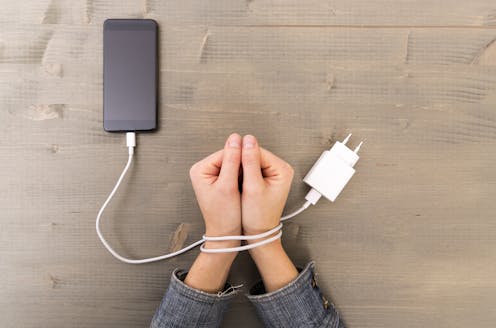
In an age when connectivity is constant, many New Zealanders find it hard to unplug from the internet. Despite a desire to switch off, the reality of disconnecting is challenging. Soon it might even come at a cost.
These were key findings from the first ever internet unplugging study[1] in Aotearoa New Zealand.
Around the world, and in New Zealand, there is increasing interest in disconnecting. School phone bans, calls for a right to disconnect from work[2], and the proliferation of screen-time apps[3] all speak to a collective concern about how constantly connected we are.
Spending time offline and using strategies to help manage screen time are being recognised as critical skills. Learning them may benefit wellbeing and productivity, and help to set boundaries around social media use.
We set out to find out whether New Zealanders do disconnect from the internet, and how. We surveyed over 1,000 people and asked them how often they intentionally disconnect, as well as their motivations and challenges in disconnecting.
Reducing distractions and social demands
We found most New Zealanders disconnect infrequently or not at all: 86% of participants reported they never (22%), rarely (32%) or sometimes (32%) disconnect.
We also found people are primarily motivated to disconnect in order to reduce online distractions. The most common reason to disconnect was to be more present with whānau and friends, or focus on an offline leisure activity, such as reading a book.
Another notable motivation was a desire to avoid the social demands associated with being online or on social media. We also found Māori are more likely to disconnect than Pākeha, due to not feeling safe[4] online.
Notably, nearly a quarter of participants reported never intentionally disconnecting. This could either be a choice or because disconnecting can be challenging.
For example, we found there are several barriers to unplugging. The first is the now basic need to access services – banking, paying bills, transport, two-step login verification – that require an internet connection.
Many also use a smart device for leisure pursuits, including exercise and entertainment, that prevents them unplugging. With so many aspects of life intertwined with devices, leaving your phone at home is not a simple calculation these days.
Read more: Would you pay to quit TikTok and Instagram? You'd be surprised how many would[5]
The privilege of disconnecting
All of this partly explains the rise of luxury “digital detox” retreats and bespoke offline experiences. With the default of everyday life being connected, unplugging is something we increasingly need to simulate – and even pay for.
We also found there are social costs associated with disconnecting. Participants not only reported FOMO (fear of missing out) as a reason why disconnecting is hard, but they acknowledged expectations about social availability have changed.
Nearly a third reported they do not disconnect because their family or friends expect them to be available. Women were more likely to say this, which may reflect lingering social norms about being available for others. This in turn suggests there may be a gendered privilege to switching off.
Perhaps unsurprisingly, we found younger people (18-24) struggle to disconnect more than older people (75+). Older participants described disconnecting with great ease, saying they would just “turn the Wi-Fi off” or “put my phone away”.
This type of disconnection would be quite extreme for young people. Having grown up with connectivity as the default, they prefer to use productivity or wellbeing apps to limit their screen time.
Disconnection as a skill
It is unfair to label young people as merely addicted to their phones, however. Social media serve as a crucial platform for friendship, identity formation and self-expression in today’s digital age.
Additionally, we need to recognise the billions of dollars invested in making social media and other apps habit-forming[6].
Given this, the recent high school phone ban may be missing an opportunity to teach young people crucial skills for thriving in the digital age. Our research shows we should be focused on how to learn and live well with phones, rather than banning them outright.
Teaching young people how to disconnect, rather then doing it for them, will be crucial in an ever-more-connected future.
Local communications giant One NZ’s partnership with SpaceX promises to connect[7] the country on an unprecedented scale. No longer will New Zealanders be able to disconnect by going bush or travelling to remote places.
Disconnecting will become a choice people have to make for themselves. Knowing how to do this, and why, will only become more important.
References
- ^ internet unplugging study (www.tandfonline.com)
- ^ right to disconnect from work (theconversation.com)
- ^ proliferation of screen-time apps (theconversation.com)
- ^ not feeling safe (netsafe.org.nz)
- ^ Would you pay to quit TikTok and Instagram? You'd be surprised how many would (theconversation.com)
- ^ habit-forming (www.theguardian.com)
- ^ promises to connect (one.nz)
Authors: Alex Beattie, Lecturer, Media and Communication, Te Herenga Waka — Victoria University of Wellington