


Slow, Small and Switched Off: Why a Kimberley Coast Cruise Fits How We Want to Travel Now
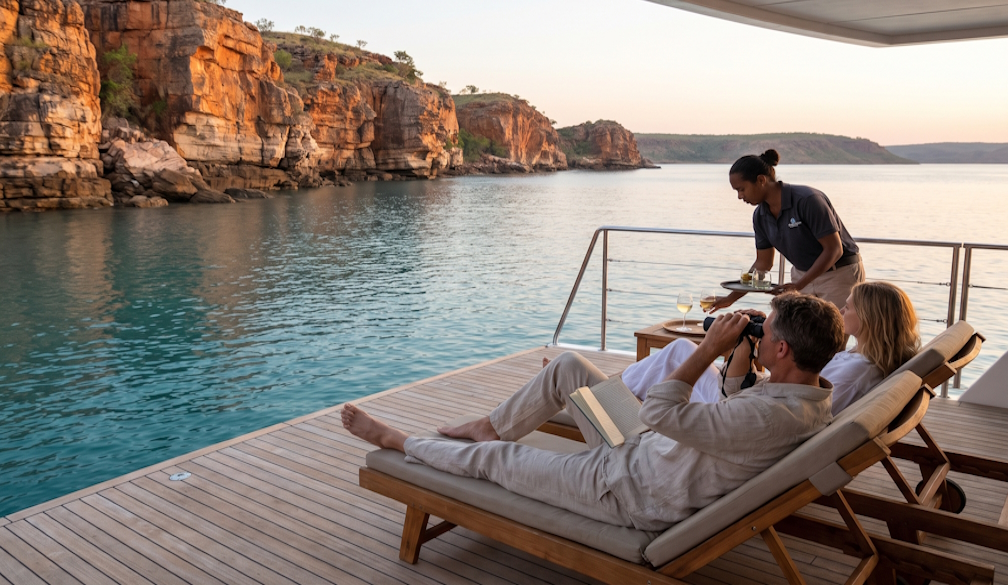
Ask Australians how they want to holiday in 2026 and a clear theme comes back: slower. In Wotif's Unpack '26 travel report, half of Australians said they plan to swap over-planned holidays for peaceful escapes, and 80 per cent said they want a gentler pace and fewer crowds.
Few trips answer that brief as completely as a Kimberley coast cruise. There are no queues at the waterfalls, no traffic, and often no phone signal. The days follow the tide, not a tour bus timetable. Here's how five of the biggest travel trends of the moment line up with one of Australia's most remote coastlines.
1. Slow travel, set by the tide
Slow travel is about depth over distance: fewer places, more time in each. The Kimberley coast builds that in. With tides that can reach close to 12 metres near Derby, the sea itself decides when a river can be entered, when a reef will emerge and when a bay turns to mudflat.
That means a well-run expedition can't rush. A morning might be spent drifting up a single gorge, an afternoon waiting for Montgomery Reef to rise out of the sea as the tide drains. For travellers tired of ticking off a list, there's something freeing about letting the moon set the schedule.
2. The digital detox you don't have to discipline yourself into
"Switching off" is a popular holiday goal and a hard one to keep when your phone works. On much of the Kimberley coast, it simply doesn't. Some ships offer satellite Wi-Fi, but on one of the most remote coastlines in the world it's limited at best.
It's a different kind of disconnection from a weekend away with the phone on silent. There's no feed to refresh between outings, no inbox waiting at the end of the day, and no temptation to plan the next leg of the trip online. The only schedule is the one the crew sets with the tide.
Most people find that after a day or two the urge to check fades. Evenings turn into conversations on deck, star-gazing and early nights. If you need to stay reachable for work or family, ask your operator exactly what connectivity is available before you book, and plan around it.
3. Culture led by the people whose Country it is
Travellers increasingly want cultural experiences that are led by Traditional Owners, not narrated about them. The Kimberley is moving in that direction.
In April 2026, the Western Australian Government committed $5 million to support Traditional Owner-led tourism at Garaan-ngaddim, the Horizontal Falls, where the Dambimangari Aboriginal Corporation is developing new cultural experiences. Licensed operators can continue traversing the falls' wide gap through the 2028 season, with access to be reassessed after that.
Across the wider coast, the region holds some of the oldest rock art traditions in Australia. Visiting it carries responsibilities. Look for an operator that explains how visits to cultural sites are arranged and who guides them, and treat what you're shown with the respect you'd expect for your own family's history.
4. Fewer people, closer to the place
The same Wotif research found 72 per cent of Australians want to support local communities when they travel, and the appetite for crowd-free experiences runs through almost every 2026 trend report. Small-ship expedition cruising is the coastal version of that idea.
Ships built for this coast often carry fewer than 40 guests. A small group can get onto the water at the same time, guiding is more personal, and a shallow-draft vessel can reach rivers and bays where a larger ship has to wait offshore. Before choosing a Kimberley coast cruise, compare the published guest numbers, how many tenders or adventure boats come along, and whether an aircraft travels with the ship, because those details decide how close you'll actually get.
5. Adventure that's active, not extreme
Today's adventurous travellers aren't necessarily chasing adrenaline. More often they want to feel active and capable: a walk to a gorge pool, a morning's fishing, a tender ride into a mangrove creek, then a good meal and a proper bed.
It's also a trend that crosses generations. Grandparents, adult children and older teenagers can share the same voyage, each picking the outings that suit them, then meeting up again at dinner to compare notes.
That balance suits the Kimberley well. Outings range from gentle boat rides to scrambles over hot, uneven sandstone, and most days offer a quieter option. Two things are worth knowing in advance. This is saltwater crocodile country, so swimming happens only where the crew judges it safe, and snorkelling and diving generally aren't part of a Kimberley itinerary. If mobility is a concern, ask which activities suit you before booking.
When to take a Kimberley coast cruise
The Kimberley's cruising window is set by the dry season, roughly March or April to September or October. Ships don't sail the coast in the wet season.
That timing suits slow travel too. Rather than squeezing a trip into school holidays, many travellers who have the flexibility pick their month around what they most want to see. Early-season waterfalls, mid-season calm and late-season fishing all have their followers.
Conclusion
Travel trends come and go, but the ones shaping 2026 (slowing down, switching off, travelling in smaller groups and learning from Traditional Owners) all point toward the same kind of trip. A Kimberley coast cruise happens to deliver it by default.
Go with realistic expectations. Wildlife, weather and waterfall flow keep their own timetable here, and no two voyages are quite the same. For many travellers, that unpredictability is exactly the point.