Film Review: Why Casablanca Still Captivates Audiences Eight Decades On
- Written by: Times Media Culture Desk
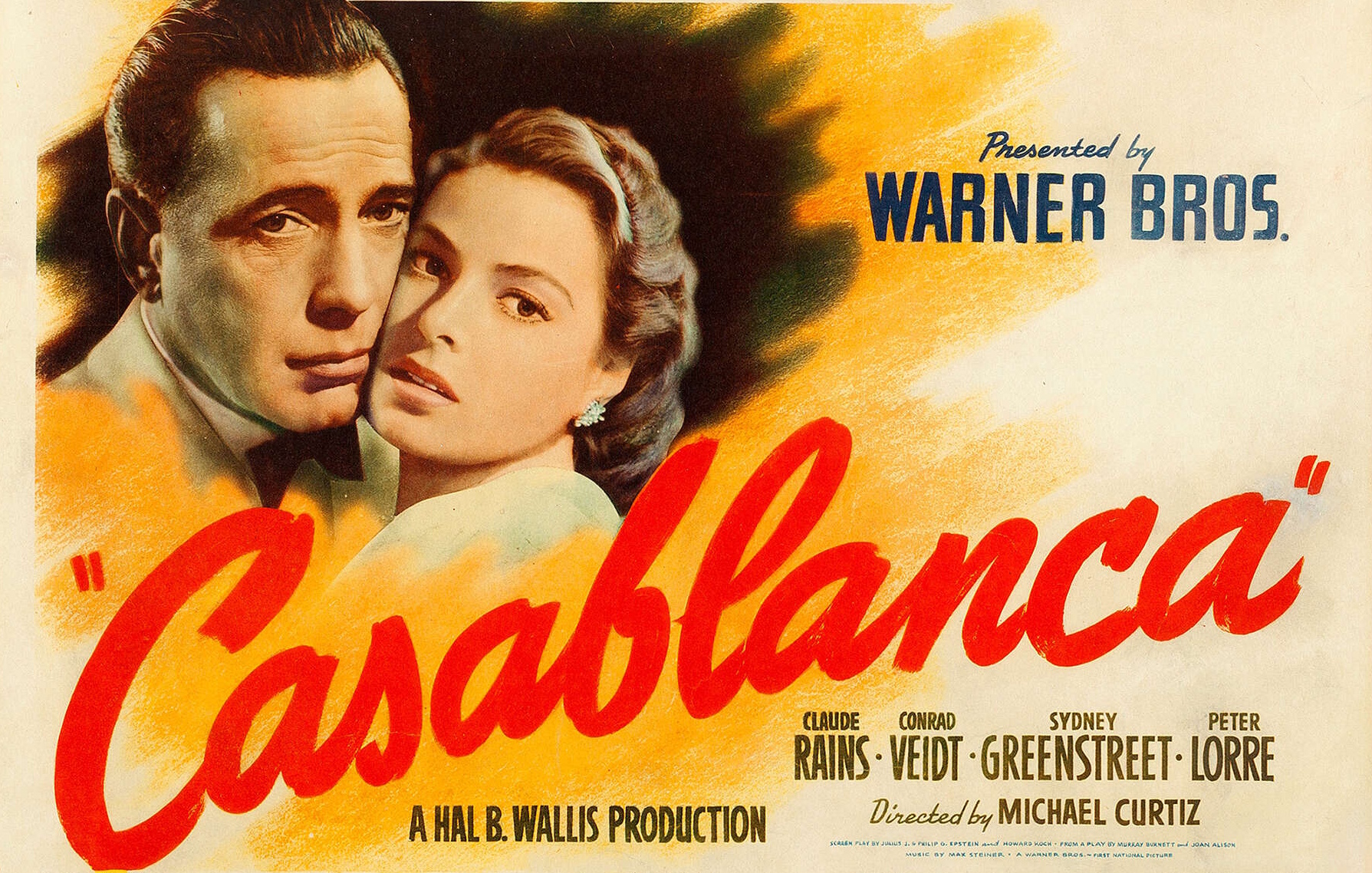
Few films have endured in the public imagination quite like Casablanca. Released in 1942 during the height of World War II, the film was not expected to become a cultural landmark. Yet more than 80 years later, it remains one of cinema’s most consistently admired works—quoted, studied, and revisited with a reverence usually reserved for literature or classical music.
So why does Casablanca still matter? And what makes it compelling to modern audiences, most of whom were born generations after its release?
A Love Story That Never Ages
At its centre lies a timeless emotional conflict: a love that cannot be fulfilled. Humphrey Bogart’s Rick Blaine is the iconic reluctant hero—cynical, wounded, yet ultimately governed by a buried idealism.
Opposite him, Ingrid Bergman’s Ilsa Lund delivers one of Hollywood’s most luminous performances. Their chemistry carries a world of longing with just a glance, a fading smile, or a moment of silence. Modern romances often rely on spectacle; Casablanca relies on restraint, and that restraint is what makes it powerful.
The famous closing scenes, with fog swirling across the airport runway, still hit as hard as they did in 1942. This is cinema at its most emotionally elegant.
Dialogue That Became Part of Pop Culture
Very few films have contributed as many memorable lines to everyday language:
-
“Here’s looking at you, kid.”
-
“We’ll always have Paris.”
-
“Round up the usual suspects.”
-
“Of all the gin joints in all the towns in all the world…”
It’s rare for a screenplay to produce even one universally recognised quote; Casablanca produced half a dozen. Sharp, witty, and emotionally loaded, these lines have helped cement the film’s ongoing relevance.
A Wartime Drama That Captures a Moment in History
Set in the tense international crossroads of Vichy-controlled Morocco, the film reflects a world on the brink. Refugees, resistance fighters, corrupt officials and opportunists all converge on Rick’s Café Américain, seeking freedom, safety, or advantage.
The political undertones are subtle by today’s standards, but deeply felt. Victor Laszlo’s resistance leadership, Strasser’s sinister authority, and Renault’s charming opportunism all represent real wartime archetypes. The emotional stakes of the story—love vs duty, safety vs sacrifice—mirror the moral dilemmas faced by millions during the 1940s.
Performances That Defined Careers
Bogart, who had played mostly hard-edged characters before this, found his defining role in Rick Blaine. He makes cynicism feel noble, sacrifice feel painful, and romance feel universal.
Bergman, already a star in Europe, became a global icon thanks to her performance. The supporting cast, especially Claude Rains as Captain Renault and Dooley Wilson as Sam, deepen the film’s warmth and texture.
Why It Still Works Today
Modern audiences are used to fast cuts, high stakes, and loud emotional cues. Casablanca takes the opposite approach: it trusts its story, trusts its characters, and trusts its audience.
The film endures because:
-
The emotions are universal.
-
The dialogue is unforgettable.
-
The moral choices are relatable.
-
The romance is heartfelt without being sentimental.
Most importantly, it understands that the perfect ending is not always the happy one—but the one that stays with you.
Verdict
★★★★★ (5/5)
Casablanca remains a masterpiece not because of nostalgia, but because its craftsmanship still outshines most modern films. It’s a lesson in how to tell a story that is intimate yet sweeping, romantic yet restrained, and morally complex without losing heart.
For new viewers, it feels surprisingly fresh. For returning fans, it feels like revisiting an old friend.
In short: Casablanca isn’t just a classic—it’s a standard.