A ‘forever language’ – te Wiki o te Reo Māori marks 52 years of extraordinary progress
- Written by: Jeanette King, Professor, Aotahi School of Māori and Indigenous Studies, University of Canterbury

Ko tēnei te Wiki o te Reo Māori – it’s Māori Language Week.
It’s been 52 years since the landmark moment on September 14 1972, when Hana Te Hemara[1] and her fellow activists from Ngā Tamatoa[2], Te Reo Māori Society and student group Te Huinga Tauira marched to parliament and carefully placed a suitcase on its steep, grey steps.
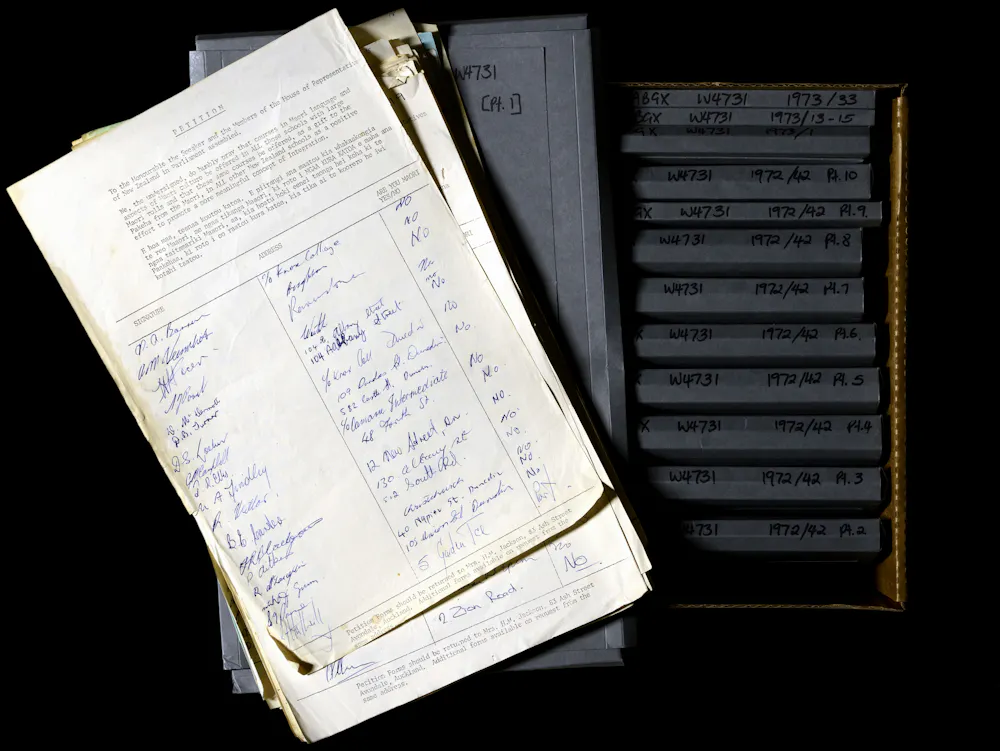
Inside the suitcase was a petition with 30,000 signatures, which became known as te Petihana Reo Māori[3] – the Māori Language Petition.
Although a National government was still in power, a general election was due and the petition was delivered to MP Matiu Rata, soon to become Minister of Māori Affairs in the Labour government of Norman Kirk.
It was one of the most important catalysts for the subsequent Māori language revitalisation movement[4], and led to the introduction of optional te reo classes in schools, and teacher training courses.
Over the years since, there have been many more milestones as te reo Māori regained its place in the nation’s life and culture, including it becoming an official language[5] in 1987, the direct result of the WAI11 Waitangi Tribunal claim[6].
Already, in 1982, the kōhanga reo (preschool language “nest”) system had begun, after a national hui of kaumātua[7] was presented with research showing very few Māori children were being raised as speakers of the language.
With the subsequent advent of kura kaupapa Māori[8] (language immersion schools) and wānanga[9] (tertiary institutions), the language’s slow decline since colonisation was gradually reversed. A new phrase eventually entered the national consciousness: the kōhanga reo generation[10].
Hana Te Hemara explains the motivation for the Māori Language Petition, presented to parliament on September 14 1972.A better future
While there have been several generations of kōhanga reo graduates, it’s the current group of savvy, articulate reo speakers aged under 35 that is making waves.
They include politicians such as Hana-Rawhiti Maipi-Clarke[11] and now the new Kuini Māori Nga wai hono i te po[12]. Along with many others, they embody the energy, vision and passion of the kōhanga reo generation, grounded in their whakapapa[13] and identity as reo Māori speakers.
Looking back from this vantage point to 1972, it’s clear Aotearoa New Zealand has come a long way. The people behind that landmark petition were largely urban-raised and disconnected from their Māori roots. But they wanted a better future for Māori children, and access to te reo Māori was one of their key priorities.
At the heart of the petition was a very modest request:
We the undersigned, do humbly pray that courses in Māori language and aspects of Māori culture be offered in all those schools with large Māori rolls and that these same courses be offered as a gift to the Pākehā from the Māori in all other New Zealand schools as a positive effort to promote a more meaningful concept of integration.
Essentially, they were asking for te reo Māori to be taught in some schools – hardly an earth-shattering request at face value, but one with profound consequences.
And the life and influence of the petition didn’t stop there. September 14 quickly became Māori Language Day, which then became Māori Language Week, which we’ve been celebrating ever since.
Ake, Ake, Ake
Hana Te Hemara was only 22 when she laid that petition on the steps of parliament. But she knew it was a historic moment, one that would lead to a future almost impossible to envisage back then – one where a strong generation of young Māori, fluent in te reo, would take their place as leaders in their country.
That journey is far from over, of course. In 2018, the then Labour government set a national target of one million te reo Māori speakers (at any level of proficiency) by 2040.
Tomorrow, data visualisations based on the 2018 Census will be released by researchers looking at how the language is tracking[15], and what resources and strategies might be needed now to ensure its long-term revitalisation and survival.
It’s particularly appropriate, then, that the theme for this year’s te Wiki o te Reo Māori is “Ake Ake Ake – A Forever Language[16]”. The phrase also has a political context, being the words said to have been spoken by Rewi Maniapoto[17] at the seige of Ōrākau in 1864: Ka whawhai tonu mātou, Ake, Ake, Ake – we will keep fighting, for as long as it takes.
A forever language still needs to be fought for, especially in the current environment where the government has moved to minimise the official use[18] of te reo.
Let’s remember and celebrate the vision and actions of Hana Te Hemara and others all those years ago, which have ensured te reo Māori has become what it always has been – Aotearoa’s forever language.
References
- ^ Hana Te Hemara (e-tangata.co.nz)
- ^ Ngā Tamatoa (teara.govt.nz)
- ^ te Petihana Reo Māori (www.parliament.nz)
- ^ Māori language revitalisation movement (teara.govt.nz)
- ^ official language (www.legislation.govt.nz)
- ^ WAI11 Waitangi Tribunal claim (teara.govt.nz)
- ^ national hui of kaumātua (teara.govt.nz)
- ^ kura kaupapa Māori (teara.govt.nz)
- ^ wānanga (www.twoa.ac.nz)
- ^ kōhanga reo generation (theconversation.com)
- ^ Hana-Rawhiti Maipi-Clarke (www.parliament.nz)
- ^ Nga wai hono i te po (www.rnz.co.nz)
- ^ whakapapa (maoridictionary.co.nz)
- ^ CC BY-SA (creativecommons.org)
- ^ how the language is tracking (www.tepunahamatatini.ac.nz)
- ^ Ake Ake Ake – A Forever Language (www.reomaori.co.nz)
- ^ Rewi Maniapoto (teara.govt.nz)
- ^ minimise the official use (www.teaonews.co.nz)
Authors: Jeanette King, Professor, Aotahi School of Māori and Indigenous Studies, University of Canterbury