The 4 big changes to gun laws that would make NZ safer
- Written by Alexander Gillespie, Professor of Law, University of Waikato
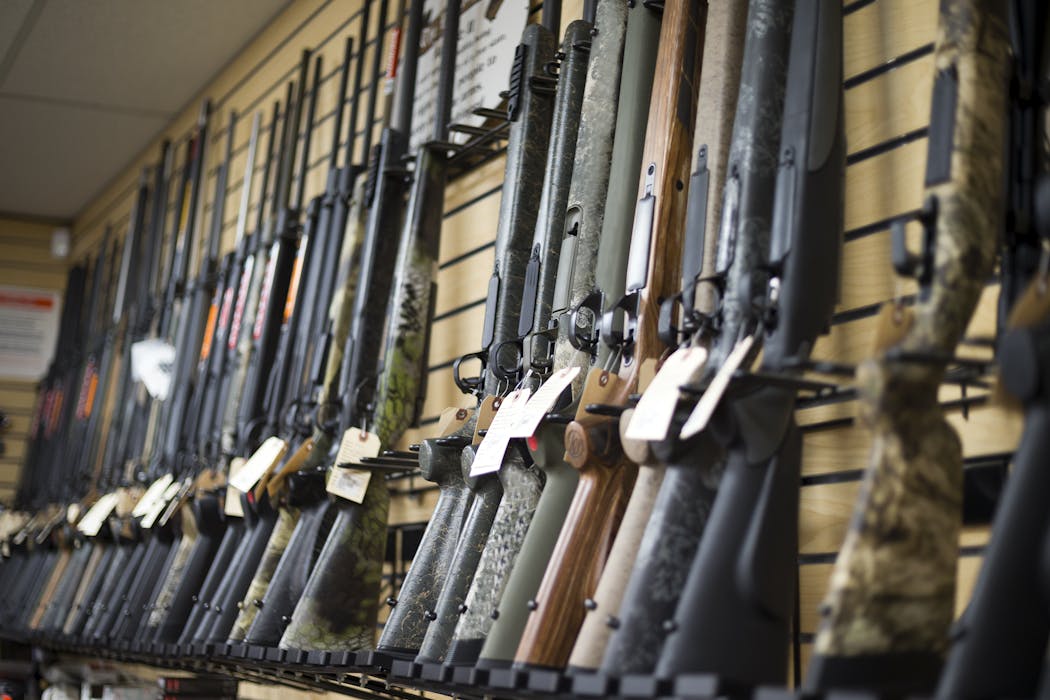
New Zealand is undertaking the most significant rewrite of firearms law[1] in over 40 years. Overall, it’s a welcome step, as the law was messy and times have changed.
But that’s not to say the proposed law can’t be improved further.
While controls on the kinds of weapons used in the Christchurch terror attack will remain, as will a firearms register, other ways of ensuring public safety must be addressed.
Submissions on the Arms Bill[2] close on February 16. From my recent research in nine comparable countries, I can see four main areas where New Zealand’s new law can be enhanced.
Greater protection from self-harm
There are considerably more firearms deaths in New Zealand from suicide[3] than from homicide[4]. The rate is lower than in the United States, but higher than in England, Wales[5] and Australia.
The most practical way to protect unlicensed people wanting to self-harm is to implement the strictest possible standards for safe firearms storage.
To protect licensed gun owners, the law needs to encourage the building of effective communities of firearms owners, with leadership from the gun industry and related organisations.
As outlined below, this would be coupled with input from mental health professionals, new standards for licensing, with education and resources that dovetail with the Ministry of Health’s existing Suicide Prevention Action Plan 2025–2029[6].
Tighter control of trade and manufacture
The role of gangs and other criminal networks[7] in the possession and supply of illegal or unlicensed firearms is already a serious problem.
According to the Ministerial Advisory Group on Transnational, Serious and Organised Crime, New Zealand is struggling to counter the threat[8], which has been growing for the past five years.
As well as being a party to the United Nations Convention Against Organized Crime[9], New Zealand will also have to improve domestic law.
The main challenge is ensuring full accountability for the estimated 1.5 million[10] legal and licensed firearms, and the permanent removal from circulation of restricted firearms.
All firearms must be registered by the end of August 2028, with more than 400,000[11] now accounted for. So the crunch will come within the next two years. Three specific changes will be important.
Third party verification, such as by a gun dealer, between all private buyers and sellers of conventional firearms would help improve the oversight of these sales.
Greater restriction on the manufacture of firearms or their parts, especially with rapidly evolving technologies such as 3D printing[12], with specific licences authorising manufacture.
Another buyback at market rates of all guns that should be on the register but are currently unlicensed (though not necessarily in criminal hands).
Better monitoring of extremism
Political and ideological extremism is always a threat, with the biggest risks posed by alienated individuals estranged from their immediate communities.
While Australia has represented a gold-standard[13] for firearms regulation, the Bondi terror attack showed the risk can never be reduced to zero.
But there are tools that can be built into the new law:
mandatory searches of the social media accounts of all firearms applicants
closer scrutiny of applicants if and when they are known to be close with high-risk individuals
mandatory gun club membership[14] for all gun owners as evidence of a “genuine reason” to possess a given class of firearms (already the case for handgun owners in New Zealand)
education for club members in how to spot concerning signs of extremism[15] and an obligation to report it (as exists in Quebec in Canada[16]).
Beyond these changes, the Bondi terror attack may see tighter restrictions on the number of guns and amount of ammunition a person can possess.
In New Zealand, one person can own up to 12 pistols, but there is no limit on how many other standard firearms or how much legal ammunition they can own.
Australian regulators may look closely at the current limits in Western Australia[17], which stipulate a maximum of five firearms if someone possesses a hunting or recreational licence.
Tighter age and fitness restrictions
Just as there is a minimum age for driving a motor vehicle, followed by a learner’s licence with restrictions, firearms ownership should have clear age and stage limits.
Beneath a certain age – say ten – firearms should not be touched at all. Above that minimum age, young applicants should be encouraged and mentored into accredited training and safety programmes.
Licences should allow for access to firearms in gradual stages. Again, as with a driver’s licence, older owners should have shorter renewal periods, with medical certificates to confirm their fitness.
If a medical professional considers a person unsafe[18] to drive, they “must” report them. But a health practitioner is only notified after a firearms licence is issued, and the current law says[19] only that they “may” contact the police if they have concerns.
There should be no discretion in such cases – reporting should be mandatory.
And finally, it should be mandatory for all health officials to report any firearms injuries and accidents they become aware of in their clinical practice.
References
- ^ rewrite of firearms law (www.legislation.govt.nz)
- ^ Arms Bill (bills.parliament.nz)
- ^ more firearms deaths in New Zealand from suicide (www.hqsc.govt.nz)
- ^ homicide (www.police.govt.nz)
- ^ England, Wales (www.ons.gov.uk)
- ^ Suicide Prevention Action Plan 2025–2029 (www.health.govt.nz)
- ^ gangs and other criminal networks (ocindex.net)
- ^ struggling to counter the threat (www.customs.govt.nz)
- ^ United Nations Convention Against Organized Crime (treaties.un.org)
- ^ estimated 1.5 million (www.firearmssafetyauthority.govt.nz)
- ^ 400,000 (www.firearmssafetyauthority.govt.nz)
- ^ such as 3D printing (theconversation.com)
- ^ gold-standard (www.waikato.ac.nz)
- ^ mandatory gun club membership (www.police.nsw.gov.au)
- ^ concerning signs of extremism (www.nzsis.govt.nz)
- ^ Quebec in Canada (www.cbc.ca)
- ^ Western Australia (www.wa.gov.au)
- ^ considers a person unsafe (www.legislation.govt.nz)
- ^ current law says (www.legislation.govt.nz)
Authors: Alexander Gillespie, Professor of Law, University of Waikato
Read more https://theconversation.com/the-4-big-changes-to-gun-laws-that-would-make-nz-safer-275085