New ferry names: Winston calls it woke, but debating Cook’s legacy is nothing new
- Written by: Weekend Times
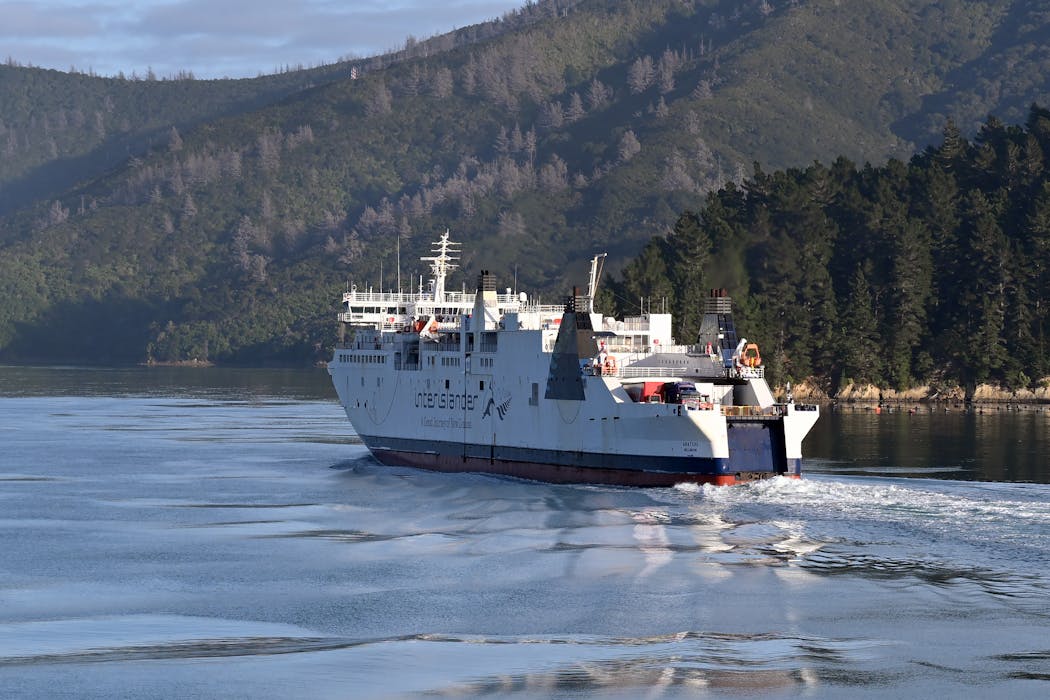
With an election looming, it was perhaps unsurprising that Minister for Rail Winston Peters used the announcement of the names of two new state-owned ferries to indulge
in a little campaign signalling.
Targetting the “snivelling wokesters” who might take issue with one ferry being named after Captain James Cook, Peters suggested “a mature country does not run from its history” (a point with which I fully agree).
In fact, the new names – Kupe, after the great explorer of Pacific and Māori tradition, and Cook, honouring the commander of three British Pacific expeditions from 1768 to 1779 – already mark a break with past naming traditions.
Since the 1960s, ferries often bore the te reo Māori prefix “Ara”, meaning “path”. The first was the Aramoana (“passage over the sea”), a “roll-on, roll-off” rail ferry that transformed travel across Cook Strait between New Zealand’s two main islands.
Of course, naming practices shift over time. And Peters was correct in highlighting the “indelible mark on these islands, and on Cook Strait in particular” left by both Kupe and Cook.
Many features of this waterway are associated with Kupe. For example, its Māori name, Te Moana Raukawakawa, refers to the kawakawa leaves worn to protect ocean travellers as they neared the islands called Ngā Whatu (The Eyes), understood to be the calcified eyes of the great wheke (octopus) Kupe had pursued and killed.
Yet that Māori name is rarely visible: most maps call it Cook Strait and the vessels that cross it are widely known as “Cook Strait ferries”.
This primacy of English names is an extension of the process Cook started, including at Tōtaranui (which he called Queen Charlotte Sound) and a favoured anchorage there, Meretoto, which he named Ship Cove.
Discovery and rediscovery
There is no doubt, however, the new ferry names do recognise some deep historical associations.
They are also in line with a cultural tradition of linking Cook and Kupe. The pair were prominent in The Discovery of New Zealand, the landmark work by New Zealand historian and Cook scholar J. C. Beaglehole, published in 1940.
Beaglehole imagined a conversation where “Cook would eagerly have talked” with Kupe, “as men converse between their peers”.
But this equivalence between Kupe and Cook as men of the sea and great navigators glosses over the very real differences between “discovering” uninhabited islands and the “rediscovery” of already occupied lands in the context of empire building. So there is a fundamental tension in placing the two figures side by side.
Peters suggested it has become fashionable for Cook “to be condemned, cancelled and cast out”, and dismissed those who identify him as a “harbinger of colonisation”.
However, it is misleading to suggest that critiques of Cook are a recent product of a so-called woke agenda.
As my book Captain Cook and the Unsettled Afterlives of Empire demonstrates, the Māori communities who experienced injuries and death as a result of Cook’s expeditions have never forgotten those losses and have increasingly shared their perspectives with the wider public in recent times.
And there also has been a long tradition of commentary from Pākehā New Zealanders expressing deep unease about the violence used as a tactic during Cook’s voyages.
In 1859, the pioneering historian A. S. Thomson – a Scottish military surgeon who hardly fits the profile of a “wokester” – noted that after the first voyage,
Captain Cook left the country without having had one of his crew killed or wounded by the natives; while they had to mourn the loss of ten men killed, and many others wounded, by the English during this visit.
The politician and historian William Pember Reeves (1857–1932), who was also an influential architect of immigration laws designed to exclude Asians from New Zealand, observed that Cook repeatedly used gunfire and this had terrible consequences:
Once Cook fired on the crew of a canoe merely for refusing to stop and answer questions about their habits and customs, and killed four of them – an act of which he calmly notes that he himself could not, on reflection, approve.
Cook and colonisation
Reeves celebrated Cook as a navigator and a mapmaker, but he was troubled by the violence Cook and other agents of empire set in train, initiating a “series of deeds of blood and reprisal which made the name of New Zealand notorious for generations”.
And the historical record teaches us that Cook was indeed a harbinger of colonisation. His secret instructions from the Admiralty encouraged him to “take Possession of Convenient Situations” during his explorations “in the Name of the King of Great Britain”.
He undertook rituals of possession in Te Whanganui-a-Hei and Tōtaranui during the first voyage, and imagined New Zealand as a flourishing future colony of Britain.
He suggested it would not “be at all difficult for Strangers to form a settlement in this Country” because colonists could exploit divisions between the kin-groups that structured Indigenous life.
Colonists arrived in large numbers from 1840 and many have subsequently looked back on Cook as a foundational figure and a hero.
But such judgements were never unanimous: from the moment of his death in 1779, Cook has been and remains contested. Questions about his actions and the consequences of his visits are not new and reflect the profoundly unsettling nature of empire and colonisation.
Such questions will be raised again now with the christening of the new ferries, and rightly so. What we name things matters, serving to shape our sense of ourselves, our pasts and our futures.
Tony Ballantyne does not work for, consult, own shares in or receive funding from any company or organisation that would benefit from this article, and has disclosed no relevant affiliations beyond their academic appointment.