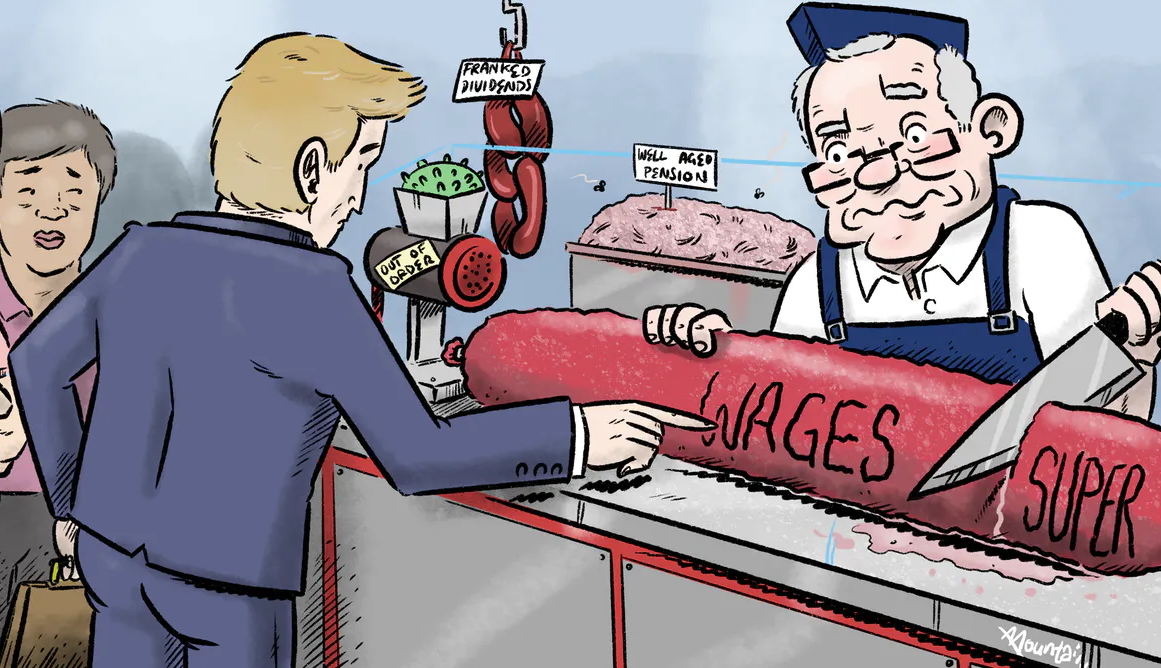


The Greens have adopted confrontation and self-declared populism. Can they bring voters along with them?
- Written by: Weekend Times
Election losses often scar political parties, and scarred political parties tend to overcorrect. Within 18 months, the Greens have shifted from constrained confrontation with Labor, to cooperation, and now to open rivalry.
Each shift has arrived with a new leader – revealing the party’s continuing dilemmas, but also how narrowly its strategic direction is now decided.
Since losing three of their four lower house seats at the 2025 federal election, including that of leader Adam Bandt, the Greens have realised two opposing lessons.
Under Larissa Waters, who has stepped down for health reasons, it was that the party had been too obstructive, and was punished electorally for it. Under David Shoebridge – chosen by the party room over Mehreen Faruqi and Sarah Hanson-Young in the first contested leadership ballot in the party’s history – it is that conciliation fails to distinguish the Greens from Labor.
One defeat, two lessons
Both interpretations hold some merit. Parties often trade off three goals: influencing policy, holding office and winning votes. Under Bandt, the Greens sought policy gains through (initially) hardline bargaining, stalling Labor’s housing and climate agendas before settling for modest concessions. They reaped neither the benefits of strident opposition nor those of compromise, but the costs of both.
Waters maintained the focus on policy but amended the method. Her “firm but constructive” approach produced further gains, such as on investor taxes and environmental laws, among others. But the party’s support barely moved.
In selecting Shoebridge, the party appears to have concluded that policy wins cannot substitute for distinctiveness at election time. It is shifting from policy-seeking to vote-seeking, pursued through more direct confrontation with Labor.
Yet both lessons were taken from seat losses resulting as much from preference flows in tight multi-party contests as anything the party did or did not do; the national vote held steady.
The risk is that the party is reacting to its own past decisions, rather than the underlying puzzle: with Labor increasingly unpopular, why are its disaffected voters not moving to the Greens?
Multi-party politics
Part of the answer rests in Australia’s fragmenting party system, and Shoebridge’s pitch is a bet on how this plays out. The major parties’ vote share is in decline, with lower house seats being lost despite the buffer of a majoritarian electoral system.
The question is: which divide will now organise federal politics? If it is left versus right, the Greens are an obvious home for disappointed Labor voters. But if it is establishment against anti-establishment, a party using its Senate balance of power to strike legislative compromises looks very much part of the establishment.
Shoebridge’s call to “replace Labor” is an attempt to escape this. But the anti-establishment mantle may already be taken. One Nation, not the Greens, is capturing disillusioned voters, and state results show the party can draw from Labor and the Coalition alike.
Replacing Labor therefore means competing on two fronts. The first, winning progressive voters frustrated with the Albanese government, is where the most realistic gains are. The second, redirecting the flow of voters from the major parties to One Nation, is much tougher.
Comparative research in Europe finds little direct voter exchange between far-right populist parties and green or left parties. The contest with One Nation, then, may be less over its voters than over what the next election is about, and who gets the blame for Australia’s woes.
On that, Shoebridge’s framing is apt. One Nation, he says, has “understood the anger” but aimed it at “exactly the wrong target” – the migrant working as a nurse, not the wealthy elite.
An opaque leadership contest
That there was a leadership ballot at all is instructive. Greens leaders had always emerged through party room consensus. Rivalries are not new, but consensus relied on strategic agreement – something the 2025 result disrupted.
The party also now has more centres of power: a vocal youth wing, former leaders, state parliamentarians, and the Green Institute – a think tank now led by former MP Max Chandler-Mather.
But it is difficult to discern much ideological difference between the frontrunners, Shoebridge and Faruqi. Both argue for a firmer stand against Labor, both call for building a political movement, and both back a member vote for leadership contests. What separated them appears to be perceived temperament, relationships and judgements about how each would be received by voters. Hanson-Young, favourably covered in the media, again lacked party room support.
A contest lasting more than two days might have clarified those differences, or confirmed how small they were. It would have also allowed greater scrutiny of a voting group of just 11, and without Indigenous representation following two Senate defections.
Who decides?
The process highlights a persistent organisational tension. Shoebridge and deputy leader Steph Hodgins-May have committed to giving members a say in future contests, ending the peculiar exclusion from choosing the leader of a party that espouses grassroots democracy.
However, the model that will be introduced is unclear: a “one member, one vote” ballot may face resistance from smaller state branches, uneasy about larger branches dominating. Weighting votes by state holds its own inequities.
Either model carries risks. A member ballot gives a leader legitimacy, but it does not resolve strategic dilemmas or internal conflict. A leader with a direct mandate from members would likely be harder for the party room or state branches to constrain, intensifying the personalisation of politics and the influence of the leader’s office. If the aim is to reverse the party’s gradual centralisation, a vote every few years alone is insufficient.
What might Shoebridge achieve?
The Greens remain a confederation, in which state branches guard their authority and members shape policy principles. The policy platform has consequently been remarkably consistent across leaders. But the leader still holds considerable influence, and more directly controls style, salience and strategy – and therefore what most voters hear, and how.
Shoebridge’s impact might be in focus and framing. He offers an account of who holds power in Australia, and whose side the state is on. This can turn a list of grievances into a narrative.
But a story of captured power and corruption could also convince voters the system is irredeemable, rather than something to be reclaimed for progressive purposes. Across much of Europe, the far right has been the main beneficiary of political cynicism and distrust.
The challenge for a party now adopting confrontation and a self-declared populism is to persuade voters, at the same time, that collective action can still deliver.
Josh Holloway does not work for, consult, own shares in or receive funding from any company or organisation that would benefit from this article, and has disclosed no relevant affiliations beyond their academic appointment.