Weekend Times


Google Workspace

Business News

How to make roads with recycled waste, and pave the way to a circular economy

  • Written by Salman Shooshtarian, Research Fellow, RMIT University
How to make roads with recycled waste, and pave the way to a circular economy

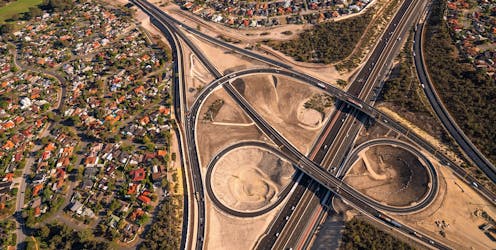
It cost A$49 million[1] to add 12.5 kilometres of extra lanes to Western Australia’s Kwinana Highway, south of Perth’s CBD. That’s not unusual. On average, building a single lane of road costs about about A$5 million per kilometre[2].

What is unusual about this stretch of extra freeway is not the money but the materials beneath the bitumen: two stabilising layers comprised of 25,000 tonnes of crushed recycled concrete[3], about 90% of which came from the demolition of Subiaco Oval (once Perth’s premier football ground).

Recycling building and construction materials remains the exception to the rule in Australia. The National Waste Policy[4] agreed to by federal, state and territory governments has a target of 80% resource recovery by 2030. It’s currently about 40%[5].

Of the 74 million tonnes of waste generated in Australia in 2020[6], masonry materials comprised about 22.9 million tonnes. Plastics, by comparison, comprised about 2.5 million tonnes. Of the 61.5 million tonnes of “core waste” managed by the waste and resource recovery sector, 44% (27 million tonnes) came from the construction and demolition sector, compared with 20% (12.6 million tonnes) from households and local government activities.

Most of this waste – concrete, brick, steel, timber, asphalt and plasterboard or cement sheeting – could be reused or recycled. It ends up in landfill due to simple economics. It’s cheaper to buy new materials and throw them away rather than reuse and recycle.

Changing this equation and moving to a circular economy, in which materials are reused and recycled rather than discarded in landfill, is a key goal to reduce the impact of building and construction on the environment, including its contribution to climate change.

Read more: A third of our waste comes from buildings. This one's designed for reuse and cuts emissions by 88%[7]

The economics of ‘externalities’

The fact it is more “economic” to throw materials away than reuse them is what economists call a market failure, driven by the problem of “externalities”. That is, the social and environmental costs of producing, consuming and throwing away materials is not reflected in the prices charged. Those costs are instead externalised – borne by others.

In such cases there is a legitimate – and necessary – role for governments to intervene and correct the market failure. For an externality such as carbon emissions (imposing costs on future generations) the market-based solution favoured by most economists is a carbon price.

Read more: COP26: cities create over 70% of energy-related emissions. Here's what must change[8]

For construction material waste, governments have a few more policy levers to help create a viable market for more recycling.

Using procurement policies

One way to make recycling more attractive to businesses would be to increase the cost of sending waste materials to landfill. But this would likely have unintended consequences, such as illegal dumping.

The more obvious and effective approach is to help create more demand for recycled materials through government procurement, adopting policies that require suppliers to, for example, use a minimum amount of recycled materials.

With enough demand, recyclers will invest in further waste recovery, reducing the costs. Lower costs in turn create the possibility of greater demand, creating a virtuous circle that leads to a circular economy.
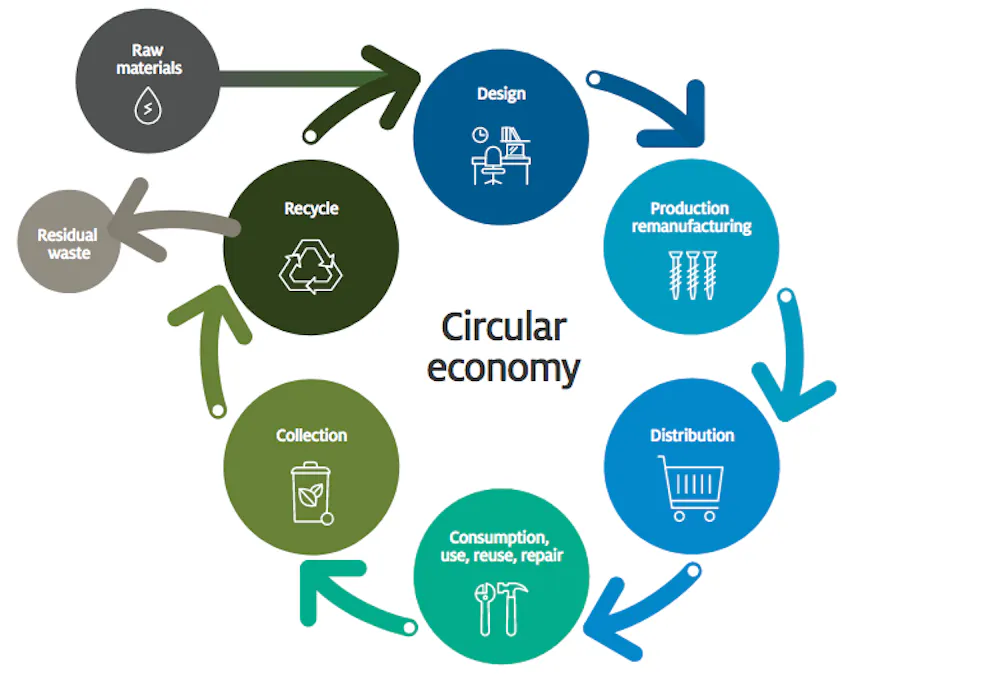
Diagram of the circular economy
Australian Government, Sustainable Procurement Guide: A practical guide for Commonwealth entities, 2021[9] Australia’s federal, state and territory governments all have sustainable procurement policies. The federal Sustainable Procurement Guide[10] states the Australian government “is committed to transforming Australia’s waste into a resource, where most goods and services can be continually used, reused, recycled and reprocessed as part of a circular economy”. But these policies lack some basic elements. Three key market-making reforms Our research suggests three important reforms could make a big difference to waste market operations. This is based on interviewing 27 stakeholders from the private sector and government about how to improve sustainable procurement. First, government waste policies that set aspirational goals are not supported by procurement policies setting mandatory minimum recycled content targets. All contractors on government-funded construction projects should be required to use a percentage of recycled waste materials. Second, the nature of salvaging construction materials means quality can vary significantly. Cement recycled from a demolition site, for example, could contain contaminants that reduce its durability. Read more: Australia needs construction waste recycling plants — but locals first need to be won over[11] Governments can help the market through regularly auditing the quality of recycler’s processes, to increase buyer confidence and motivate suppliers to invest in production technologies. Third, in some states (such as Western Australia) the testing regimes for recycled construction products are more complex than that what applies to raw materials. More reasonable specifications would reduce compliance costs and thereby the cost of using recycled materials. References^ A$49 million (www.buildingfortomorrow.wa.gov.au)^ A$5 million per kilometre (www.bitre.gov.au)^ 25,000 tonnes of crushed recycled concrete (www.wasteauthority.wa.gov.au)^ National Waste Policy (www.awe.gov.au)^ about 40% (www.awe.gov.au)^ generated in Australia in 2020 (www.environment.gov.au)^ A third of our waste comes from buildings. This one's designed for reuse and cuts emissions by 88% (theconversation.com)^ COP26: cities create over 70% of energy-related emissions. Here's what must change (theconversation.com)^ Australian Government, Sustainable Procurement Guide: A practical guide for Commonwealth entities, 2021 (www.awe.gov.au)^ Sustainable Procurement Guide (www.environment.gov.au)^ Australia needs construction waste recycling plants — but locals first need to be won over (theconversation.com)Authors: Salman Shooshtarian, Research Fellow, RMIT University

Read more https://theconversation.com/how-to-make-roads-with-recycled-waste-and-pave-the-way-to-a-circular-economy-164997

The Weekend Times Magazine

Australia’s Booming Cosmetic Dentistry Market: What Patients Are Asking For in 2025

Cosmetic dentistry in Australia is experiencing an unprecedented boom, with more patients than ever seeking to enhance their smiles through innovative and accessible treatments. The landscape of aesthetic dentistry has...

A Fantastic Trip To Melbourne, Australia With Minimal Spending? Here’s How?

Famed for the iconic Melbourne cup horse race, Melbourne, Australia ranks as one of the best travel destinations worldwide. It offers tourists an escape from the hustle and bustle of...

The Importance of Professional Heating and Cooling Installation: A Guide for Homeowners

When it comes to maintaining a comfortable home, the importance of heating and cooling installation cannot be overstated. Whether you're looking to stay warm during cold winters or cool off...

Why Pigmentation Removal Melbourne Treatments Help Restore Even Skin Tone

Skin pigmentation concerns are common among individuals of all ages. Dark spots, uneven skin tone, and sun damage can affect the appearance of the skin and often develop due to...

Prime Minister Press Conference Australian Parliament House

PRIME MINISTER: Good afternoon everyone. Today's meeting of the National Cabinet came during a week of what I'd describe of increased hope. This was a week of hope. We were...

Launching Weekly Campaigns with Zero Dev Involvement: The Headless Advantage

Marketing teams are forever tasked with more and more quickly. It wasn't long ago that launching a campaign weekly was a stretch goal and not a minimum viable timeframe. Today...

Brisbane Compensation Lawyers for Work Injury Damages

Suffering a work-related injury can turn your life upside down. The physical pain, emotional stress, and financial uncertainty can feel overwhelming. If you’re in Brisbane and facing this situation, finding...

How to Pay Off Your Mortgage Faster

Paying off the mortgage on your property early can save you significant amounts of money on interest Freeing yourself of the burden of having to keep up with monthly mortgage...

This City of Museums is Deserve to be Put on Your Wishlist, Especially if You Are a First-Timer to Australia

Sydney is a multicultural city that has a lot of art in it. You can find street art on the city's outskirts and world-class art galleries. Sydney museum are countless...

hacklink hack forum hacklink film izle hacklink jetbahistipobetslogan bahis girişirocket play casino australiapadişahbetgalabetmarsbahisjojobetjojobet giriş