Weekend Times


Google Workspace

Business News

Australia needs an honest conversation about tax and budgets – and Jim Chalmers is ready to talk

  • Written by Peter Martin, Visiting Fellow, Crawford School of Public Policy, Australian National University
Australia needs an honest conversation about tax and budgets – and Jim Chalmers is ready to talk

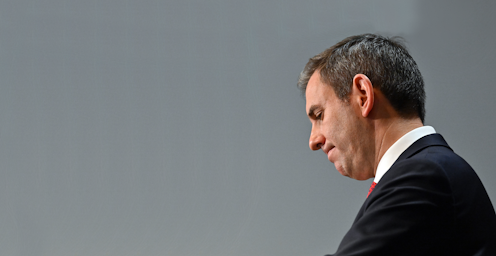
Jim Chalmers is a wily operator. Ahead of delivering his first budget next Tuesday[1], he has given himself room to do the things a treasurer needs to do.

For a while, his predecessor Josh Frydenberg denied himself that room. In his first budget as treasurer under Scott Morrison ahead of the 2019 election, Frydenberg promised to get the budget “back in the black[2]”.

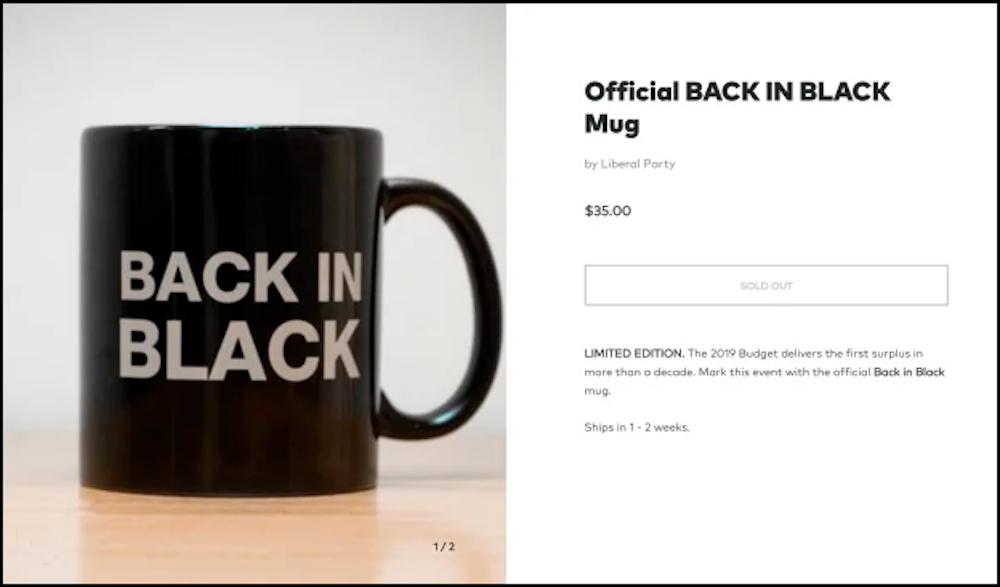
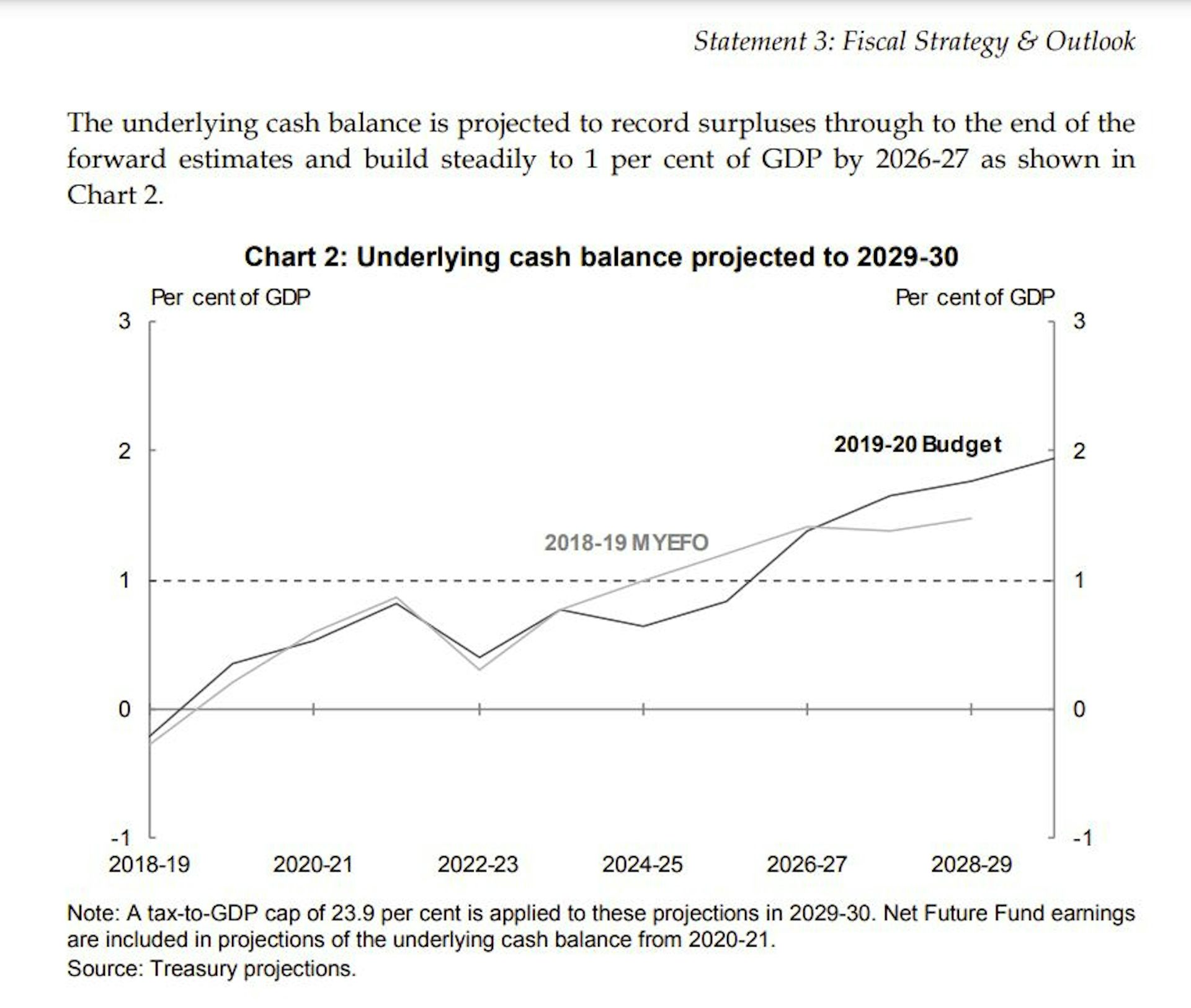
That 2019 budget forecast increasing surpluses as far as the eye could see (which was ten years[3], the limit of the graphs presented in the budget papers). The Liberal Party began selling “back in the black” celebratory mugs at A$35 each.

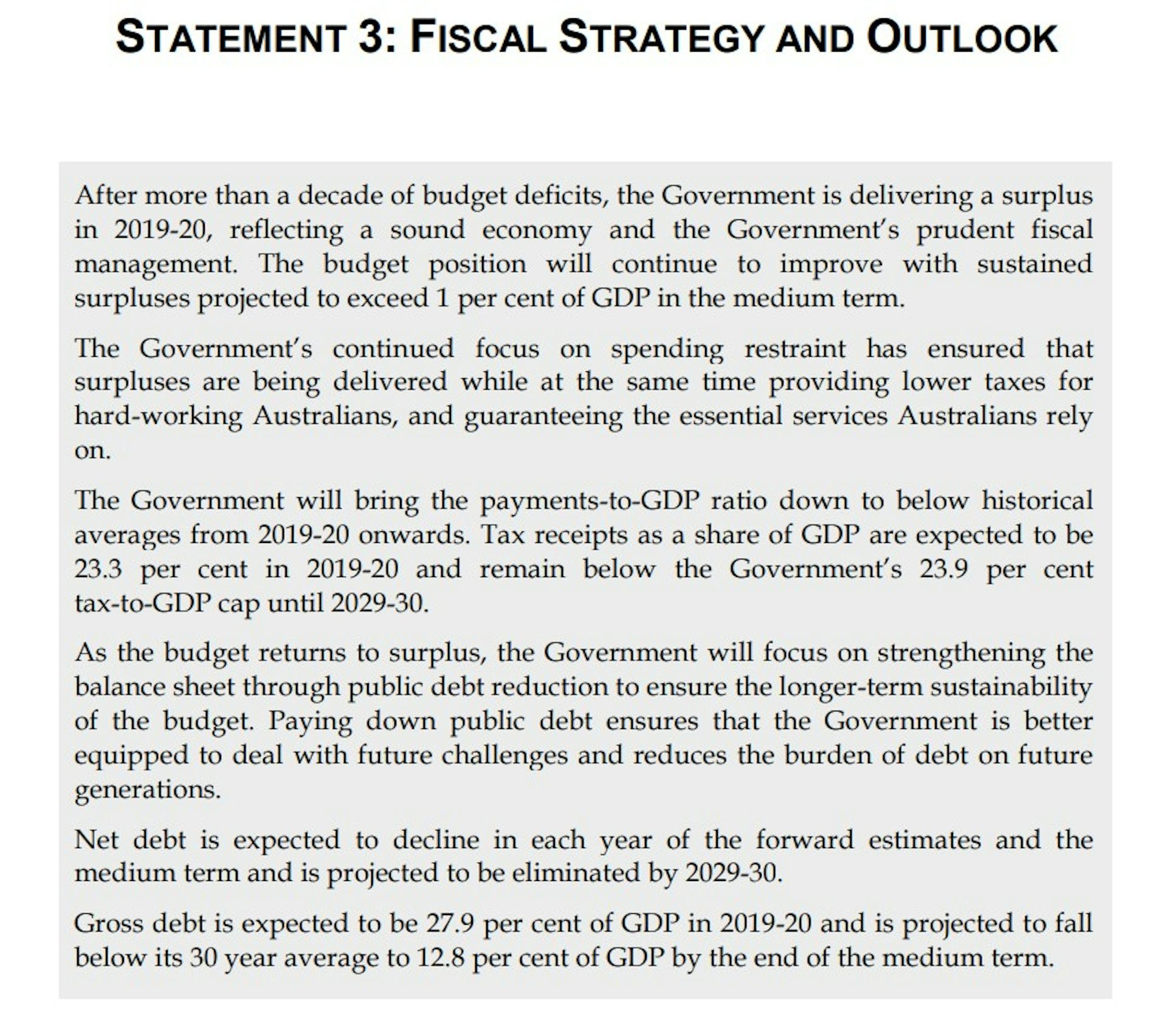
Liberal Party of Australia, 2019 The trick was that from then on, government spending would grow more slowly than the rest of the economy. As a proportion of GDP, it would slide from around 25% to 23.6%[4] by 2029-30. For that to happen, all sorts of government programs would have to become and stay less ambitious for ten years. But instead of details, Frydenberg’s department gave us gobbledegook[5] – such as that lower payment projections had been driven by lower than expected payments across a range of programs in the forward estimates flowing through to the medium term. It made substantial extra spending near-impossible. The 2019 budget assumed that the cost of National Disability Insurance Scheme couldn’t blow out (it has), that governments couldn’t spend more in response to aged care and disability royal commissions (they’ll have to), or pay aged care workers the big rises the Fair Work Commission is about to award, and so on. COVID changed everything – except the tax cap Just about every fairly foreseeable crisis couldn’t be responded to, if the assumptions in the 2019 budget were to be believed. Not even by raising more tax. A separate “tax cap[6]” set out in the budget said the government would never collect more than an arbitrarily chosen[7] 23.9% of GDP. Frydenberg tied his own hands in a way a treasurer who wanted to take charge of the nation’s finances would not have. Until COVID. Within a year, Frydenberg junked the “back in the black” pledge and spent big, because he had to. But he kept in place the bizarre 23.9% tax cap. The Liberal Party campaigned[8] on it in the election, challenging Chalmers to adopt it. No tax cap – but what comes next? But here’s how much Chalmers really wanted the job of treasurer. In an election in which Labor repeatedly presented itself as a small target, Chalmers said “no” to the tax cap, over and over again. Asked on ABC’s 7.30[9] last month whether next week’s and future budgets would be bound by the tax cap written into Frydenberg’s final budget, he said the cap had been more or less “plucked out of the air”. And I had the courage, if I can say that, to say that before the election as well as during the election campaign. His task was to fit the budget to the conditions Australia faced: rising inflation, falling real wages, rising interest rates, and looming recessions worldwide. The amount he would have to spend, and the amount he would have to raise, would be the result of those deliberations. Read more: Election tip: 23.9% is a meaningless figure, ignore the tax-to-GDP ratio[10] And it would be the result of things beyond any government’s control. Unexpectedly, the Coalition almost breached its tax cap in its final year in office[11] because of a flood of revenue flowing from higher commodity prices and a greater than expected number of Australians in jobs. It took in 23.4% of GDP. What would it have done if it had breached the cap? Given the money back? Growing demands on the budget The demands on future budgets will be enormous. Not only paying for the National Disability Insurance Scheme and aged care, but also Medicare, hospitals, defence, education, rent assistance, boosting the scandalously low[12] rate of JobSeeker, and dealing with increasingly frequent floods and climate change. Australians expect these challenges to be taken seriously. Labor’s actual election promises aren’t that expensive. The parliamentary budget office found a net impact of $6.9 billion[13] over four years. In Tuesday’s budget, Chalmers will find much of the money for those promises by cancelling decisions made in Frydenberg’s March budget. An upside of having budgets in both March and October this year is that a lot of the money committed in March hasn’t yet been spent. How do we pay for what we need most? But beyond that, Chalmers says he is up for a serious conversation[14] about how we pay for the services we need and have a right to expect. A former head of the prime minister’s department, Michael Keating, wants an expert committee[15] (“not a royal commission made up of lawyers”) to prepare a bottom-up estimate of the extra revenue we will need to guarantee the essential services we are likely to need. After the committee has developed the estimate, Keating wants a second inquiry to work out how best to raise it. Read more: Memo to Labor: you need more tax, working out how much more is urgent[16] Economist Ross Garnaut told September’s jobs summit[17] that as a share of GDP, total federal, state and local government tax revenue was 5.7 percentage points below the developed country average. On one calculation, that means Australia could raise an extra A$140 billion[18] a year and still be taxed at developed country rates. It needn’t all come from income tax. Most developed countries have much bigger goods and services taxes than we do, and many have windfall profits taxes, and effective taxes on energy exporters. And it needn’t all be raised now. There’s no point in taxing more for the sake of taxing more. But we are likely to need to raise more in future, to help fix the kinds of problems we’re likely to face in the future. That’s the overdue conversation we have to have, starting next Tuesday. References^ next Tuesday (budget.gov.au)^ back in the black (ministers.treasury.gov.au)^ ten years (images.theconversation.com)^ 23.6% (images.theconversation.com)^ gobbledegook (archive.budget.gov.au)^ tax cap (images.theconversation.com)^ arbitrarily chosen (theconversation.com)^ campaigned (www.liberal.org.au)^ ABC’s 7.30 (ministers.treasury.gov.au)^ Election tip: 23.9% is a meaningless figure, ignore the tax-to-GDP ratio (theconversation.com)^ final year in office (archive.budget.gov.au)^ scandalously low (theconversation.com)^ $6.9 billion (www.aph.gov.au)^ serious conversation (ministers.treasury.gov.au)^ expert committee (theconversation.com)^ Memo to Labor: you need more tax, working out how much more is urgent (theconversation.com)^ jobs summit (theconversation.com)^ A$140 billion (insidestory.org.au)Authors: Peter Martin, Visiting Fellow, Crawford School of Public Policy, Australian National University

Read more https://theconversation.com/australia-needs-an-honest-conversation-about-tax-and-budgets-and-jim-chalmers-is-ready-to-talk-192603

The Weekend Times Magazine

Northern New South Wales may be facing a schoolies invasion

Northern New South Wales may be facing a “schoolies invasion” and unit, apartment and townhouse owners need to prepare – or be left with a potentially large clean-up bill. ...

Film Review: Why Casablanca Still Captivates Audiences Eight Decades On

Few films have endured in the public imagination quite like Casablanca. Released in 1942 during the height of World War II, the film was not expected to become a cultural...

How To Gain Financial Freedom In Retirement

Planning for retirement? Retired already? Discover how you can gain financial independence during your golden years. Hitting retirement is a joyous milestone - a just reward for a lifetime of hard...

Could You Furnish and Equip a Whole House with IKEA Products?

IKEA has long been known as the global giant of affordable, ready-to-assemble furniture. From minimalist Scandinavian sofas to clever kitchen gadgets, the Swedish retailer has built its reputation on making...

The best Nike shoes you can buy right now

You certainly have a few pairs of Nike sneakers around the house, but you may not be aware that the brand famous for its Swoosh was not always known as...

The Future of the Sales Handoff: From AI SDR to Human Closer

Artificial intelligence is altering the sales process at lightning speed. For many firms, AI is their Sales Development Representative. This class of SDRs completes the initial stage of the sales...

Camplify Research Reveals 2020 is the Year of the Local Road Trip

Camplify has today released a research report highlighting that 2020 is no doubt the year of the local road trip. With COVID-19 restricting international travel, Australians have hit the roads...

Dentists in Sydney: Your Guide to Dental Care

Sydney, Australia is home to the absolute best dental experts in the country. With a different range of services and specialties, dental specialists in Sydney take care of different needs...

Why Timely Air Conditioning Repair Is Important for Comfort, Efficiency, and System Longevity

A functioning air conditioning system is essential for maintaining a comfortable home, especially during warm weather. When the unit begins to show signs of trouble—such as weak airflow, unusual noises...