Weekend Times


Google Workspace

Business News

Employers will resist, but the changes for casual workers are about accepting reality

  • Written by John Buchanan, Professor, Discipline of Business Information Systems, University of Sydney Business School, University of Sydney
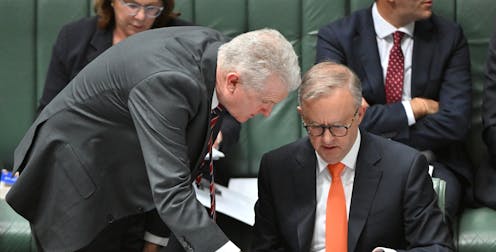
Employers will resist, but the changes for casual workers are about accepting reality

The Albanese government’s plan to improve the pathway to permanency for casual workers has employers worried, fearful their ability to employ casual workers will be restricted.

Even before the details had been released, there was certainty, in the words[1] of Australian Industry Group chief executive Innes Willox, that there “is simply no justification for further changes to the regulation of casual work”.

In support of this argument are statistics suggesting the casualisation trend has peaked. But that’s by no means certain: the most recent data from the Australian Bureau of Statistics shows casualisation climbing again, with an overall rate of 23.5%.

The counterargument is that entrenched casualisation doesn’t make the status quo right, and that the government’s proposed reforms will give greater recognition to reality. That is, if a worker is effectively working as a permanent employee, they have the right to be treated as such. Read more: Albanese government to make it easier for casuals to become permanent employees[2] Rise of the ‘permanent casual’ While casual employment can often suit both employer and employee, the evidence does suggest some employers have exploited the legal ambiguities around definitions and obligations. Australia’s National Employment Standards – the minimum safety net for all workers – say a casual employee who has worked for their employer for 12 months must be offered the option[3] to convert to full-time or part-time (permanent) employment. But there are significant exemptions, particularly for small business. Close to 60% of Australia’s casual workers have been with their employer for more than a year[4], and 45% to 60% report regular hours and pay[5]. This has resulted in the great Australian oxymoron of “the permanent casual”. There is effectively a class of workers who don’t get holiday and sick pay, no matter how long or regularly they work, simply because their employer deemed them “casual” when they began. Read more: The truth about much 'casual' work: it's really about permanent insecurity[6] The legal landscape Since the 1990s, workers and their union representatives have challenged these contrivances in industrial tribunals. Several of these decisions have been tested on appeal in the Federal Court. In two cases in 2018 and 2020[7], the Federal Court agreed a worker’s employment status should based on the reality of their long-term employment relationship. That is, if there was continuity, based on extended, regular patterns of employment, a worker was a permanent employee. Similar principles applied to those deemed contractors. However, appeals to the High Court in 2021[8] and in 2022[9] overturned these rulings. For the High Court, a formal stipulation of relations written in a contract were all that counted. The reality of life on the job was irrelevant. Read more: What defines casual work? Federal Court ruling highlights a fundamental flaw in Australian labour law[10] Common law versus parliament The High Court’s decisions – that formal freedom of contract has to be respected irrespective of the realities of bargaining power – reflect a long struggle between the common law and parliament in matters concerning working life. In the 1700s and 1800s, workers were jailed for meeting to discuss wage campaigns. To this day, commercial common law considers the principle of “freedom of contract” as the foundation for all commercial relations – including those involving employment. Union activity is an illegal restraint of trade. These principles have never been changed in the courts. It is only by statute (legislation passed by parliament) that trade unions and collective action by workers has been allowed. The federal Employment and Workplace Relations Minister, Tony Burke, says[11] the government “will legislate a fair, objective definition to determine when an employee can be classified as casual”, and no one will lose their casual status if that is their preference. There will, no doubt, be opposition, with warnings about threats to productivity and suggestions economic conditions are too fragile. But there’s a lot to be said in favour of giving greater recognition to reality.

References

  1. ^ the words (www.theaustralian.com.au)
  2. ^ Albanese government to make it easier for casuals to become permanent employees (theconversation.com)
  3. ^ must be offered the option (www.fairwork.gov.au)
  4. ^ for more than a year (www.aph.gov.au)
  5. ^ regular hours and pay (www.aph.gov.au)
  6. ^ The truth about much 'casual' work: it's really about permanent insecurity (theconversation.com)
  7. ^ 2018 and 2020 (www.lexisnexis.com.au)
  8. ^ in 2021 (www.corrs.com.au)
  9. ^ in 2022 (www.minterellison.com)
  10. ^ What defines casual work? Federal Court ruling highlights a fundamental flaw in Australian labour law (theconversation.com)
  11. ^ says (ministers.dewr.gov.au)

Authors: John Buchanan, Professor, Discipline of Business Information Systems, University of Sydney Business School, University of Sydney


Read more https://theconversation.com/employers-will-resist-but-the-changes-for-casual-workers-are-about-accepting-reality-210272

The Weekend Times Magazine

Parrtjima opens in Australia’s Red Centre

Free event in Alice Springs will lift spirits every night until 20 September Parrtjima – A Festival in Light launched last night with an incredible display of lighting installations and interactive...

Tips For Creating A Safe Pool Environment For Your Growing Family

Having a pool in the backyard is a dream for many Australian families. It offers hours of entertainment, a way to stay active, and a place to cool off during...

Brisbane Compensation Lawyers for Work Injury Damages

Suffering a work-related injury can turn your life upside down. The physical pain, emotional stress, and financial uncertainty can feel overwhelming. If you’re in Brisbane and facing this situation, finding...

Coasting through Australia: 5 things you need to know

No matter where you choose to explore, you can never go wrong with Australia. The best time to spend time on the water in Australia is during the autumn and...

5 Bars You Cannot Miss While Visiting Sydney

One of the best things about visiting Sydney is the nightlife. While there are a lot of touristic gems for visitors to see throughout the day, Sydney is also widely...

The Most Popular Tattoo Placements (and Why)

Choosing where to place your tattoo is almost as important as choosing the artwork itself. Placement affects how a tattoo looks, how it heals, how visible it is in day-to-day...

Make Your Holiday Merry with Christmas Inflatables

The holiday season is all about bringing joy and festivity to your home or event. One of the most fun and visually captivating ways to do this is by incorporating...

Smart Lock: The Future of Home Security and Convenience

A smart lock has revolutionized the way people think about home security. Moving beyond traditional keys and mechanical locks, smart locks bring technology and convenience together, offering homeowners and businesses a new...

How Custom Made Inflatables Can Turn Your Backyard into a Kids' Wonderland

If you're planning an event for your kids at home, transforming your backyard into a magical wonderland is easier than you think. Custom made inflatables offer a versatile and fun...