A carbon tax can have economic, not just environmental benefits for Australia
- Written by: Mona Mashhadi Rajabi, Postdoctoral Research Fellow, University of Technology Sydney
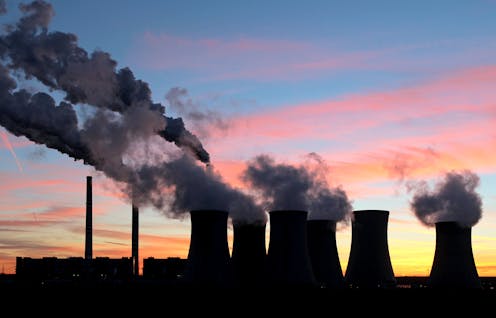
A new study[1] has found that a carbon tax, accompanied by “revenue recycling”, can produce both environmental and economic benefits for Australia.
Revenue recycling means money reaped from a carbon tax would be redirected back into the economy. This means the money accumulated from the tax would be redistributed between different stakeholders in the economy without increasing the government’s revenue.
To be more specific, the tax income should be used to support consumption, invest in new research and development projects, and subsidise energy saving and pollution reducing programs. Using this approach makes the tax more politically appealing to companies and other opponents.
Australia’s experience with a carbon tax
Debate about a carbon tax has always been heated in Australia. The Gillard government introduced a carbon pricing scheme in 2012 which involved an initial rate of $23[2] per tonne on about 500 big carbon emitters, including the electricity industry.
The scheme contained compensation measures[3] including increases in money to government payment recipients and a program to help emissions-intensive, trade-exposed industries reduce carbon emissions, which were themselves a form of recycling.
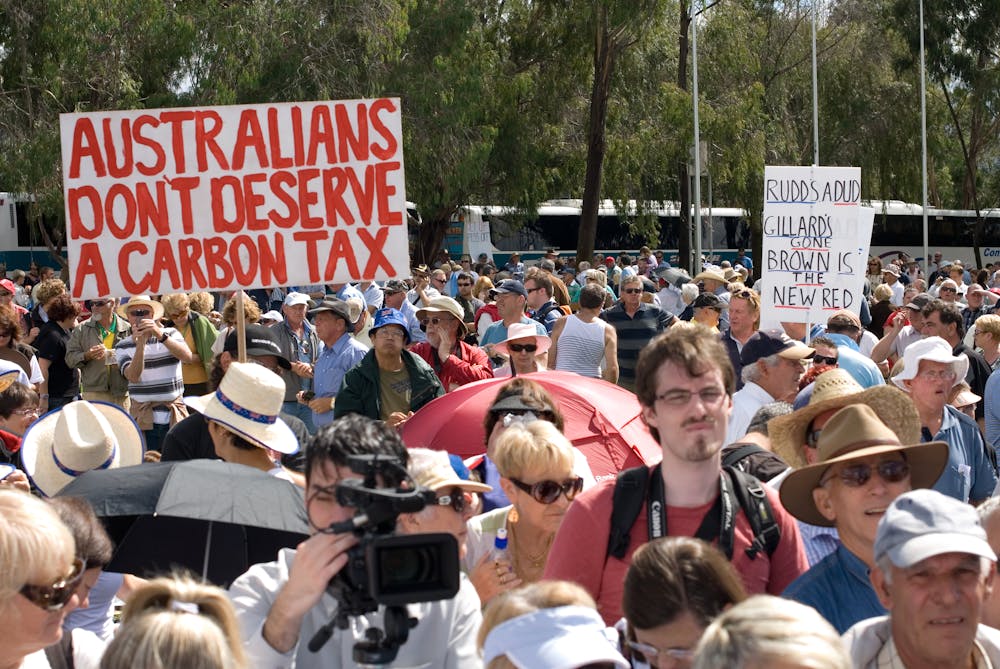
Despite reducing emissions, the tax only lasted two years before it was terminated by the Abbott government, which argued the tax was costing big companies and causing electricity prices to rise.
I examined how such a scheme could work again, basing the design on the models used in Norway, Ireland and Switzerland. I simulated Australia’s economy from 2020 to 2035 to examine the impact of a carbon tax policy with the associated revenue recycling approach on prices, total emissions and economic growth.
The first step in the design is identifying a tax rate and the reach of the policy. Research shows that a uniform rate[5] covering the whole industry sector generates the greatest environmental benefits.
As well as suggesting a uniform tax rate on all sectors including the electricity sector (which is excluded from the current emissions safeguard mechanism), my study recommends starting the tax rate at $23 (the same rate applied in Gillard’s scheme) in 2023 and increasing it gradually to $70 in 2030.
The rate would stay at this level until 2035.
A carbon tax increases the cost of production and leads to an increase in the inflation rate. The inflation impact of this policy is estimated to be 0.5% in 2023, increasing substantially to 1.52% in 2035.
Rising inflation reduces the spending power of families and reduces consumption and economic growth. Considering consumption has a fundamental role in a growing economy, the accumulated tax revenue would be used to keep consumption unchanged after implementing a carbon tax.
How a new version of the tax would work
My study recommends using the accumulated carbon tax revenue to lower income taxes. This would leave more money for families, thereby reducing the impact of inflation, caused by the tax, on the economy.
As well as strengthening families’ spending power, a share of the tax revenue would be invested in research and development projects. This would create new jobs and provide a baseline for a prosperous economy.
Read more: China is pumping out carbon emissions as if COVID never happened. That's bad news for the climate crisis[6]
My study recommends that in the first year, all the tax revenue would be used to support consumption. However, the amount of money allotted to investment would rise from the second year as the carbon tax rate increases. It is estimated that about $57 billion would be available for new technologies over 13 years under this carbon tax.
Imposing a carbon tax would also provide a financial incentive for industry to reduce its fossil fuel use. It would motivate the sector to shift to low-carbon technologies as they would bear a smaller tax bill and reap larger profits.
My study concludes Australia could reduce carbon emissions by 35% while GDP would increase by 0.286% by 2035 and new jobs would be created in research and development. Following the recommended carbon tax design, Australia’s transition to a low-carbon economy would be accelerated, which would benefit both the economy and the environment.
References
- ^ study (doi.org)
- ^ initial rate of $23 (doi.org)
- ^ compensation measures (www.centreforpublicimpact.org)
- ^ Shutterstock (www.shutterstock.com)
- ^ uniform rate (doi.org)
- ^ China is pumping out carbon emissions as if COVID never happened. That's bad news for the climate crisis (theconversation.com)
Authors: Mona Mashhadi Rajabi, Postdoctoral Research Fellow, University of Technology Sydney