Weekend Times


Google Workspace

Business News

We can and should keep unemployment below 4%, says our survey of top economists

  • Written by Peter Martin, Visiting Fellow, Crawford School of Public Policy, Australian National University
We can and should keep unemployment below 4%, says our survey of top economists

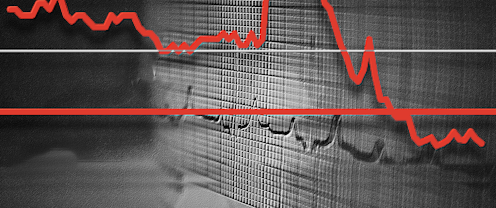
Australia’s leading economists believe Australia can sustain an unemployment rate as low as 3.75% – much lower than the latest Reserve Bank estimate of 4.25%[1] and the Treasury’s latest estimate of 4.5%[2].

This finding, in an Economic Society of Australia poll of 51 leading economists selected by their peers, comes ahead of next month’s release of a government employment white paper[3], and an expected direction from Treasurer Jim Chalmers that the Reserve Bank quantify[4] its official employment target.

Asked what unemployment rate was most consistent with “full employment” under present policy settings, the 46 respondents who were prepared to pick a number or range picked an average rate of 3.75%.

The median (middle) response was higher, but still below official estimates – an unemployment rate of 4%.

Significantly, only two of the economists surveyed picked an unemployment rate of 5% or higher, which is where Australia’s unemployment rate has been for most of the past five decades. The 3.75% average implies either that the Reserve Bank and government have lacked ambition on employment for much of the past half-century, or that the sustainable unemployment rate has fallen. Australia’s unemployment rate dived to 3.5% in mid-2022 and has remained close to that long-term low since. The survey result suggests the government can lock in the present historic low and need not – and should not – allow unemployment to climb too far from its present rate. Many of the experts surveyed questioned the idea of a “magic number” or non-accelerating inflation rate of unemployment (NAIRU) used by the Treasury and the Reserve Bank as a guide to how low unemployment can go without feeding inflation. Former OECD official Adrian Blundell-Wignall said the concept was not helpful “even in the short run, and certainly not the long run” because NAIRU kept changing depending on what else was going on in the domestic and global economy. Any rate of unemployment would have a different implication for inflation depending on what the government was doing with tax and spending policy. Geopolitical events and climate change have probably pushed up the rate of inflation to be expected from any given domestic unemployment rate. 3.5% unemployment, yet falling inflation Craig Emerson, a former minister in the Rudd and Gillard governments, said NAIRU was best described as the lowest unemployment rate consistent with inflation not taking off. Given Australia’s inflation rate is now coming down[5], NAIRU is clearly below the present unemployment rate of 3.5%, he argued. The University of Queensland’s John Quiggin said Australia can be considered to have full employment when the number of job vacancies matches the number of unemployed people. This is the case at present, suggesting “full employment” means an unemployment rate of 3.5%. Alison Preston from the University of Western Australia said industrial relations changes have given workers much less power to obtain higher wages than before, suggesting the “non-inflation accelerating rate of unemployment” was either lower than before or an irrelevant concept. Curtin University’s Harry Bloch says there will always be a mismatch between the jobs on offer and the skills available – an academic can’t do the work of a plumber, or vice versa, for instance. But even so, he says it ought to be possible to get unemployment down to the 2% achieved repeatedly during the 1950s and 1960s. Consulting economist Rana Roy says in normal times “full employment” probably meant an unemployment rate near 1%, but the business cycle meant there would always be brief – “and I stress brief” – periods when governments might have to accept an unemployment rate of nearer 2%. Fix education, job-matching and childcare Asked to select the three measures from a list of 11 that would do the most to bring down the sustainable rate of unemployment, the 51 experts overwhelmingly backed improving the quality of school education (55%), followed by improving employment services (39%) and cutting out-of-pocket childcare costs (39%). There was also strong support for relaxing industrial relations to give employers greater flexibility (33%) and winding back taxes and regulations facing businesses (24%) as well as boosting enrolments in tertiary education (27%). There was very little support for cutting immigration or the JobSeeker payment. Labour market specialist Sue Richardson said a high-quality job-matching service would both reduce unemployment and boost productivity because Australians would be matched to jobs for which they were best suited. The unemployed who would benefit the most would be those further down the queue who were the least successful in finding jobs. Industry economist Julie Toth said digital technologies and working from home were already making it easier to match Australians with jobs across a range of industries, and it was important to preserve these recent gains. Read more: Australia is about to set its first full employment target – and it will define people's lives for decades[6] One of the panellists, Peter Tulip from the Centre for Independent Studies, rejected all the options offered for lowering the achievable unemployment rate, and said the only one that might have some effect was restraint when increasing minimum wages. Another, Brian Dollery from the University of New England, said much of Australia’s unemployment had been generated by unemployment benefits that were too high. Together, the results of the survey call for the government and the Reserve Bank to be ambitious about unemployment, and not to accept a rate above 4%. The government’s employment white paper[7] is due by the end of September. Individual responses. Click to open:

References

  1. ^ 4.25% (www.rba.gov.au)
  2. ^ 4.5% (treasury.gov.au)
  3. ^ employment white paper (treasury.gov.au)
  4. ^ quantify (theconversation.com)
  5. ^ down (theconversation.com)
  6. ^ Australia is about to set its first full employment target – and it will define people's lives for decades (theconversation.com)
  7. ^ white paper (treasury.gov.au)

Authors: Peter Martin, Visiting Fellow, Crawford School of Public Policy, Australian National University

Read more https://theconversation.com/we-can-and-should-keep-unemployment-below-4-says-our-survey-of-top-economists-211277

The Weekend Times Magazine

Catering Boxes: Practical Packaging That Supports Food Quality and Presentation

Reliable Catering boxes are essential for food businesses that need to transport, store, and present meals safely and professionally. From cafés and bakeries to large-scale caterers and event organisers, catering boxes...

Why External Blinds and Awnings Are Essential for Comfortable and Protected Outdoor Spaces

Creating outdoor areas that remain functional, comfortable, and visually appealing throughout the year requires effective protection from sun, wind, and changing weather. Installing external blinds and awnings provides a practical solution...

Why You Should Hire an Agent When Shopping For a Luxury Home

Many home buyers find themselves in a conundrum when they think about buying a luxury property. They're excited to shop for such an amazing home, but overwhelmed by the amount...

The 29-year-old Australian Revolutionising The Edible Collagen Market

Known as ‘Nature’s Botox’, scientific research shows collagen is not only anti-ageing and good for skin, but also optimises health, ligaments, muscle recovery, the gut, and helps heal the digestive...

Why You Should Hire a Professional for Kitchen Designs

The design of a kitchen tells a lot about the residents of a house and that is why some homeowners take it seriously. If you are thinking about giving your...

Last Call for Tradies Before Christmas

The Christmas bells might not be ringing for Santa yet, but they are fast approaching, and the sooner you start getting organised, the better. Before you start present shopping or...

First Time Down Under: What to Do in Melbourne

Image Source Melbourne is often the first stop for travelers arriving in Australia, and it makes an excellent introduction to life Down Under. Known for its welcoming atmosphere, creative energy, and...

The Psychology of Your Floor Plan: How Layout Shapes the Way You Live

When most people think about designing a new home, they focus on finishes, colours, or even the kitchen benchtop. But the quiet hero of liveability is the floor plan. A...

Protecting Properties with Durable Security Fencing

From residential homes to large commercial facilities, strong and reliable fencing provides peace of mind by keeping intruders out and safeguarding what matters most. Among the many options available, security...