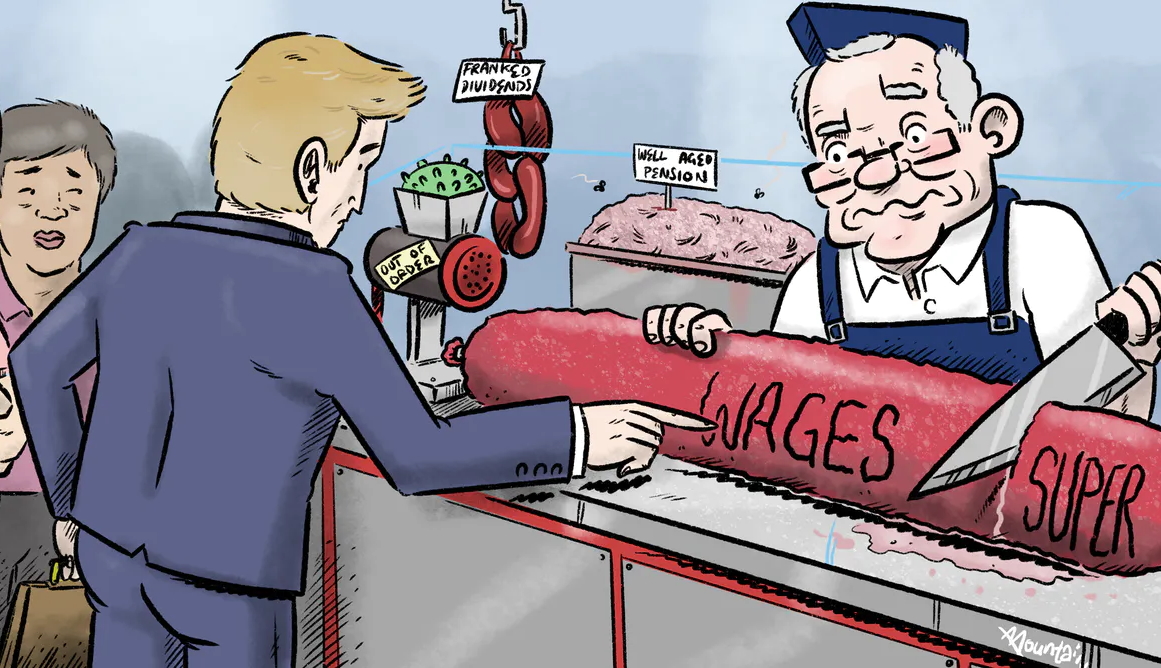
the news funding model is broken – but this would fix it
- Written by: Peter Thompson, Associate Professor of Media Studies, Te Herenga Waka — Victoria University of Wellington
The announcement last week that Newshub would be shut down[1] was not the “canary in the coalmine” some suggested – it was the explosion. If it is not to be the first of many, then New Zealand needs a new model for its fourth estate.
The fate of Newshub and today’s projected newsroom cuts at TVNZ[2] threaten to leave a significant gap in the news sector, particularly television. But beyond that, the causes and solutions are very much up for debate.
There are both specific institutional factors and deeper structural trends at play within the television and news sectors. And Newshub’s tangled financial history[3] serves as a reminder of the dangers of foreign ownership of strategic media assets.
Beyond the shifting fortunes of one company, however, the local news ecology has faced wider structural problems. The imminent loss of so many working news producers and journalists makes finding workable solutions even more urgent.
Fragmenting audiences
Over the past 25 years, the TV sector’s share of the advertising market has roughly halved[4], from 34.3% in 1999 to just 17.7% by 2022.
The capture of advertising revenue by Google and Meta (the parent of Facebook and Instagram) has played a key role. Google alone now accounts for almost two-thirds[5] of the roughly NZ$1.8 billion digital advertising spend in New Zealand.
Read more: With the end of Newshub, the slippery slope just got steeper for NZ journalism and democracy[6]
But the decline in TV revenues is also related to the fragmentation of audiences, as viewers shift to new on-demand services. TV3’s daily audience reach for its linear services declined by almost 50%[7], from 35% in 2014 to 17% in 2023.
Perhaps not surprisingly, Newshub’s demise has amplified calls from the news sector to expedite the Fair News Digital Bargaining Bill[8]. This would require the online platforms to negotiate payments to news providers for hosting, linking and sharing news content.
Some estimates suggest this could be worth $30–50 million annually to the news sector. On the face of it, this may appear to be a logical solution – but it’s not that simple.
A flawed bill
There are a number of problems with the proposed bill[9]. Fundamentally, it misdiagnoses the market relationship between the platforms and the news media.
The tech platforms’ capture of digital advertising stems not from its co-option of news content, but from the mass harvesting of audience data (enabling targeted advertising), and algorithmic influence over content discovery.
The bill also provides no fixed benchmarks for payments. And the arbitration process in the event of non-agreement is potentially very complex, because different media outlets will have varying relationships with each platform.
Read more: Facebook won't keep paying Australian media outlets for their content. Are we about to get another news ban?[10]
Making those agreements will depend on the goodwill of the platforms. But arbitration could well determine the advantages the platforms confer on news providers (increasing their visibility and directing traffic to their websites) outweigh the commercial benefits to the platforms of hosting or sharing news content.
Indeed, Meta’s resistance to the news bargaining frameworks in Australia[11] and Canada[12] underlines the risk of a platform exempting itself from bargaining obligations by prohibiting the hosting and sharing of news.
News media depending on platform payments might also be motivated to provide content that maximises value to the platforms – for example, populist or controversial content more likely to be shared. Or they may be less inclined to critically investigate issues involving their benefactors.
Ultimately, there is no guarantee any platform payments will actually be reinvested in news production, let alone commercially unattractive genres such as local government or regional reporting.
A new form of funding
There is no realistic possibility of the government bailing out Newshub or any other individual news outlet.
And while the news media’s function in upholding democratic processes and holding power to account remains vital, it doesn’t follow that market competition and plurality are sufficient to sustain that.
Indeed, it was the introduction of commercial competition for eyeballs and advertising that drove measurable declines[13] in the length and substance of television news through the 1990s.
Read more: Breaking news: making Google and Facebook pay NZ media for content could deliver less than bargained for[14]
Democracy cannot thrive if the fourth estate is in a commercial race to the bottom. It requires diversity of perspectives and competition for substance that treats the audience as citizens, not just fodder for advertisers.
This requires a new form of funding and a new institutional arrangement. One way to achieve this would be through a small levy on digital advertising expenditure, and potentially other commercial revenues such as internet and streaming services. The revenue would be reinvested in news content through an independent agency on a contestable basis.
There are different possible mechanisms, but an initial model could apply a levy to digital advertising spend across the media sector. This would mean the advertising spend currently going to Google and Meta would generate the majority of the revenue.
Although the spend going to other media would, in principle, also incur the levy, there could be rebates for local content producers. News operators would, in any case, be the recipients of the journalism funding which the levy makes possible.
Even a 1% levy on the $1.8 billion digital advertising spend would generate as much revenue as the (now defunct) Public Interest Journalism Fund[15]. A 3% levy would equal the higher estimates of what the proposed Fair News Digital Bargaining Bill would deliver.
Collaborative news sharing
Being administered by an independent agency (perhaps NZ On Air) would help ensure the levy supported news based on public service principles – including investigative, local government, regional and minority coverage – and that a wide range of news operations received support.
There is also a need for some form of collaborative news-sharing model. RNZ already shares its news content, and there have been proposals for a regional news network[16] to cover local issues often overlooked by the mainstream.
An independent, multi-platform news publisher model could underpin such an initiative. It would operate across both broadcasting, print and online media, and allow members to make use of any pooled content on their own channels or websites.
A levy mechanism and public news publisher model would be a far better basis for rescuing New Zealand’s fourth estate than throwing the news media some crumbs from Big Tech’s table.
References
- ^ Newshub would be shut down (www.rnz.co.nz)
- ^ projected newsroom cuts at TVNZ (www.rnz.co.nz)
- ^ tangled financial history (newsroom.co.nz)
- ^ roughly halved (www.asa.co.nz)
- ^ two-thirds (www.rnz.co.nz)
- ^ With the end of Newshub, the slippery slope just got steeper for NZ journalism and democracy (theconversation.com)
- ^ declined by almost 50% (www.nzonair.govt.nz)
- ^ Fair News Digital Bargaining Bill (www.legislation.govt.nz)
- ^ problems with the proposed bill (www.parliament.nz)
- ^ Facebook won't keep paying Australian media outlets for their content. Are we about to get another news ban? (theconversation.com)
- ^ Australia (www.theguardian.com)
- ^ Canada (www.bbc.com)
- ^ measurable declines (www.researchgate.net)
- ^ Breaking news: making Google and Facebook pay NZ media for content could deliver less than bargained for (theconversation.com)
- ^ Public Interest Journalism Fund (www.stuff.co.nz)
- ^ regional news network (www.rnn.co.nz)
Authors: Peter Thompson, Associate Professor of Media Studies, Te Herenga Waka — Victoria University of Wellington